If your dentist has recommended a root canal treatment, you might be feeling anxious or uncertain about what the procedure entails. Understanding the steps involved can help ease your worries and prepare you for what to expect during this common and effective dental procedure.
What is a Root Canal Treatment?
A root canal treatment is designed to save a tooth that has become infected or badly damaged in its inner pulp — the soft tissue containing nerves and blood vessels. Instead of extracting the tooth, the dentist removes the infected pulp, cleans and disinfects the root canals, then fills and seals the space to prevent future infection.
Step-by-Step Process of a Root Canal
- Initial Examination and X-rays
Your dentist will take X-rays to examine the extent of decay or infection and to see the shape of the root canals. This helps plan the treatment accurately. - Local Anesthesia
To ensure you feel no pain, a local anesthetic is administered to numb the tooth and surrounding gum tissue. In some cases where the tooth is dead, anesthesia may not even be necessary. - Isolation of the Tooth
A rubber sheet called a dental dam will be placed around your tooth to keep it dry and free from saliva during the procedure. It also prevents any materials from falling into your mouth. - Access Opening
The dentist will drill a small opening through the crown (top surface) of your tooth to access the infected pulp chamber and root canals. - Removing the Infected Pulp
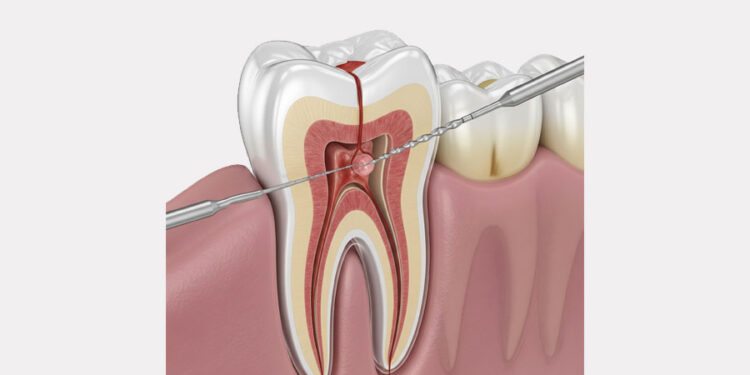
Using special tiny files, the dentist gently removes the infected or dead pulp tissue, cleaning out the canals thoroughly. - Cleaning and Shaping the Canals
The canals are cleaned and shaped progressively with smaller files to create a smooth, regular pathway. Disinfecting solutions are used to flush out any remaining bacteria. - Filling the Root Canals
Once cleaned and dried, the canals are filled with a biocompatible material called gutta-percha, sealing the canals to protect against reinfection. - Temporary Filling and Tooth Restoration
A temporary filling seals the access hole initially. Later, during a follow-up visit, the temporary filling is removed, and a permanent restoration such as a crown may be placed to strengthen and protect the tooth.
How Long Does It Take?
The treatment usually requires two or more appointments, especially if the infection is severe. Some cases may be completed in a single visit.
What Happens After Treatment?
You might experience some mild tenderness or discomfort for a few days, which can be managed with over-the-counter pain medications. Maintaining good oral hygiene and following your dentist’s advice will help you heal quickly.
Why is Root Canal Treatment Important?
Root canal therapy saves your natural tooth, helping you maintain normal chewing, prevent jawbone deterioration, and preserve your smile.