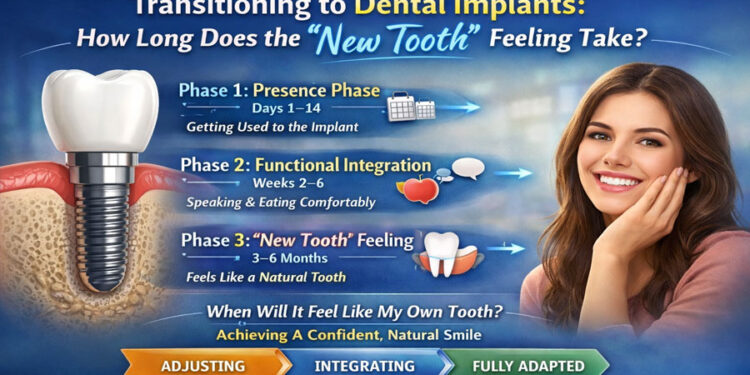
Transitioning to Dental Implants: How Long Does the ‘New Tooth’ Feeling Take?

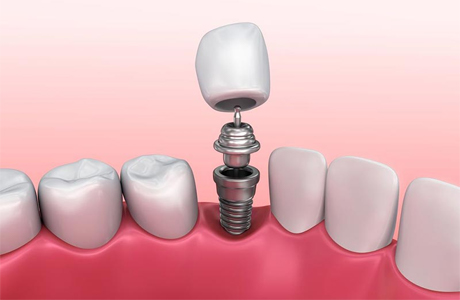
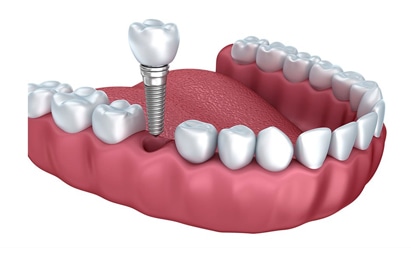
Choosing dental implants is a life-changing decision. Unlike dentures or bridges, implants are designed to mimic the entire structure of a tooth—from the root to the crown. But as with any surgical procedure, there is a period of adjustment.

At Stavya Dental Clinic, the most common question we hear after a successful placement is: “When will this actually feel like my own tooth?” Here is a timeline of what to expect during your transition.


Phase 1: The “Presence” Phase (Days 1–14)

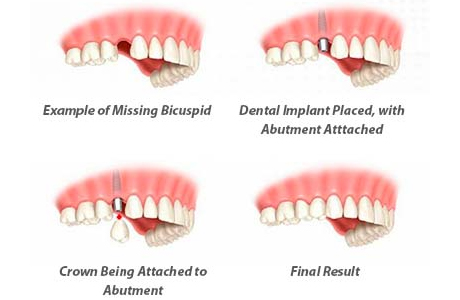
Immediately after the crown (the visible tooth) is attached to the implant post, your mouth will be hyper-aware of the change.

  • The Sensation: You might feel a slight “bulkiness.” Your tongue, which is incredibly sensitive to changes in the mouth, will likely wander to the new tooth constantly.
  • The Adjustment: This is mostly neurological. Your brain is mapping the new shape and height of the restoration.
  • Our Tip: Stick to softer foods for the first few days to allow the surrounding gum tissue to settle around the new crown.

Phase 2: Functional Integration (Weeks 2–6)

This is the stage where you stop “thinking” about the tooth and start “using” it.

  • Speech: If the implant is in the front, you might have noticed a slight lisp or change in certain sounds (like “S” or “V”). By week three, your tongue and lips usually adapt, and your speech returns to normal.
  • Chewing: You will begin to trust the implant. Because it is anchored directly into the bone through a process called osseointegration, it provides a biting force nearly identical to a natural tooth.

Phase 3: The “New Tooth” Feeling (3–6 Months)

By this point, the “transition” is complete. The “new tooth” feeling usually arrives when the following occurs:

  1. Proprioception Gap Closes: Natural teeth have a periodontal ligament that senses pressure. Implants do not have this ligament, so they feel slightly “solid” or “stiffer.” By six months, your brain adjusts to this feedback, and the difference becomes imperceptible.
  2. Tissue Maturity: The gum tissue has completely contoured around the base of the crown, making it feel like a seamless part of your anatomy.
  3. The “Forgot It’s There” Test: This is the ultimate goal. You’ll realize you’ve gone a whole day without thinking about your implant. That is when you know it has truly become part of you.

Why Some Transitions Take Longer

Every patient at Stavya Dental Clinic is unique. A few factors can influence your timeline:

  • Bone Density: Stronger bone can lead to faster stability.
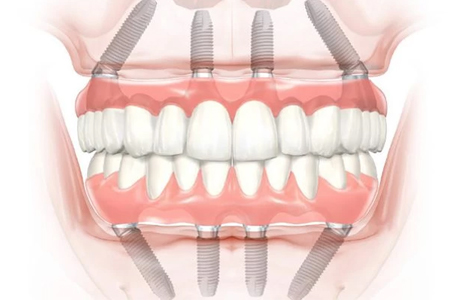
  • Number of Implants: A single tooth is often easier to adapt to than a full-arch restoration (All-on-4).
  • Position: Molars are usually forgotten faster than front teeth because they aren’t involved as much in speech or the “aesthetic” check in the mirror.

The Stavya Standard

We don’t just place implants; we ensure they fit your life. Our precision-guided surgery and custom-milled crowns are designed to minimize the adjustment period, getting you back to a natural, confident smile as quickly as possible.
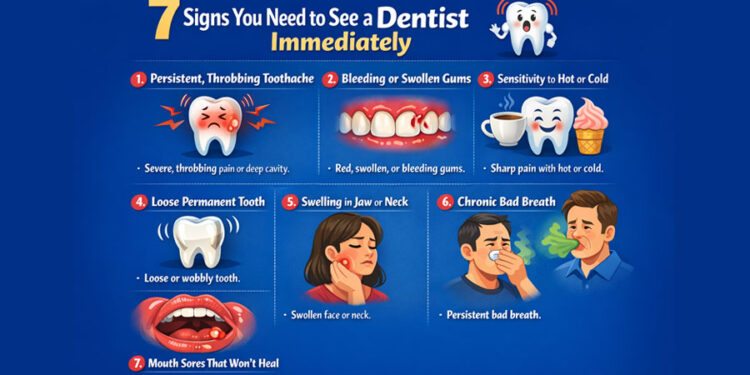
7 signs you need to see a dentist immediately.

In the world of oral health, “waiting until it hurts” is often a recipe for more complex and expensive treatments. While some dental issues can wait for a scheduled cleaning, others are your body’s way of sounding an SOS.

At Stavya Dental Clinic, we prioritize emergency care because we know that when it comes to your teeth, time is of the essence. Here are seven red flags that mean you should book an appointment today.


1. Persistent, Throbbinng Toothache

Pain is the most obvious signal that something is wrong. If you experience a sharp, constant, or “heartbeat-like” throb in your tooth, it could indicate:

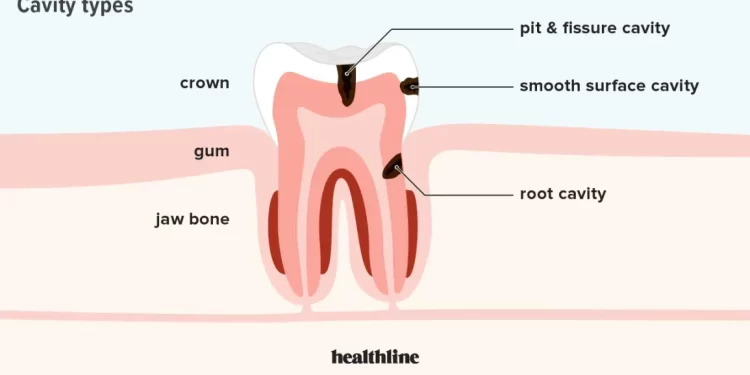
  • A deep cavity reaching the nerve.
  • An underlying infection or abscess.
  • A cracked tooth that isn’t visible to the naked eye.

2. Bleeding or Swollen Gums

While a little blood after flossing occasionally happens if you’ve been inconsistent, persistent bleeding or gums that look bright red and puffy are classic signs of periodontal (gum) disease. If left untreated, this can lead to bone loss and eventually tooth loss.

3. Sensitivity to Hot or Cold

Does a sip of hot coffee or a spoonful of ice cream send a jolt through your jaw? While some sensitivity is normal, lingering pain (lasting more than a few seconds) suggests the protective enamel has worn down or the pulp inside the tooth is inflamed.

4. A Loose Permanent Tooth

As an adult, your teeth should never feel “wiggly.” A loose tooth is a dental emergency. It could be a sign of:

  • Advanced gum disease.
  • An injury to the jaw.
  • Bone loss around the root.

Note: If a tooth is knocked out entirely, keep it moist (in milk or saliva) and get to us within 30–60 minutes for the best chance of saving it.

5. Swelling in the Jaw or Neck

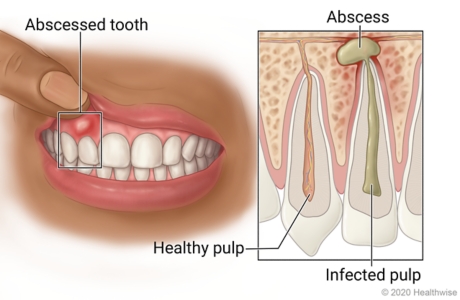
Visible swelling in your face, jaw, or the lymph nodes under your chin is a serious warning sign. This often indicates a dental abscess—an infection that can spread to other parts of your body if not drained and treated with antibiotics immediately.

6. Chronic Bad Breath (Halitosis)

If brushing, flossing, and mouthwash can’t kick the bad taste or smell in your mouth, it’s not just your lunch. Persistent bad breath is frequently caused by bacteria hiding in deep gum pockets or a hidden infection that needs professional cleaning.

7. Mouth Sores That Won’t Heal

A canker sore usually clears up in a week. If you have a sore, lump, or white/red patch in your mouth that persists for more than two weeks, it needs to be examined. While often harmless, these can sometimes be early indicators of oral cancer.


Don’t Ignore the Signs

Ignoring dental pain doesn’t make the problem go away; it usually just makes the solution more complicated. At Stavya Dental Clinic, we use advanced diagnostics to find the root cause of your discomfort and get you back to smiling comfortably.

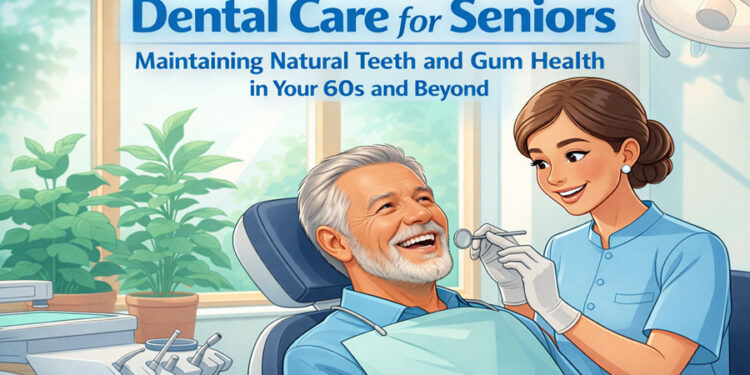
Dental Care for Seniors: Maintaining Natural Teeth and Gum Health in Your 60s and Beyond.

Entering your 60s is a milestone that brings wisdom, new chapters, and a different set of priorities for your health. While many assume that tooth loss is an inevitable part of aging, at Stavya Dental Clinic, we believe your natural smile should last a lifetime.

With the right care and modern dental techniques, maintaining healthy teeth and gums in your senior years is not just possible—it’s expected.


The Unique Challenges of the “Golden Age”

As we age, our mouths undergo physiological changes that require specialized attention. Understanding these risks is the first step toward prevention.

  • Dry Mouth (Xerostomia): Often a side effect of medications for blood pressure or cholesterol, a lack of saliva increases the risk of tooth decay and infections.
  • Receding Gums: Over time, gums may pull back, exposing the sensitive roots of the teeth which do not have protective enamel.
  • Systemic Health Links: Research continues to show a strong connection between gum disease and heart disease, diabetes, and even cognitive decline.

Essential Tips for Longevity

Maintaining your “dental fitness” doesn’t have to be complicated. Consistency is your best friend.

1. Upgrade Your Tools

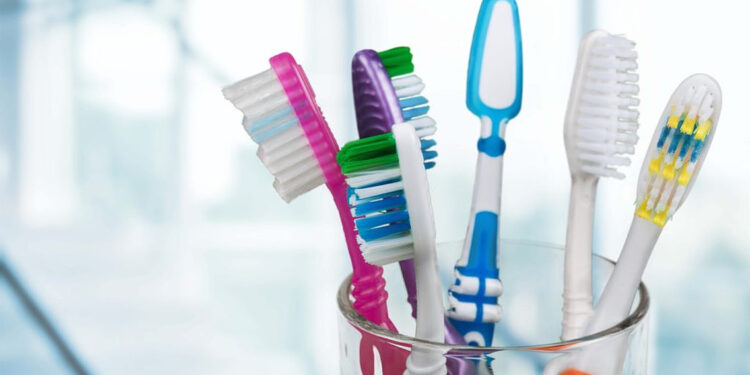
If arthritis or limited mobility makes brushing difficult, switch to an electric toothbrush. The mechanical action does the heavy lifting for you, ensuring a thorough clean without straining your joints.

2. Hydration is Key

If you suffer from dry mouth, sip water throughout the day. You can also use saliva substitutes or sugar-free lozenges to keep your mouth moist and neutralize harmful acids.

3. Don’t Ignore the Gums

Gum disease (periodontitis) is often “silent”—it doesn’t always hurt until it’s advanced. Look for redness, swelling, or bleeding during flossing.


The Importance of Professional Maintenance

At Stavya Dental Clinic, we don’t just “fix” problems; we manage your oral environment. Regular check-ups in your 60s and beyond allow us to:

  • Screen for Oral Cancer: The risk increases with age, and early detection is life-saving.
  • Professional Cleanings: We remove hardened plaque (tartar) that home brushing simply cannot reach.
  • Check Existing Restorations: Old fillings and bridges from decades ago can weaken or leak; we ensure they remain structural and safe.

Your Smile, Your Health

Your oral health is a gateway to your overall well-being. Keeping your natural teeth allows for better nutrition, clearer speech, and the confidence to keep smiling through your best years.

“A healthy mouth in your 70s and 80s isn’t just about aesthetics; it’s about the quality of life and the ability to enjoy the foods you love.” — The Stavya Team

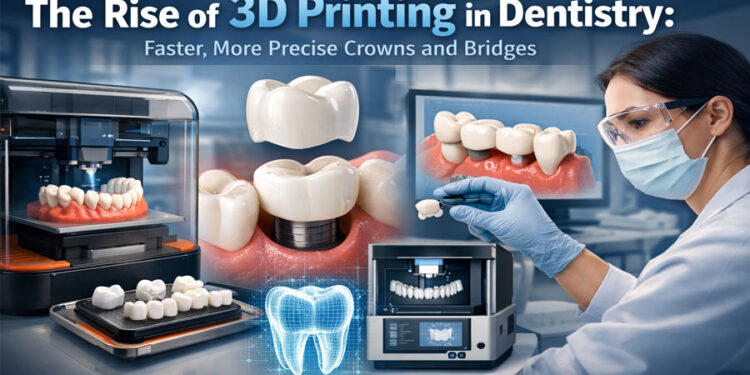
The Rise of 3D Printing in Dentistry: Faster, More Precise Crowns and Bridges.

Gone are the days when getting a crown meant biting into a mouthful of gooey putty and waiting two weeks for a dental lab to mail back your restoration. At Stavya Dental Clinic, we are witnessing a digital revolution. 3D printing—once a futuristic concept—is now the backbone of modern restorative dentistry.


From Messy Molds to Digital Perfection

The traditional process of creating bridges and crowns was often uncomfortable and prone to human error. Today, we utilize Computer-Aided Design (CAD) and Computer-Aided Manufacturing (CAM) to streamline the entire experience.

How it works:

  1. Digital Impression: We use an intraoral scanner to take a high-definition 3D map of your teeth. No putty required.
  2. Digital Design: Our team uses specialized software to design your crown or bridge with micron-level precision, ensuring it fits your bite perfectly.
  3. 3D Printing: The design is sent to a high-end dental 3D printer, which builds the restoration layer by layer using biocompatible resins or ceramics.

Why 3D Printing is a Game Changer

Why should patients care about the tech behind their smile? It comes down to three main factors:

1. Unmatched Precision

3D printers can produce geometries that are nearly impossible to achieve with traditional hand-casting. This means:

  • Better Fit: Reduced gaps between the crown and the gum line, preventing future decay.
  • Natural Feel: The anatomy of the tooth is replicated to match your existing teeth exactly.

2. Speed and Efficiency

What used to take 10 to 14 days can now often be completed in a fraction of the time. By eliminating the need to ship physical molds to external labs, we can move from “diagnosis” to “final fit” much faster.

3. Minimal Discomfort

For patients with a strong gag reflex, the digital scanning process is a massive relief. It’s quick, non-invasive, and allows you to see a 3D model of your mouth on screen in real-time.


What Can We Print?

While crowns and bridges are the most common applications, 3D printing at Stavya Dental Clinic also covers:

  • Surgical Guides: For more accurate dental implant placement.
  • Night Guards & Aligners: Custom-fit for better sleep and straighter teeth.
  • Temporary Restorations: High-strength temporaries that look and feel like the real thing.

The Stavya Commitment

At Stavya Dental Clinic, we believe that technology should serve the patient. By investing in 3D printing, we aren’t just following a trend; we are ensuring that your dental work is more durable, more comfortable, and more beautiful than ever before.

Tips for Maintaining Results After Dental Treatment

Maintaining the results of your dental treatment is essential for long-lasting oral health and a beautiful smile. Whether you’ve undergone teeth whitening, dental implants, braces, or restorative treatments, proper care afterward can preserve and even enhance your outcomes. Here are some valuable tips to help you maintain your dental treatment results:

  1. Practice Good Oral Hygiene
    Brush your teeth at least twice a day with fluoride toothpaste and floss daily to remove plaque and prevent decay or gum disease. Proper oral hygiene is fundamental to sustaining any dental treatment results.
  2. Follow Your Dentist’s Instructions
    After treatment, your dentist may provide specific care guidelines—such as avoiding certain foods, using special rinses, or scheduling follow-up visits. Adhering to these instructions ensures optimal healing and longevity of your treatment.
  3. Avoid Staining Foods and Habits
    For treatments like teeth whitening or veneers, avoid foods and beverages that can cause staining, such as coffee, tea, red wine, and tobacco products. Using a straw for drinks can help reduce direct contact with your teeth.
  4. Use a Mouthguard if Needed
    If you grind your teeth at night (bruxism) or play contact sports, wearing a custom mouthguard protects your dental work and natural teeth from damage.
  5. Attend Regular Dental Check-Ups
    Routine dental visits allow your dentist to monitor your oral health, clean your teeth professionally, and catch any issues early, helping to maintain the success of your dental treatment.
  6. Maintain a Healthy Diet
    Eating a balanced diet rich in vitamins and minerals supports strong teeth and gums. Limit sugary snacks and acidic foods that can erode enamel or undermine your dental work.
  7. Address Issues Promptly
    If you notice discomfort, looseness, or damage to your dental work, contact your dentist immediately. Early intervention can prevent more serious problems down the line.

By following these tips, you can enjoy the full benefits of your dental treatment and keep your smile healthy and radiant for years to come. If you’d like, I can also help you create detailed care guides for specific types of dental treatments.

Understanding Root Canal Treatment: Myths and Facts

Root canal treatment is a common dental procedure designed to save a tooth that is infected or severely damaged. However, it is often misunderstood, causing unnecessary fear and hesitation. Here, we clarify some of the most common myths and provide the facts to help you feel informed and confident about this treatment.

Myth 1: Root Canal Treatment Is Painful

Fact: Modern root canal treatments are no more painful than getting a routine dental filling. Advanced anesthetics and techniques help ensure the procedure is comfortable and pain-free. In fact, the treatment relieves the severe toothache caused by infection or inflammation of the tooth pulp. Most patients feel relief after the procedure rather than pain during it.

Myth 2: It’s Better to Extract the Tooth than Have a Root Canal

Fact: Saving your natural tooth is almost always the best choice. Root canal treatment preserves the tooth’s structure and function and prevents complications like shifting of adjacent teeth, bite problems, and bone loss. Extracting a tooth may lead to the need for more costly and time-consuming treatments like implants or bridges.

Myth 3: Root Canal Treatment Causes Illness Elsewhere in the Body

Fact: There is no scientific evidence linking root canal treatments to systemic diseases. This myth originated from debunked, outdated research. In reality, root canal therapy removes infection and prevents it from spreading, promoting overall health rather than causing illness.

Myth 4: Root Canals Take Multiple Painful Visits

Fact: Thanks to modern technology and expertise, many root canals are completed in a single visit lasting about 60 to 90 minutes. Some complex cases might require a second appointment, but most patients experience a quick, efficient treatment process.

Myth 5: If My Tooth Doesn’t Hurt, I Don’t Need a Root Canal

Fact: Sometimes there may be no pain, even when the tooth pulp is infected or damaged. Dentists use diagnostic tools to assess the health of the tooth pulp and recommend root canal treatment when needed, regardless of pain presence.

Myth 6: Root Canal Treatment Removes the Roots of the Tooth

Fact: The root canal procedure removes the infected pulp inside the tooth but leaves the actual roots intact. These roots anchor the tooth in place and help maintain the jawbone.


Root canal treatment today is a safe, effective, and often painless procedure that saves natural teeth and restores oral health. If you have concerns or symptoms like tooth pain or sensitivity, consult your dentist for a thorough evaluation.

Dental Implants vs. Dentures: Pros and Cons

When it comes to replacing missing teeth, dental implants and dentures are two of the most common solutions. Each option has its own set of advantages and disadvantages depending on your oral health, lifestyle, and budget. Understanding these factors can help you make the best decision for your smile.

What Are Dental Implants?

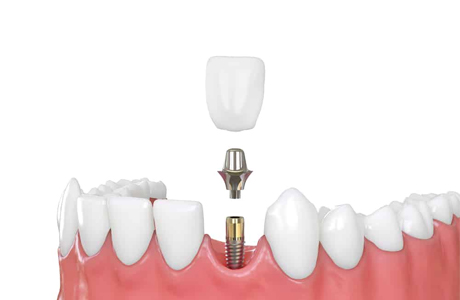
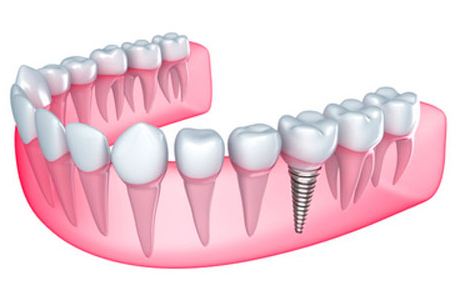
Dental implants are titanium posts surgically inserted into the jawbone to serve as artificial roots for replacement teeth. A crown is then attached to the implant post, offering a permanent and natural-looking solution that functions like real teeth.

What Are Dentures?

Dentures are removable prosthetic teeth, either full or partial, that rest on the gums. They can replace an entire row of teeth or just a few missing ones. Dentures are generally more affordable and less invasive but require different maintenance.


Pros of Dental Implants

  • Durability and Longevity: Implants can last 15-25 years or even a lifetime with proper care, making them a long-term solution.
  • Natural Look and Feel: Because implants fuse with the jawbone, they look, feel, and function like natural teeth.
  • Bone Preservation: Implants stimulate the jawbone and prevent bone loss, maintaining your facial structure.
  • Comfort and Stability: Implants are fixed, so they do not slip or move when eating or speaking.
  • Low Maintenance: Caring for implants is like caring for natural teeth—regular brushing, flossing, and dental visits.

Cons of Dental Implants

  • Higher Initial Cost: They tend to be more expensive upfront compared to dentures.
  • Surgical Procedure: The process requires surgery and sufficient bone density for implant placement.
  • Healing Time: The full process can take several months for the implant to integrate with the bone.

Pros of Dentures

  • Cost-Effective: Dentures are generally more affordable initially.
  • Non-Invasive: Fitting dentures does not require surgery, which is ideal for patients unable to undergo surgical procedures.
  • Customizable: Dentures can be made to fit even when there is significant bone loss.
  • Quick Solution: Dentures can be fabricated and fitted in a shorter time.

Cons of Dentures

  • Less Stability: Dentures can slip or move, which may cause discomfort or difficulties in speaking and eating.
  • Bone Loss: Dentures do not prevent jawbone deterioration, which may change the shape of your face over time.
  • Maintenance: Dentures require daily cleaning and must be removed at night. They may also require adhesives.
  • Replacement and Adjustment: Dentures typically need replacement or refitting every 5-10 years as the bone changes.

Summary Comparison

FeatureDental ImplantsDentures
DurabilityLong-lasting (15+ years or lifetime)Needs replacement every 5-10 years
StabilityFixed, very stableCan slip or move
AppearanceNatural look and feelNatural-looking but may be less durable fit
Bone HealthPrevents bone lossDoes not prevent bone loss
CostHigher initial cost but potentially more cost-effective long-termLower initial cost but ongoing maintenance costs
MaintenanceSimilar to natural teethRequires daily cleaning and adhesives
ProcedureSurgical, longer healing timeNon-surgical, quicker fitting

Conclusion

Dental implants offer a more permanent, comfortable, and natural-feeling solution for tooth replacement, with benefits like bone preservation and low maintenance. However, they come with a higher upfront cost and require surgery.

Dentures provide a less expensive and non-invasive option, suitable for those who may not qualify for implants due to bone loss or health concerns. They require more upkeep and periodic replacement.

Consulting with your dentist can help you evaluate your oral health, lifestyle, and budget to decide which option best suits your needs.

How to Choose the Right Dental Treatment for Your Needs

Selecting the appropriate dental treatment is essential for maintaining both your oral health and overall well-being. With numerous treatment options available, making an informed decision can seem overwhelming. Here’s a guide to help you choose the right dental treatment tailored to your specific needs.

  1. Assess Your Dental Health
    Begin by understanding your current dental condition. Regular dental check-ups and X-rays provide valuable insights into issues such as cavities, gum disease, tooth alignment, and missing teeth. Knowing the status of your oral health allows you and your dentist to identify the necessary treatments.
  2. Define Your Treatment Goals
    Consider what you want to achieve: Are you looking to improve aesthetics, alleviate pain, restore function, or prevent future problems? Whether it’s teeth whitening, fillings, root canal therapy, or dental implants, your goals will guide the choice of treatment.
  3. Consult with a Qualified Dentist
    A professional evaluation is crucial. Dentists can recommend treatments based on your health, preferences, and budget. They will explain the benefits, risks, duration, and costs associated with each option, helping you make a balanced decision.
  4. Consider Minimally Invasive Options
    Whenever possible, opt for treatments that preserve natural tooth structure and are less invasive. Modern dentistry offers many such options that provide effective results with quicker recovery times.
  5. Evaluate Costs and Insurance Coverage
    Dental treatments vary widely in cost. Review your dental insurance plan to understand what procedures are covered. Discuss payment plans or financing options with your dental office if needed.
  6. Think About Longevity and Maintenance
    Some treatments require more upkeep or may need replacement over time. For example, dental crowns and implants have different lifespans and care requirements compared to fillings or bonding. Choose treatments aligning with your lifestyle and willingness to maintain them.
  7. Prioritize Comfort and Convenience
    Ask about the procedure length, number of visits, and potential discomfort. Treatments that fit your schedule and tolerance for dental visits can reduce anxiety and improve your experience.

Choosing the right dental treatment involves a balanced approach of professional guidance, personal goals, and practical considerations. With the right information and support, you can achieve optimal oral health and a smile that feels good and functions well.

Advances in Cosmetic Dentistry: Transform Your Smile

Cosmetic dentistry has witnessed remarkable advancements in recent years, offering innovative solutions that can dramatically transform your smile and boost your confidence. Modern techniques and technologies provide effective, minimally invasive, and long-lasting results tailored to individual needs.

One of the key advances is the development of dental veneers, which are ultra-thin shells crafted from porcelain or composite resin that cover the front surface of teeth. Veneers can correct a range of issues including discoloration, chips, gaps, and minor misalignments, creating a natural and aesthetically pleasing appearance.

Teeth whitening procedures have also become more sophisticated, with options like laser whitening and custom-fitted trays delivering faster, safer, and more enduring results. These treatments effectively remove stains caused by food, drinks, or smoking, brightening your smile by several shades.

Dental bonding is another popular technique where tooth-colored resin is applied to repair minor imperfections such as cracks or discoloration. This procedure is quick, painless, and cost-effective while providing a significant cosmetic improvement.

For those with missing teeth, dental implants offer a revolutionary alternative to traditional dentures. Implants are titanium posts surgically inserted into the jawbone, serving as sturdy anchors for replacement teeth that look and function like natural teeth.

Digital technology has also enhanced treatment planning and execution. Digital smile design allows dentists to create 3D models and simulations, enabling patients to visualize results before treatment begins. Additionally, CAD/CAM technology facilitates the creation of precise dental restorations in a single visit.

Overall, advances in cosmetic dentistry enable personalized treatments that not only improve aesthetics but also enhance oral health and function. Consulting with a qualified cosmetic dentist can help you explore the best options to achieve a radiant, confident smile.

Common Dental Treatments: What to Expect at Your Dentist Visit

Visiting the dentist is an essential part of maintaining your overall health, and understanding the most common procedures can help ease any anxiety you might have. Here is a breakdown of what you can expect from some of the most frequent dental treatments.


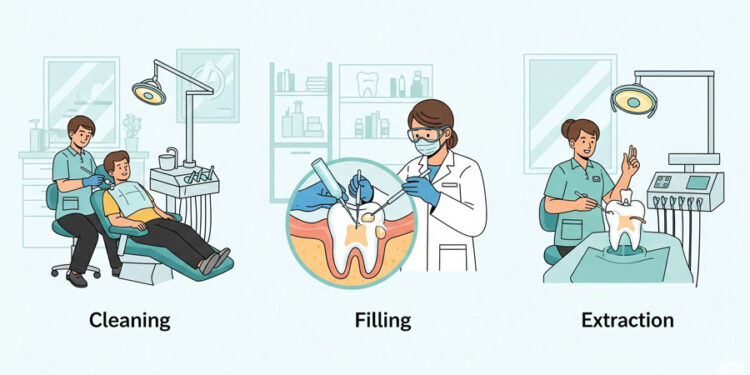
1. Regular Check-up and Cleaning

This is the most common reason for a dental visit, and it is crucial for preventative care.

  • The Exam: Your dentist will first conduct a thorough examination of your mouth, looking for signs of cavities, gum disease, and other oral health issues. They may also take X-rays to see what’s happening beneath the surface of your teeth and gums.
  • The Cleaning: A dental hygienist will use specialized tools to remove plaque and tartar (hardened plaque) from your teeth, both above and below the gum line. They will then polish your teeth with a gritty paste to remove surface stains and finish by flossing between your teeth.
  • What to Expect: The cleaning may involve some scraping sounds and a bit of pressure, but it should not be painful. The polishing feels similar to a thorough brushing. The entire process typically takes about 30 to 60 minutes.

2. Fillings

Fillings are used to repair a tooth that has been damaged by decay (a cavity) or minor fractures.

  • What It Involves: First, the dentist will numb the area around the tooth with a local anesthetic to ensure you don’t feel any pain. They will then use a drill to remove the decayed portion of the tooth. Once the decay is gone, the dentist will fill the space with a restorative material, such as composite (tooth-colored) or amalgam (silver-colored).
  • What to Expect: You will feel a small pinch from the numbing injection, followed by a sensation of pressure or vibration as the dentist works. The numbness will wear off within a few hours.

3. Root Canal Therapy

This procedure is performed to save a tooth that is severely infected or decayed to the point that the pulp (the soft tissue inside the tooth) is affected.

  • What It Involves: After numbing the area, the dentist makes an opening in the crown of the tooth to access the infected pulp. They will then carefully remove the infected tissue, clean and shape the inside of the tooth, and fill the space with a sterile, rubber-like material. The tooth is then sealed. In most cases, a crown will be placed over the tooth later to protect it.
  • What to Expect: Despite its reputation, a root canal is not a painful procedure. The anesthetic ensures you are comfortable throughout the treatment. You may experience some soreness for a few days afterward, but this can be managed with over-the-counter pain medication.

4. Crowns

A crown is a custom-made cap that fits over a damaged or weakened tooth to restore its shape, size, strength, and appearance.

  • What It Involves: This procedure typically requires two visits. During the first visit, the dentist will prepare the tooth by reshaping it to make room for the crown. They will then take an impression of your tooth, which is sent to a lab to create the permanent crown. A temporary crown is placed to protect the tooth. During the second visit, the temporary crown is removed, and the permanent one is cemented into place.
  • What to Expect: You’ll receive a local anesthetic for both visits. The process is straightforward, and the temporary crown will feel a bit different but allows you to continue eating and brushing normally until the permanent crown is ready.

5. Tooth Extractions

A tooth extraction is the removal of a tooth. This is done when a tooth is too damaged to be saved by other treatments, or for orthodontic reasons.

  • What It Involves: The dentist will first numb the area. Then, using special tools, they will carefully and gently loosen the tooth and remove it. They will then provide you with instructions on how to care for the extraction site.
  • What to Expect: You should not feel any sharp pain during the procedure, only a feeling of pressure. Afterward, you will need to follow your dentist’s post-operative instructions carefully to ensure proper healing and avoid complications.

Open communication is key to a comfortable dental visit. Don’t hesitate to ask your dentist questions about any procedure you are undergoing.

How can I prevent cavities in toddler teeth

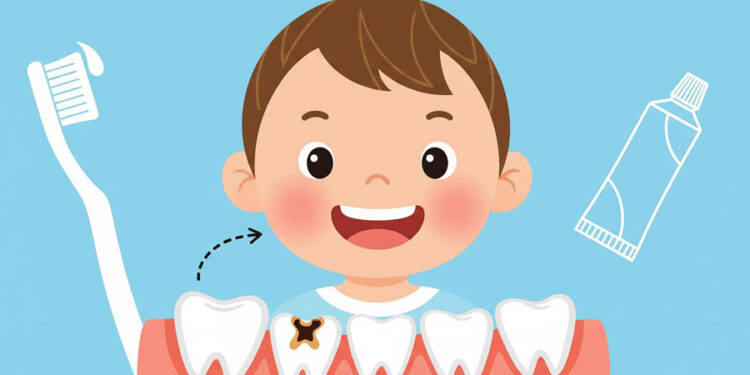
To prevent cavities in toddler teeth, follow these expert strategies:

  • Brush Twice Daily with Fluoride Toothpaste: Start brushing your child’s teeth as soon as the first tooth appears, using a tiny smear (grain of rice size) of fluoride toothpaste for children under 3, and a pea-sized amount for those 3 and older. Brush at least twice daily, especially before bedtime, and supervise brushing to ensure proper technique. Avoid rinsing after brushing to let the fluoride remain on the teeth.
  • Practice Flossing: Begin flossing when two teeth touch; plaque can hide between teeth where a brush cannot reach.
  • Limit Sugary Foods and Drinks: Offer healthy snacks that are low in sugar and avoid sticky candies, juices, and sweetened beverages. If your child drinks juice, restrict it to mealtimes and no more than 4 ounces a day. Water is the best drink between meals to rinse food particles away.
  • No Bottles in Bed: Never put your toddler to sleep with a bottle of milk, juice, or any sweetened drink as it increases the risk of “baby bottle tooth decay.” If your child needs a bottle, fill it with water only.
  • Avoid Grazing: Do not let your child snack or sip drinks (other than water) frequently throughout the day, as this creates a constant sugar supply for cavity-causing bacteria.
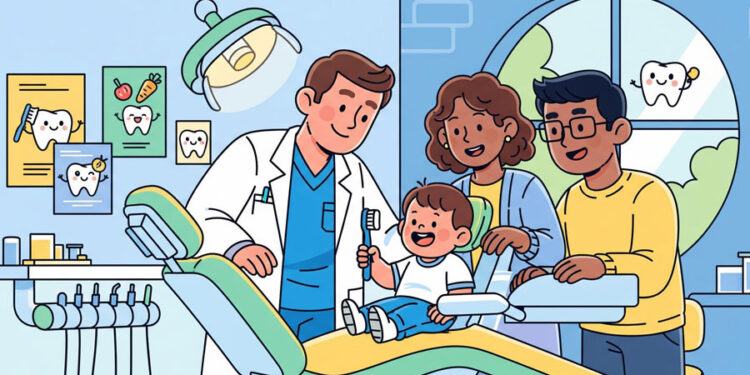
  • Early Dental Visits: Schedule the first dental check-up by your child’s first birthday or within 6 months after the first tooth erupts. Regular visits help catch any issues early and give access to preventive fluoride treatments and advice.
  • Fluoride Protection: Ensure your child gets fluoride, either through toothpaste, drinking water, supplements, or professional applications if your community water is not fluoridated.
  • Dental Sealants: Ask your dentist about sealants, which are protective coatings applied to back teeth to shield against decay.
  • No Sharing Utensils: Avoid sharing spoons, cups, or cleaning pacifiers with your mouth to prevent the spread of cavity-causing bacteria.

These habits lay the foundation for a healthy mouth and reduce the risk of cavities for your toddler now and as they grow.

Dental Care for Children & Families

Maintaining good oral health is essential for the entire family, but particularly important for children, as healthy habits formed early can last a lifetime. Here’s a guide to dental care for children and families in 2025:

Oral Hygiene Habits for Children

  • Begin Early: Start cleaning your baby’s gums with a soft, damp cloth even before their first tooth appears. Once teeth emerge (usually around 6 months), switch to a soft-bristled, age-appropriate toothbrush with just a smear of fluoride toothpaste.
  • Supervised Brushing: Young children need help brushing and flossing until they have the dexterity to do it themselves—usually around ages 7 to 8. Use a rice-sized smear of fluoride toothpaste for children under 3, and a pea-sized amount for children ages 3 and up.
  • Brush and Floss Daily: Brush teeth twice a day for at least 2 minutes each time. Floss once a day as soon as two teeth touch.

Making Dental Care Fun

  • Use colorful brushes, songs, and timers to make brushing engaging.
  • Supervise and guide their hand to ensure effective cleaning.
  • Lead by example—let your children see the whole family brushing and flossing together.

Healthy Diet for Strong Teeth

  • Limit sugary snacks and drinks; choose tooth-friendly snacks like cheese, yogurt, fruit, and crunchy vegetables.
  • Encourage drinking water, especially after eating, to rinse away food particles.

Regular Dental Visits and Professional Care

  • Timing: The first dental visit should occur by the age of 1, or within six months of the first tooth coming in.
  • Frequency: Schedule check-ups every six months, or as recommended by your dentist, for cleanings, fluoride treatments, and monitoring development.
  • Fluoride: Ensure children use fluoride toothpaste and consider professional fluoride treatments for extra protection, especially if your water supply is not fluoridated.

Extra Tips for the Whole Family

  • Replace toothbrushes every 3–4 months, or sooner if bristles are frayed.
  • Use antibacterial mouthwash as an extra preventive step for older children and adults.
  • If your child plays contact sports, ask your dentist about mouthguards to prevent injuries.

Building Lifelong Healthy Habits

  • Consistency is key: Make oral hygiene part of the family routine by brushing and flossing at the same time each day.
  • Educate: Talk openly about the importance of oral health and teach kids why dental care matters.

By taking these steps and working closely with your family dentist, you can ensure healthy smiles for everyone in your family—now and for years to come.

Treatments for Sensitive Teeth – Causes and Solutions

Sensitive teeth can result from several underlying issues:

  • Worn enamel: Over-brushing, abrasive toothpaste, or acidic foods and drinks can wear down tooth enamel, exposing the sensitive dentin underneath.
  • Gum recession: Age, gum disease, or aggressive brushing can cause gums to recede, leaving tooth roots exposed and sensitive.
  • Tooth decay or damage: Cavities, cracked or chipped teeth allow outside stimuli to reach nerves inside the tooth.
  • Teeth grinding: Habitual grinding or clenching of teeth can erode surfaces and lead to sensitivity.
  • Recent dental procedures: Treatments like whitening or professional cleanings may temporarily increase sensitivity

Solutions for Tooth Sensitivity

1. Desensitizing Toothpaste

  • Formulated with compounds like potassium nitrate or arginine, these block pain signals to nerves inside teeth. Use twice daily, applying directly onto sensitive areas for several weeks to see improvement.

2. Fluoride Treatments

  • Professional fluoride gels, varnishes, or rinses strengthen enamel and reduce pain. Available both in-clinic and as at-home rinses. Regular use improves overall protection.

3. Dental Sealants and Bonding

  • Dentists can apply sealants (protective coatings) to vulnerable areas or use tooth-colored resin to cover exposed roots, cracks, or worn enamel. This provides a barrier that alleviates sensitivity.

4. Gum Grafting

  • For severe gum recession, a gum graft uses tissue from another part of your mouth to cover exposed roots, treating the underlying cause.

5. Root Canal Treatment

  • In extreme cases of pain or if nerve damage is present, a root canal may be necessary to remove the affected nerve tissue and permanently resolve sensitivity.

6. Lifestyle Changes

  • Switch to a soft-bristled toothbrush and gentle brushing technique to protect enamel.
  • Avoid acidic foods and drinks (citrus, sodas), which can aggravate sensitivity.
  • Limit use of over-the-counter whitening products, as they may increase discomfort.

7. Home Remedies

  • Rinsing with saltwater for inflammation relief, oil pulling, and using clove oil for temporary pain relief are often recommended, but professional evaluation is best for persistent symptoms.

Advanced Options

  • Laser therapy: Lasers are sometimes used to seal dentinal tubules and reduce nerve sensitivity, with mixed clinical evidence.
  • Cervical restorations: Glass ionomer restorations are favored for their fluoride release and bonding properties, providing long-term results for severe cases.
  • Remember: Surgical options (like gum grafts or advanced laser therapy) are reserved for cases where other methods have failed.

If sensitivity lasts more than a few days or impacts daily activities, it’s advisable to consult a dentist for diagnosis and tailored treatment. Proper care and timely intervention will help restore comfort and enjoyment while protecting long-term oral health.

What to Expect During a Root Canal Treatment

If your dentist has recommended a root canal treatment, you might be feeling anxious or uncertain about what the procedure entails. Understanding the steps involved can help ease your worries and prepare you for what to expect during this common and effective dental procedure.

What is a Root Canal Treatment?

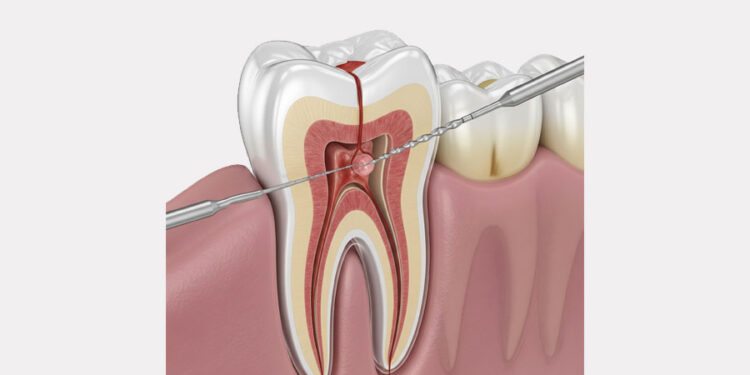
A root canal treatment is designed to save a tooth that has become infected or badly damaged in its inner pulp — the soft tissue containing nerves and blood vessels. Instead of extracting the tooth, the dentist removes the infected pulp, cleans and disinfects the root canals, then fills and seals the space to prevent future infection.

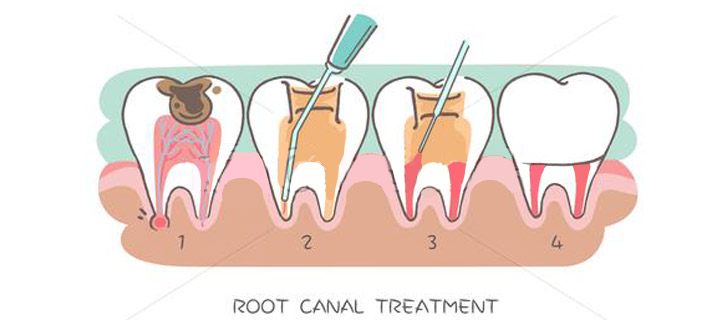
Step-by-Step Process of a Root Canal

  1. Initial Examination and X-rays
    Your dentist will take X-rays to examine the extent of decay or infection and to see the shape of the root canals. This helps plan the treatment accurately.
  2. Local Anesthesia
    To ensure you feel no pain, a local anesthetic is administered to numb the tooth and surrounding gum tissue. In some cases where the tooth is dead, anesthesia may not even be necessary.
  3. Isolation of the Tooth
    A rubber sheet called a dental dam will be placed around your tooth to keep it dry and free from saliva during the procedure. It also prevents any materials from falling into your mouth.
  4. Access Opening
    The dentist will drill a small opening through the crown (top surface) of your tooth to access the infected pulp chamber and root canals.
  5. Removing the Infected Pulp
    Using special tiny files, the dentist gently removes the infected or dead pulp tissue, cleaning out the canals thoroughly.
  6. Cleaning and Shaping the Canals
    The canals are cleaned and shaped progressively with smaller files to create a smooth, regular pathway. Disinfecting solutions are used to flush out any remaining bacteria.
  7. Filling the Root Canals
    Once cleaned and dried, the canals are filled with a biocompatible material called gutta-percha, sealing the canals to protect against reinfection.
  8. Temporary Filling and Tooth Restoration
    A temporary filling seals the access hole initially. Later, during a follow-up visit, the temporary filling is removed, and a permanent restoration such as a crown may be placed to strengthen and protect the tooth.

How Long Does It Take?

The treatment usually requires two or more appointments, especially if the infection is severe. Some cases may be completed in a single visit.

What Happens After Treatment?

You might experience some mild tenderness or discomfort for a few days, which can be managed with over-the-counter pain medications. Maintaining good oral hygiene and following your dentist’s advice will help you heal quickly.

Why is Root Canal Treatment Important?

Root canal therapy saves your natural tooth, helping you maintain normal chewing, prevent jawbone deterioration, and preserve your smile.

Dental Crowns vs. Bridges: Which Option is Right for You?

Missing or damaged teeth can significantly impact your smile, your ability to chew comfortably, and even your overall oral health. Thankfully, modern dentistry offers excellent solutions to restore your smile and confidence. Two of the most common and effective options are dental crowns and dental bridges.

While both serve to improve the function and aesthetics of your teeth, they address different issues and are suitable for different situations. Understanding the differences between them can help you make an informed decision with your dentist.

Let’s dive into the specifics of dental crowns and dental bridges to help you determine which might be the best choice for your unique needs.

What is a Dental Crown?

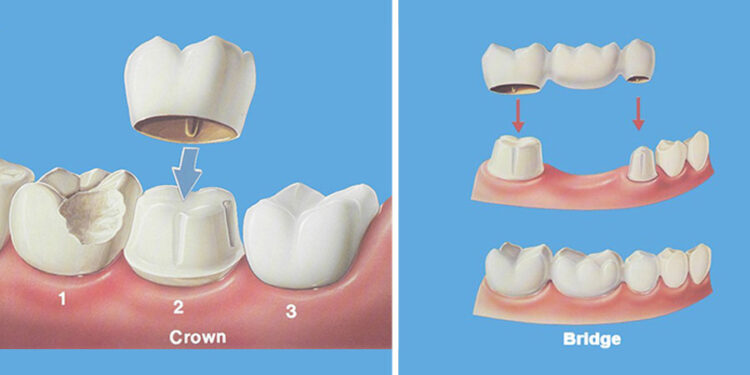
A dental crown is essentially a custom-made “cap” that is placed over a damaged or weakened tooth. It completely covers the visible part of the tooth, from the gum line up, restoring its shape, size, strength, and appearance.

When is a Dental Crown Recommended?

Dental crowns are a versatile solution for a variety of dental problems, including:

  • Protecting a weak tooth from breaking (e.g., a tooth with a large filling)
  • Restoring an already broken tooth or a tooth that has been severely worn down
  • Covering and supporting a tooth with a large filling when there isn’t much tooth structure left
  • Holding a dental bridge in place (in this case, the crown serves as an anchor)
  • Covering misshapen or severely discolored teeth for cosmetic improvement
  • Covering a dental implant

Types of Dental Crowns:

Crowns can be made from various materials, each with its own advantages:

  • Porcelain or Ceramic: Popular for their natural tooth-like appearance, ideal for front teeth.
  • Porcelain Fused to Metal (PFM): Offers good strength and aesthetics.
  • Gold Alloys: Highly durable and biocompatible, often used for back teeth where aesthetics are less of a concern.
  • Base Metal Alloys: Very strong and resistant to corrosion.
  • Zirconia: Known for its exceptional strength and good aesthetics, a popular modern choice.

The choice of material will depend on the tooth’s location, your bite, and your aesthetic preferences.

What is a Dental Bridge?

A dental bridge is a prosthetic device used to bridge the gap created by one or more missing teeth. It typically consists of an artificial tooth (or teeth) called a “pontic,” which is held in place by dental crowns placed on the natural teeth on either side of the gap. These anchoring teeth are called “abutment teeth.”

When is a Dental Bridge Recommended?

Dental bridges are an excellent option when you have:

  • One or more missing teeth in a row
  • Healthy adjacent teeth that can support the bridge

Benefits of Dental Bridges:

  • Restores your smile: Fills the unsightly gap.
  • Restores your ability to chew and speak properly: Missing teeth can affect both.
  • Maintains facial shape: Prevents the sunken appearance that can occur with tooth loss.
  • Distributes the forces in your bite: Prevents adjacent teeth from shifting into the empty space.
  • Prevents remaining teeth from drifting out of position: This helps avoid further dental problems.

Types of Dental Bridges:

  • Traditional Bridges: The most common type, involving crowns on the adjacent natural teeth to support the pontic.
  • Cantilever Bridges: Used when there are only healthy teeth on one side of the gap. Less common due to less support.
  • Maryland Bonded Bridges (Resin-Bonded Bridges): Use metal or porcelain wings bonded to the back of adjacent teeth. Ideal for front teeth where there’s less biting force.

Dental Crowns vs. Bridges: Key Differences

FeatureDental CrownDental Bridge
PurposeRepairs and strengthens a single damaged toothReplaces one or more missing teeth
Tooth StatusApplied to an existing toothSpans a gap where teeth are absent
AnchoringCaps an individual toothAnchored by crowns on adjacent natural teeth
Number of TeethOne tooth treated per crownReplaces 1-3 (sometimes more) missing teeth in a row
PreparationTooth is reshaped to fit the crownAbutment teeth are reshaped to fit crowns

Export to Sheets

Which Option is Right for You?

The best solution for your smile depends on several factors:

  • Number of missing teeth: If you have a single damaged tooth, a crown is likely. If you have missing teeth, a bridge (or implant) is considered.
  • Condition of surrounding teeth: For a bridge, the adjacent teeth must be healthy and strong enough to support the prosthetic.
  • Overall oral health: Your gums and remaining teeth need to be healthy.
  • Budget: Costs can vary between the two procedures and material choices.
  • Personal preference and long-term goals: Your lifestyle and desired outcome play a role.

For a single damaged or weakened tooth: A dental crown is generally the ideal choice to restore its strength, function, and appearance.

For one or more missing teeth with healthy adjacent teeth: A dental bridge can effectively fill the gap, restore chewing ability, and prevent shifting of remaining teeth.

A note on Dental Implants: While this post focuses on crowns and bridges, it’s important to mention dental implants as a gold standard for replacing missing teeth. Implants are surgically placed into the jawbone, providing a highly stable and long-lasting foundation for a single crown or to support a bridge, without impacting adjacent healthy teeth. We can discuss this option in more detail during your consultation.

Schedule Your Consultation Today!

Choosing between a dental crown and a dental bridge is a decision best made in consultation with an experienced dental professional. At Stavya Dental Clinic, we are dedicated to helping you achieve and maintain a healthy, beautiful smile.

How Does Invisalign Actually Work?

How Does Invisalign Actually Work? Your Clear Path to a Straighter Smile

You’ve heard the buzz about Invisalign – the “invisible” way to straighten teeth without traditional braces. But if you’re wondering, “How does it actually work?” you’re not alone! It might seem like magic, but it’s a sophisticated, yet surprisingly simple, process rooted in advanced dental technology.

Let’s pull back the curtain and demystify the journey to your new smile.

The Core Concept: Gentle, Precise Pressure

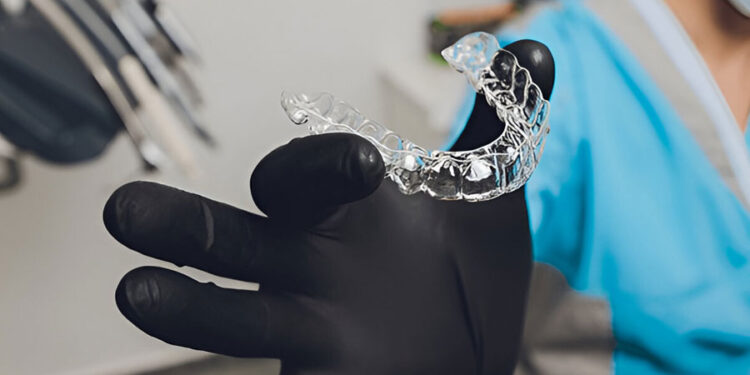
At its heart, Invisalign works on the same principle as traditional braces: applying gentle, continuous pressure to gradually shift your teeth into their desired positions. The key difference? Instead of wires and brackets, Invisalign uses a series of custom-made, clear, removable plastic aligners.

Step 1: Your Personalized Smile Scan & Consultation

Your Invisalign journey begins with a comprehensive consultation with your orthodontist. This isn’t just a chat; it’s where the magic starts!

  • Detailed Examination: Your orthodontist will assess your bite, jaw alignment, and the current position of your teeth.
  • 3D Digital Scan: Forget messy impressions! Most modern Invisalign providers use an iTero Element scanner to create a precise 3D digital model of your teeth and gums. This scan is incredibly accurate and forms the foundation of your entire treatment plan.
  • Discussion of Goals: You’ll discuss your smile goals and what you hope to achieve.

Step 2: The Power of the Plan – Your Custom Treatment Journey

This is where Invisalign’s advanced technology truly shines:

  • ClinCheck® Software: Using the 3D scan, your orthodontist will use special Invisalign software called ClinCheck. This software allows them to meticulously plan each tooth’s movement, from its current position to its ideal final alignment.
  • Virtual Preview: You’ll even get to see a virtual, animated preview of your smile’s transformation, from start to finish! This allows you to visualize the expected outcome before you even begin treatment.
  • Series of Aligners: Based on this detailed plan, a series of custom aligners are then fabricated specifically for your teeth. Each aligner in the series is slightly different, designed to move your teeth in small, precise increments.

Step 3: Wearing Your Aligners – Consistency is Key!

Once your custom aligners arrive, your active treatment begins:

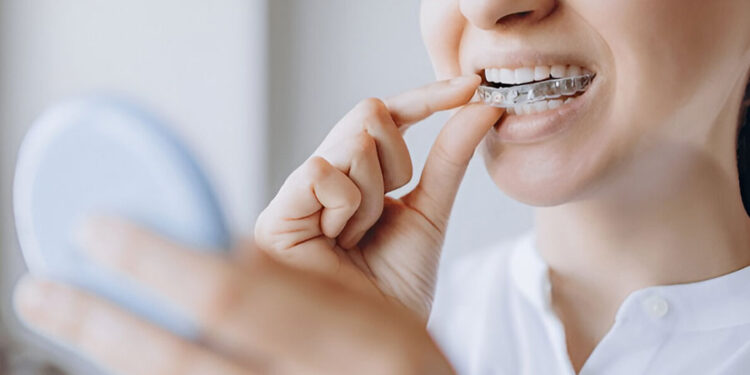
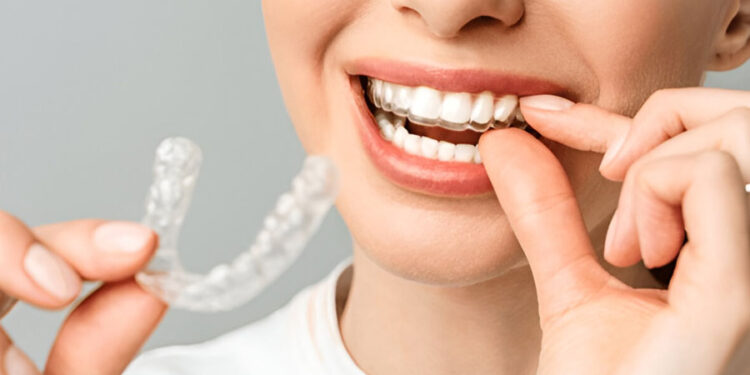
  • Daily Wear: You’ll wear each set of aligners for 20 to 22 hours per day, removing them only to eat, drink anything other than water, brush, and floss.
  • Scheduled Changes: Typically, you’ll switch to a new set of aligners every one to two weeks, as directed by your orthodontist. Each new set continues the gentle pressure, moving your teeth closer to their planned positions.
  • Attachments (Sometimes Needed): For more complex movements, small, tooth-colored “attachments” might be bonded to certain teeth. These act as tiny anchors or handles for the aligners to grip, making specific movements more efficient. They are virtually invisible and removed easily at the end of treatment.

Step 4: Regular Check-ups & Progress Monitoring

You’ll have periodic check-ups with your orthodontist, usually every 6-8 weeks. These appointments are quick and allow your doctor to:

  • Monitor your progress.
  • Ensure your treatment is tracking as planned.
  • Provide you with your next sets of aligners.

Step 5: The Grand Reveal & Retainers

Once you’ve worn all your aligners and your teeth have reached their final positions, your treatment is complete! But the journey doesn’t quite end there.

  • Retainers: To maintain your beautiful new smile and prevent your teeth from shifting back, you’ll need to wear Vivera® retainers (or another type of retainer) as prescribed by your orthodontist. This is a crucial step to ensure your results last a lifetime.

Why Does This Method Appeal to So Many?

  • Virtually Invisible: The clear aligners are very discreet, making them popular for adults and teens.
  • Removable: You can eat what you want and brush/floss normally.
  • Comfortable: No wires or brackets to poke or irritate your mouth.
  • Predictable: The 3D planning allows for a high degree of predictability in results.

Invisalign isn’t just about clear plastic; it’s about precise engineering, advanced technology, and a custom-tailored approach to transform your smile effectively and comfortably.

What is Invisalign Treatment?

1. What is Invisalign? (The Basics)

  • Clear and Simple Explanation: Start by defining Invisalign as a modern orthodontic treatment that uses a series of clear, custom-made aligners to gradually straighten teeth. Emphasize that they are a discreet alternative to traditional metal braces.
  • How it Works: Briefly explain the process: a consultation with an orthodontist, 3D digital scans of the teeth, the creation of a personalized treatment plan, and the fabrication of a series of aligners. Mention that each set of aligners is worn for a specific period (usually 1-2 weeks) before moving to the next set in the series.
  • Key Advantages Highlighted: Immediately point out the main benefits that attract people to Invisalign, such as their near invisibility, removability, and often more comfortable treatment experience compared to traditional braces.

2. Why Choose Invisalign? (The Benefits in Detail)

  • Aesthetics: Elaborate on the “invisible” aspect. Discuss how they are less noticeable than metal braces, boosting confidence during treatment, especially for adults and teenagers concerned about their appearance.
  • Comfort: Explain that Invisalign aligners are made of smooth plastic, which minimizes irritation to the cheeks and gums, unlike the wires and brackets of traditional braces.
  • Removability: Emphasize the convenience of being able to remove the aligners for eating, brushing, and flossing. This allows for a normal diet without restrictions and makes maintaining good oral hygiene much easier, reducing the risk of cavities and gum disease during treatment.
  • Predictable Treatment: Mention the use of 3D digital imaging technology, which allows orthodontists to create a precise treatment plan and even show patients a virtual representation of their expected results before starting.
  • Fewer Orthodontist Visits: While regular check-ups are still necessary, Invisalign often requires fewer emergency appointments compared to traditional braces, as there are no wires to break or brackets to come loose.

3. The Invisalign Treatment Process: What to Expect

  • Initial Consultation: Describe what happens during the first visit, including an examination of the teeth, discussion of treatment goals, and potentially initial scans or X-rays.
  • Creating Your Custom Treatment Plan: Explain how the 3D digital scans are used to create a detailed treatment plan, mapping out the precise movements of your teeth over time.
  • Receiving Your Aligners: Describe the delivery of the series of custom-made aligners and the instructions on how to wear and care for them.
  • Wearing Your Aligners: Detail the recommended wear time (usually 20-22 hours per day) and the importance of consistency for successful treatment.
  • Progress Checks: Explain the schedule of follow-up appointments with the orthodontist to monitor progress and receive the next sets of aligners.
  • The Refinement Process (if needed): Mention that sometimes, after the initial series of aligners, a refinement stage with additional aligners may be necessary to achieve the desired final alignment.
  • Retention: Emphasize the importance of wearing retainers after completing Invisalign treatment to maintain the new alignment of the teeth.

4. Who is a Good Candidate for Invisalign?

  • Addressing Different Malocclusions: Explain that Invisalign can treat a wide range of orthodontic issues, including:
    • Crowded teeth
    • Gaps between teeth
    • Overbite
    • Underbite
    • Crossbite  
    • Open bite
  • Age Considerations: Discuss that while often popular with adults and teens, Invisalign can also be an option for some younger patients, depending on their specific needs and dental development.
  • Importance of Consultation: Stress that the best way to determine if Invisalign is right for an individual is through a consultation with a qualified orthodontist.

5. Caring for Your Invisalign Aligners and Teeth

  • Cleaning Your Aligners: Provide instructions on how to properly clean the aligners (e.g., rinsing, using a soft toothbrush and mild soap or specialized cleaning solutions).
  • Maintaining Oral Hygiene: Remind readers of the importance of brushing and flossing their teeth regularly, especially before reinserting the aligners after eating.
  • Eating and Drinking: Advise on removing the aligners before eating or drinking anything other than water to prevent staining and damage.
  • Storing Your Aligners: Suggest using the provided case to protect the aligners when they are not being worn.
  • Avoiding Harmful Habits: Discourage chewing on the aligners or exposing them to excessive heat.

6. Invisalign vs. Traditional Braces: A Brief Comparison

  • Create a concise table or bulleted list highlighting the key differences between Invisalign and traditional metal braces in terms of:
    • Appearance
    • Comfort
    • Removability
    • Oral Hygiene
    • Dietary Restrictions
    • Treatment Duration (can vary for both)
    • Cost (can be comparable)
    • Complexity of Cases (Invisalign can now treat many complex cases)

7. The Cost of Invisalign Treatment

  • Acknowledge that the cost of Invisalign can vary depending on the complexity of the case, the length of treatment, and the location of the orthodontist.
  • Mention that many dental insurance plans offer coverage for orthodontic treatment, which may include Invisalign.
  • Suggest discussing payment options and financing plans with the orthodontist’s office.

8. Getting Started with Invisalign

  • Encourage readers to schedule a consultation with an experienced orthodontist to learn more about Invisalign and determine if it’s the right treatment option for them.
  • Suggest looking for orthodontists who are certified Invisalign providers.

Happy Maha Shivratri 2025

Maha Shivratri is a Hindu festival that celebrates the deity Shiva. It is celebrated annually in February or March. The festival is marked by fasting, meditation, and worship services. The festival commemorates the wedding of Shiva and Parvati. It also honours Shiva’s cosmic dance, the Tandava, which symbolizes the cycles of creation, preservation, and destruction. The festival symbolizes the triumph over darkness and ignorance. It encourages spiritual awakening and self-reflection. 

The Complete Guide to Invisible Aligner Maintenance: Keeping Your Smile Sparkling

Invisible aligners are a fantastic way to straighten your teeth discreetly, but maintaining them properly is crucial for a successful treatment and a healthy smile. This guide will walk you through the essential steps to keep your aligners clean, clear, and in optimal condition.

1. Daily Cleaning is Non-Negotiable:

Just like your teeth, your aligners collect bacteria and plaque throughout the day. Daily cleaning is essential to prevent odors, discoloration, and potential oral health issues.

  • Rinse After Every Removal: Immediately rinse your aligners with cool water after removing them. This helps remove saliva and food particles.
  • Gentle Brushing: Use a soft-bristled toothbrush and mild, clear soap (like fragrance-free dish soap) to gently brush your aligners. Avoid toothpaste, as it can be abrasive and scratch the plastic.
  • Never Use Hot Water: Hot water can warp the plastic, affecting the fit and effectiveness of your aligners.
  • Avoid Harsh Chemicals: Do not use bleach, mouthwash (unless specifically recommended by your orthodontist), or other harsh chemicals, as they can damage the aligners.

2. Soaking for Deeper Cleaning:

In addition to daily brushing, occasional soaking can help remove stubborn buildup and keep your aligners sparkling.

  • Orthodontic Aligner Cleaners: Your orthodontist may recommend specific aligner cleaning solutions. Follow their instructions carefully.
  • Denture Cleaning Tablets: Some people find denture cleaning tablets effective, but always check with your orthodontist first. Dissolve the tablet in cool water and soak your aligners for the recommended time.
  • Vinegar or Hydrogen Peroxide Soak (Use with Caution): A diluted solution of white vinegar (1:1 with water) or 3% hydrogen peroxide (also diluted) can help remove stubborn stains. However, these solutions can be harsh, so use them sparingly and rinse thoroughly. Consult your orthodontist before using these solutions.

3. Maintaining Optimal Oral Hygiene:

Your aligners won’t stay clean if your teeth aren’t clean.

  • Brush and Floss After Every Meal: Brush and floss thoroughly before reinserting your aligners. This prevents food particles from getting trapped between your teeth and the aligners.
  • Carry a Travel Toothbrush: If you’re on the go, carry a travel toothbrush and toothpaste to maintain your oral hygiene.
  • Mouthwash (Use with Caution): If you use mouthwash, ensure it’s alcohol-free and won’t stain your aligners. Consult your orthodontist for recommendations.

4. Proper Storage is Key:

When you’re not wearing your aligners, store them in their case to prevent damage or loss.

  • Use Your Aligner Case: Always store your aligners in their designated case when not in use.
  • Keep Away from Heat: Avoid leaving your aligners in hot environments, such as a car on a sunny day, as this can warp them.
  • Keep Away from Pets: Pets can mistake your aligners for toys, so keep them out of reach.

5. Handling Discoloration:

Despite your best efforts, aligners may become discolored over time.

  • Minimize Staining Foods and Drinks: Avoid staining foods and drinks like coffee, tea, red wine, and dark sauces while wearing your aligners.
  • Clean Immediately After Consumption: If you do consume staining substances, remove and clean your aligners immediately.
  • Consult Your Orthodontist: If you notice significant discoloration, consult your orthodontist for advice.

6. Regular Check-ups:

Regular check-ups with your orthodontist are essential for monitoring your progress and ensuring your aligners are functioning correctly.

  • Follow Your Orthodontist’s Schedule: Attend all scheduled appointments.
  • Report Any Issues: If you experience any discomfort or damage to your aligners, contact your orthodontist immediately.

By following these guidelines, you can maintain your invisible aligners effectively, ensuring a comfortable and successful treatment journey. A clean and well-maintained aligner will help you achieve the sparkling, straight smile you desire.

How Invisible Braces Work: The Science Behind the Smile

Invisible braces, or clear aligners, have revolutionized orthodontics, offering a discreet and comfortable way to achieve a straighter smile. But how exactly do these transparent trays move teeth? Let’s delve into the science behind the smile transformation.  

The Foundation: Customization and Digital Planning

The magic of invisible braces lies in their precise customization. Unlike traditional braces, which use brackets and wires, invisible aligners are created using advanced 3D imaging technology. This technology allows orthodontists to create a detailed digital model of your teeth, mapping out every stage of your treatment.  

  • Digital Impressions: Instead of traditional putty impressions, digital scanners capture highly accurate 3D images of your teeth and gums.  
  • Treatment Planning Software: Specialized software then analyzes these images, allowing your orthodontist to create a virtual treatment plan. This plan breaks down your tooth movement into a series of incremental steps.  
  • Custom Aligner Fabrication: Based on this digital plan, a series of custom-made aligners are manufactured from smooth, medical-grade plastic. Each aligner is designed to move your teeth slightly, typically 0.25mm to 0.3mm per aligner.  

The Mechanics of Tooth Movement

The aligners exert gentle, controlled pressure on your teeth, gradually shifting them into the desired positions. This process relies on the body’s natural response to force:  

  • Periodontal Ligament: The periodontal ligament is a network of fibers that connects your teeth to the jawbone. When pressure is applied, the ligament stretches on one side and compresses on the other.  
  • Bone Remodeling: This stretching and compression triggers bone remodeling. On the side where the ligament is compressed, bone cells called osteoclasts break down bone. On the side where the ligament is stretched, bone cells called osteoblasts build new bone.  
  • Gradual Movement: This bone remodeling process allows your teeth to move slowly and steadily. Each aligner is designed to maintain this gentle pressure, guiding your teeth through the planned movements.  

The Role of Attachments (If Needed)

In some cases, small, tooth-colored attachments may be bonded to your teeth. These attachments act as “handles,” providing additional leverage and control for complex tooth movements.  

  • Enhanced Grip: Attachments help the aligners grip your teeth more effectively, allowing for more precise and predictable movement.  
  • Complex Movements: They are particularly useful for rotating teeth, extruding or intruding teeth, and closing large gaps.  

The Importance of Compliance

The success of invisible braces treatment depends heavily on patient compliance. Aligners must be worn for the prescribed amount of time, typically 20-22 hours per day, to ensure consistent pressure and effective tooth movement.  

  • Consistent Wear: Consistent wear is crucial for predictable outcomes.  
  • Regular Aligner Changes: Adhering to the prescribed aligner change schedule is essential for maintaining the planned treatment progression.  

The Result: A Straighter, Healthier Smile

Through the combination of advanced technology, precise customization, and the body’s natural response to force, invisible braces gradually transform your smile. The result is a straighter, healthier, and more confident you.

Unlocking Your Perfect Smile: Everything You Need to Know About Invisible Braces

Dreaming of a straighter smile but dreading the traditional metal braces? You’re not alone! Many adults and teens are turning to invisible braces, a discreet and comfortable alternative for achieving orthodontic goals. This blog post dives into the world of invisible braces, answering your burning questions and helping you decide if they’re right for you.

What Are Invisible Braces?

Unlike traditional braces, invisible braces use clear, custom-made aligners to gradually shift your teeth into the desired position. These aligners are made from smooth, medical-grade plastic, making them virtually invisible when worn. Popular brands include Invisalign, Clear Correct, and others.

The Benefits of Invisible Braces:

  • Discreet Appearance: The most significant advantage is their near-invisibility. You can straighten your teeth without anyone noticing.
  • Comfort: The smooth plastic aligners are generally more comfortable than metal 1 brackets and wires.
  • Removable: You can remove them for eating, brushing, flossing, and special occasions.
  • Convenience: Fewer in-office appointments are typically needed compared to traditional braces.
  • Improved Oral Hygiene: Easy removal allows for thorough cleaning, reducing the risk of cavities and gum disease.
  • Predictable Results: Advanced 3D imaging technology allows for precise treatment planning and predictable outcomes.

The Invisible Braces Process:

  1. Consultation: Your orthodontist will assess your teeth and discuss your treatment goals.
  2. 3D Imaging: Digital scans or impressions are taken to create a 3D model of your teeth.
  3. Custom Aligners: A series of custom-made aligners are created based on the 3D model.
  4. Wearing Aligners: You’ll wear each set of aligners for a specified period (usually 1-2 weeks), gradually shifting your teeth.
  5. Regular Check-ups: You’ll have periodic check-ups with your orthodontist to monitor your progress.
  6. Retainers: After treatment, you’ll wear retainers to maintain your new smile.

Are Invisible Braces Right for You?

Invisible braces can treat a variety of orthodontic issues, including:

  • Crooked teeth
  • Gaps between teeth
  • Overbite
  • Underbite
  • Crossbite

However, they may not be suitable for complex cases. A consultation with an orthodontist is essential to determine if they’re the right option for you.

Cost and Duration:

The cost of invisible braces varies depending on the complexity of your case and the duration of treatment. Treatment typically ranges from 6 to 18 months.

Maintaining Your Invisible Braces:

  • Clean your aligners regularly with mild soap and water.
  • Brush and floss your teeth before wearing your aligners.
  • Remove your aligners before eating or drinking anything other than water.
  • Store your aligners in their case when not in use.

Conclusion:

Invisible braces offer a discreet and comfortable way to achieve a straighter smile. If you’re considering orthodontic treatment, talk to your orthodontist about whether invisible braces are right for you. With proper care and commitment, you can unlock the confident smile you’ve always wanted.

Dental Implant Restoration Options

Dental implants offer a remarkable foundation for replacing missing teeth. But the implant itself is just the beginning. The final piece of the puzzle is the restoration, which creates the visible tooth structure that blends seamlessly with your smile. Here’s a breakdown of the common implant restoration options:

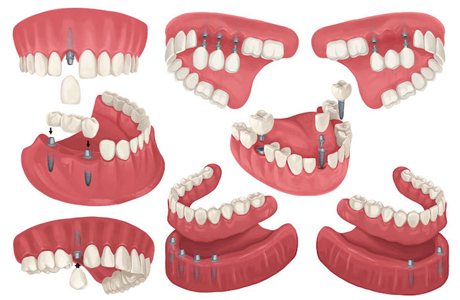
Fixed Dentures: Four to eight implants are strategically positioned in the jawbone to support a permanently fixed denture. This provides exceptional stability and function, mimicking natural teeth.

Removable Dentures: Implant-retained dentures offer improved stability compared to traditional dentures. Fewer implants (typically 2-4) are used, and the denture “clicks” onto the implants for a secure fit.

Consulting a qualified dentist is essential for a thorough evaluation and personalized treatment plan. They will assess your specific needs, discuss the available restoration options, and recommend the most suitable solution for achieving your desired outcome.

The Best Dental in Staveya Dental in Ahmadabad

Dental Implant Surgery Recovery

While dental implant surgery offers a long-term solution for missing teeth, a smooth recovery process is crucial for optimal results. Here’s a guide to what you can expect and how to promote proper healing:

Pain and Discomfort: Mild to moderate pain is expected. Your dentist will prescribe medication to manage this effectively.

Swelling: Facial swelling around the implant site is common and typically subsides within 2-3 days. Apply ice packs to the area for short intervals (15 minutes on, 15 minutes off) to reduce swelling.

Bleeding: Minor bleeding at the implant site might occur for the first 1-2 days. Gauze packs can be used to control minor bleeding.

The Best Dental in Staveya Dental in Ahmadabad

Dental Implant Surgery Side Effects

Dental implant surgery is a well-established procedure for replacing missing teeth, offering significant benefits. However, like any surgery, it’s essential to be aware of potential side effects. Here’s a breakdown of what you might encounter:

Discomfort and Pain: Mild to moderate pain is expected after surgery, manageable with medication prescribed by your dentist.

Swelling: Facial swelling around the implant site is common and usually subsides within a few days.

Bruising: Bruising may occur in the surgical area and typically fades within a week.

1952: The Pivotal Discovery: A Swedish orthopedic surgeon, Dr. Per-Ingvar Brånemark, made a groundbreaking discovery. During a study on bone healing, he observed that titanium cylinders implanted in rabbit bones fused seamlessly. This phenomenon, termed osseointegration, became the foundation for modern dental implants.

The Best Dental in Staveya Dental in Ahmadabad

Single Tooth vs. Multiple Teeth Replacement Options

Missing teeth can significantly impact your smile, confidence, and even chewing ability. Fortunately, modern dentistry offers various solutions to restore your oral health and function. Here’s a comparison of two common approaches:

Dental Implant: Considered the gold standard due to its durability, natural look, and function. An implant screw is surgically placed in the jawbone to act as an artificial tooth root. A crown is then attached to the implant for a permanent restoration.

Dental Bridge: A fixed bridge involves placing crowns on the teeth adjacent to the gap and attaching an artificial tooth in between. Requires modifying healthy teeth, potentially compromising their long-term health.

The Best Dental in Staveya Dental in Ahmadabad

All-on-4 vs. Traditional Dental Implants

Both All-on-4 and traditional dental implants aim to replace missing or damaged teeth, but they differ significantly in their approach. Here’s a breakdown to help you understand:

Traditional Implants: Each missing tooth typically requires a single implant. Depending on the number of teeth missing, this could involve multiple implants (up to 10 or more for a full arch).

All-on-4: This technique utilizes only four implants per jaw (upper or lower) to support a fixed denture. Strategic placement, including strategically angled implants in the back, allows for this efficient approach.

Traditional Implants: A multi-step process. Initial surgery inserts the implants, followed by a healing period (several months) for osseointegration (fusion with jawbone). After healing, another procedure attaches the replacement teeth.

All-on-4: Often completed in one surgery. The implants are placed, and a temporary fixed denture is attached on the same day. After healing and osseointegration, a permanent denture is secured.

The Best Dental in Staveya Dental in Ahmadabad

History-dental-implants

The history of dental implants is a long and fascinating journey, stretching back thousands of years and showcasing humanity’s constant strive for improved dental health and aesthetics. Here’s a glimpse into this timeline

Ancient Civilizations (4000 BC – 600 AD): Evidence suggests early attempts at replacing missing teeth. Excavations in China revealed carved bamboo pegs used around 2000 BC. The Egyptians used gold and precious metals for similar purposes around 1000 BC. The Mayans were known to utilize seashells as implants roughly around 600 AD.

Medieval Era (600 AD – 1800s): While the concept persisted, materials and techniques remained primitive. Animal teeth and even human teeth (often from the underprivileged) were used. Gold wires found use in stabilizing loose teeth.

The Best Dental in Staveya Dental in Ahmadabad

A Pocket Of Pus In Tooth

A pocket of pus in a tooth is known as a tooth abscess. Tooth abscesses are caused by bacterial infections, and can occur at different areas near the tooth for different reasons. There are two main types of tooth abscesses: periapical abscesses, which occur at the tip of the root, and periodontal abscesses, which occur in the gums at the side of a tooth root.1 An abscessed tooth requires treatment and won’t get better on its own. Treatment often includes draining the abscess and treating the infection with antibiotics if necessary.23

What causes a tooth abscess?

A tooth abscess is usually caused by an infection in the teeth or gums. Bacteria can enter your mouth through tiny cuts or gaps in your teeth, which may be caused by grinding or clenching your teeth while asleep. Other causes include: – Injuries to the mouth, such as a cracked tooth or bite.

– Gum disease, which causes inflammation and swelling in your gums.

– Root canal treatment on an infected tooth.

– A deep cavity that goes all the way through your tooth. – A tooth that has been knocked out of its socket. – A broken or cracked tooth. – A tooth that has been badly damaged by decay or trauma. – Tooth abscesses can also be caused by: – A tooth abscess that started as a dental cavity, which may have gone untreated for too long or was filled with an incorrect material. – Gum disease, which causes inflammation and swelling in your gums.

How To Cure Tooth Decay?

To cure tooth decay, it is important to understand the stages of tooth decay and its causes. According to Dr. Steven Lin, a dentist, the first step to curing tooth decay is understanding how bacteria cause it. The second step is preparation to reverse and cure tooth decay, and the third step is following a protocol to cure tooth decay. The protocol includes eating a nutrient-dense diet, remineralizing teeth with specific supplements, and providing proper oral hygiene to promote a healthy oral microbiome.

It is important to note that the treatment for tooth decay depends on the stage it’s in. Some examples of potential treatments include fluoride treatments, fillings, and root canals. Fluoride treatments may be liquid, gel, foam, or varnish that’s brushed onto your teeth or placed in a small tray that fits over your teeth. Fillings, also called restorations, are the main treatment option when decay has progressed beyond the earliest stage.

In addition to professional treatments, there are steps that you can take to prevent tooth decay, including brushing twice a day with fluoride toothpaste, flossing at least twice a day, limiting sugary and starchy foods, and avoiding snacking or drinking between meals. Drinking fluorinated water and using a fluoride mouth rinse can also help prevent tooth decay.

It is important to note that home remedies, such as oil pulling, licorice lollipops, and chewing gum, have not been proven to cure existing cavities, and may not be effective in preventing tooth decay.

How Crucial Replacing Teeth?

Replacing missing teeth is crucial not only for aesthetic purposes but also for maintaining good oral health and overall health. When teeth are missing, it can become difficult to chew food and speak clearly, and the area around the mouth may sag. Missing teeth can also cause other teeth to tilt or move out of place, and can lead to bone loss and changes in chewing patterns. Furthermore, missing teeth can lead to other health conditions if left untreated. Therefore, it is critical to replace missing teeth to maintain good oral health and overall health. When you lose a tooth, it can be tempting to leave the space empty. This is called a “tooth vacancy” and it can lead to other problems in your mouth. For example, when teeth are missing, it becomes difficult to chew food and speak clearly. The area around the mouth may sag as well.

To replace missing teeth, you may need to undergo several procedures. The first step is an evaluation by a dentist or oral surgeon. This will help determine the extent of damage and whether additional treatments are necessary before replacing the missing tooth.

Replacement options include dentures, bridges and implants. Dentures are removable appliances that fit over the gums and other teeth. They can be made of a variety of materials, including acrylic resin or metal alloys. include dentures, bridges and implants. Dentures are removable appliances that fit over the gums and other teeth. They can be made of a variety of materials, including acrylic resin or metal alloys. To replace missing teeth, you may need to undergo several procedures. The first step is an evaluation by a dentist or oral surgeon. This will help determine the extent of damage and whether additional treatments are necessary before replacing the missing tooth

When you lose a tooth, the first thing to do is visit your dentist. A missing tooth can cause other teeth in the mouth to shift out of place and may lead to bone loss around the jaw. The longer you wait to replace missing teeth, the more difficult it will be for your dentist to restore their original position.

Are Laser Dental Procedures Better Than Traditional Treatments?

What is laser dentistry?

Laser dentistry is the use of lasers to treat a number of different dental conditions. It became commercially used in clinical dental practice for procedures involving tooth tissue in 1989.

Laser dentistry potentially offers a more comfortable treatment option for a number of dental procedures involving hard or soft tissue compared to drills and other non-laser tools.

LASER stands for “light amplification by the stimulated emission of radiation.” The instrument creates light energy in a very narrow and focused beam. This laser light produces a reaction when it hits tissue, allowing it to remove or shape the tissue.

Laser dentistry is used in a variety of procedures, including:

  • treating hypersensitivity
  • treating tooth decay
  • treating gum disease
  • whitening teeth

Lasers can make dental treatments more efficient, cost effective, and comfortable. The Food and Drug Administration (FDA) has approved laser dentistry as a treatment option for several dental conditions.

It’s worth noting that the American Dental Association (ADA) currently has yet to do so, though they are hopeful about the potential of the field.

How are laser treatments performed?

The two main types of procedures used for laser dentistry are hard tissue and soft tissue procedures. Hard tissue refers to the teeth, and soft tissue refers to the gums.

Common hard tissue procedures include:

  • Cavity detection. Lasers can detect cavities early by finding evidence of tooth decay.
  • Tooth preparations and dental fillings. Local anesthesia and traditional drills are often not needed with laser treatments. Lasers can kill bacteria in a cavity, which can aid in the long-term health of a tooth.
  • Treating tooth sensitivity. Teeth that have sensitivity to hot and cold can be treated with dental lasers that seal tubules on the tooth’s root.

Common soft tissue procedures include:

  • Treating a “gummy smile.” Lasers are used to reshape gum tissue associated with “gummy smile,” in which the gums’ length covers much of the tooth.
  • Crown lengthening. This procedure reshapes both gum tissue and bone for healthier tooth structure, which helps with placing restorations on the teeth.
  • Treating tongue frenulum attachment. Those with a thick or tight frenulum (the fold of skin under the front part of tongue that anchors to the mouth floor) may benefit from a laser frenectomy. This treatment helps children whose restricted frenulum causes them to be tongue-tied, have difficulty breastfeeding, or have a speech impediment.
  • Removing soft tissue folds. Lasers can remove soft tissue folds from ill-fitting dentures without pain or sutures.

Other laser procedures include:

  • Viewing tissues. Optical coherence tomography allows a doctor to safely see inside a tooth or gum tissue.
  • Removing benign tumors. Lasers can remove tumors from the palate, gums, and sides of the lips and cheeks through a pain- and suture-free method.
  • Treating obstructive sleep apnea. Lasers can reshape the throat and relieve associated breathing problems when sleep apnea is caused by tissue overgrowth in the throat.
  • TMJ (temporomandibular joint) treatment. Lasers can help reduce pain and inflammation in the joint.
  • Nerve regeneration. Lasers can help regenerate damaged blood vessels, nerves, and scars.
  • Treating cold sores. Lasers can minimize healing time and reduce pain from cold sores.
  • Teeth whitening. Lasers speed up the bleaching process during teeth-whitening sessions.

Laser treatments such as these can vary in price, depending on the procedure being done and the laser equipment used. Compared to non-laser treatment, they may be less expensive because the laser treatment is usually completed in fewer sessions. Additionally, dental insurance usually determines reimbursement costs based on the treatment itself and not on what method is used.

Therefore, your compensation is likely to be the same as it would with drilling and other procedures. However, it’s always important to ask about your specific policy beforehand to get the most accurate information.

What types of lasers are used?

Dental professionals use either hard tissue or soft tissue lasers, depending on the treatment. Some will use both types if the treatment allows.

Hard tissue lasers can cut through tooth structure. Their wavelengths are absorbed through the combination of water and a specific mineral found in teeth. These lasers are most often used to prep or shape teeth for composite bonding, to repair dental fillings that have worn down, and to remove some tooth structure.

Benefits of using laser dentistry over other methods

  • There is potentially a decreased need for sutures with soft tissue lasers.
  • Bleeding is minimized in treated soft tissues, as the laser promotes blood clotting.
  • With some procedures, anesthesia is unnecessary.
  • The chance for bacterial infections is lower because the laser sterilizes the area.
  • Wounds can heal faster, and it’s possible for tissue to regenerate.
  • The procedures may involve less damage to the surrounding tissues.

Soft tissue lasers can be absorbed through water and hemoglobin. Hemoglobin is a protein found in red blood cells.

These lasers are used to treat periodontitis, including killing bacteria and activating tissue regrowth.

Soft tissue lasers seal nerve endings and blood vessels while they penetrate the tissue. For this reason, many experience almost no pain after laser treatment. The lasers also promote faster healing of the tissue.

Disadvantages of laser dentistry

  • Lasers can’t be used on teeth that already have certain types of filling, such as metal amalgam.
  • Hard lasers can sometimes injure tooth pulp.
  • Some laser procedures still require anesthesia.
  • Drills are still sometimes needed to complete fillings, including shaping, adjusting the bite, and polishing the filling.
  • Certain procedures can’t be done with laser treatment, depending on the preexisting surrounding tissue or components involving the tooth or gums.
  • There is a risk of gum injury.

What risks are associated with laser dentistry?

The risks of laser dentistry are relatively small. It’s important to find a qualified dental professional, as using the wrong wavelength or power level could damage tissue. Additionally, some providers worry that advertisers are pushing the use of laser treatment beyond what people actually need. Your dentist will have you use special glasses to protect your eyes from the laser.

Best Toothbrush: Here Are Some Tips On How To Choose A Good Toothbrush

Best toothbrush in India: Here are some general tips to choose a good toothbrush. People cannot ignore the importance of oral healthcare and dental hygiene.

There are several shapes, styles and sizes of toothbrushes in the market. Different types of toothbrushes such as manual and electric are available in the market. It is difficult to decide which kind of toothbrush to be purchased. One cannot ignore the importance of oral hygiene, not only for dental-health but also for overall well-being. Here are some general tips on choosing a good toothbrush.

Tips on choosing a good toothbrush for better oral health

Size and Style

The size of the toothbrush should give you easy access to all surfaces of teeth. A toothbrush head that is half-inch wide and one-inch tall is most suitable and effective in cleaning all the areas of one’s mouth. Larger toothbrushes are also available in the market but, it becomes difficult to manage cleaning the hard-to-reach areas of the mouth. The brush should help you clean the sides and backside of your molars. The handle of the brush should be long enough so that you can easily hold it in your hand. It should be of non-slip grip and a flexible neck.

Bristle Variety

This is an important tip to follow if one is concerned about the protection of teeth. For a majority of people, soft-bristled toothbrushes are the safest choice for their teeth. When visiting a medical store to buy a manual or an electric toothbrush, one would prefer a toothbrush with soft-bristles or a medium nylon bristle. It also depends on the strength of the teeth and the way you brush them. Be sure while purchasing a hard-bristled toothbrush because it may cause damage to gums, root surface and also affect the strength of the teeth.

Experts Say

Take recommendation from a dentist to ensure that your toothbrush has undergone the quality control test. The rigorous quality control test includes cleanliness of the toothbrush, effectiveness and safety for your oral health. One can opt for manual or powered toothbrushes that have received the (ADA) American Dental Association seal of approval. Also, take a bit of advice on which type of bristled toothbrush is suitable for the teeth.

Cost

Some people prefer using powered toothbrushes as a good alternative, but while selecting special features, keep the cost in mind. One should change your toothbrush every three to four months. Try and replace your toothbrush after having suffered from a cold, as the bristles can collect germs. It is convenient to buy a toothbrush with a tongue cleaner if it is double the price of a regular toothbrush. One could instead opt for floss or an interdental brush if you wish to spend a few more bucks on your dental hygiene.

The above tips on choosing a good toothbrush are intended to explain general dental health. It is not a substitute for any professional advice, diagnosis or treatment. It is always better to seek advice on oral health issues from a dentist or a qualified oral healthcare provider.

Times Health Icons Ahmedabad 2021 Award

Hello friends, by the grace of God and support of you all, Stavya Multispeciality Dental Hospital felicitated for Excellence in Dentistry by the TIMES OF INDIA.

Aesthetic Dentistry

Bleaching/whitening

What Is It?

Tooth whitening lightens teeth and helps to remove stains and discoloration. Whitening is among the most popular cosmetic dental procedures because it can greatly improve how your teeth look. Most dentists perform tooth whitening.

Whitening is not a one-time procedure. It will need to be repeated from time to time if you want to maintain the brighter color.

Bleaching/whitening

Veeners

Dental veneers (sometimes called porcelain veneers or dental porcelain laminates) are wafer-thin, custom-made shells of tooth-colored materials designed to cover the front surface of teeth to improve your appearance. These shells are bonded to the front of the teeth changing their color, shape, size, or length.

Veeners
Veeners

Aesthetic Inlays / Onlays

Aesthetic inlays / onlays are the common preference now over traditional amalgam filling. Many people are choosing to replace their fillings with natural-colored inlays and onlays for aesthetic reasons.

Aesthetic Inlays / Onlays

WHAT ARE AESTHETIC INLAYS AND ONLAYS?

Aesthetic Inlays / Onlays

An inlay or onlay is a type of material which is placed inside or over the surface of a decayed or damaged tooth and are seen as a good alternative to a crown. Placed to cover the top surface of the tooth, they are made from a variety of materials which resembles the natural color of your own teeth to make it more visually attractive.

ADVANTAGES OF AESTHETIC INLAYS AND ONLAYS

The main benefit is that they fit in very well with the rest of your teeth. The material used is ‘tooth colored‘ and has a realistic appearance, which is good news from a cosmetic point of view.

This procedure is often part of an overall ‘smile makeover, in which various procedures are performed to enhance the appearance of teeth and provide a huge confidence boost.

There is no risk of the inlays and onlays becoming discolored over time. They are also easy to clean as part of a daily dental routine and provide extra support for a tooth.

The Medical Benefits of Braces

Braces have become a common treatment for both teenagers and adults who want a straighter, more beautiful looking smile. A pretty smile is nice, but there are also medical benefits of braces, some of which may surprise you.

Medical Benefits of Braces

Improved bite

While one of the goals of getting braces is to correct crooked teeth, they are also used to correct poorly aligned bites. A “bite” is the dental term that explains how your upper and lower teeth fit together. When you have gaps in your bite from missing teeth or poorly aligned teeth, it can impact your ability to break food down, a critical part of healthy digestion. A poorly aligned bite can impact one’s ability to chew properly and even to eat.

If left untreated, a misaligned bite can become painful as your jaw has to work harder to chew; which can result in lock jaw, TMJ disorder, and jaw pain related headaches, all of which may require complicated dental and medical treatment.

Improved Alignment of the Jaw

Overcrowded teeth or jaw misalignment can cause some speech impediments. The good news is orthodontic treatment can address both jaw and palate alignment that cause the speech impediments.  As a part of the orthodontic treatment, an expander may need to be used to widen the palate before braces are applied

An expansion in your palate can also result in better breathing, less snoring, and potentially improved ear and sinus issues that are a result of jaw misalignment as well. In fact, proper jaw alignment can change the way you look by bringing your face into proper proportions.

Better Oral Care Habits

When you have crowded and misaligned teeth, they are harder to clean. Parts of the tooth may be hiding behind another tooth, making proper brushing and flossing almost impossible.  When teeth can’t be properly cleaned, bacteria can build up, and this bacteria leads to gum disease and cavities. By straightening crowded teeth, brushing and flossing should be naturally improved.

Good oral care habits include brushing twice a day, using mouthwash and flossing daily. For those with braces,  the need for  good oral care becomes even more important to prevent bad breath, gum disease, and staining of teeth. With braces, extra care needs to be taken to properly brush and floss between and around the brackets and wires. This can create new habits that, along with more regular visits to the dentist, will result in better habits that will last a lifetime.

More Confidence

Confidence is shown to lead to more overall success in life. When people hide their smile due to embarrassment, they are less likely to take the risks required to go after a top job or to ask for a promotion. When a person is no longer embarrassed by their smile, they naturally feel more confidence which is reported to lead to leads to more happiness, greater productivity, less social anxiety and ultimately better health.

How to saty free from corona

Basic protective measures against the new coronavirus

Stay aware of the latest information on the COVID-19 outbreak, available on the WHO website and through your national and local public health authority. COVID-19 is still affecting mostly people in China with some outbreaks in other countries. Most people who become infected experience mild illness and recover, but it can be more severe for others. Take care of your health and protect others by doing the following:

Basic protective measures against the new coronavirus

Stay aware of the latest information on the COVID-19 outbreak, available on the WHO website and through your national and local public health authority. COVID-19 is still affecting mostly people in China with some outbreaks in other countries. Most people who become infected experience mild illness and recover, but it can be more severe for others. Take care of your health and protect others by doing the following:

Wash your hands frequently

Regularly and thoroughly clean your hands with an alcohol-based hand rub or wash them with soap and water.

Why? Washing your hands with soap and water or using alcohol-based hand rub kills viruses that may be on your hands.

Maintain social distancing

Avoid touching eyes, nose and mouth

Why? Hands touch many surfaces and can pick up viruses. Once contaminated, hands can transfer the virus to your eyes, nose or mouth. From there, the virus can enter your body and can make you sick.

Practice respiratory hygiene

Make sure you, and the people around you, follow good respiratory hygiene. This means covering your mouth and nose with your bent elbow or tissue when you cough or sneeze. Then dispose of the used tissue immediately.

Why? Droplets spread virus. By following good respiratory hygiene you protect the people around you from viruses such as cold, flu and COVID-19.

If you have fever, cough and difficulty breathing, seek medical care early

Stay home if you feel unwell. If you have a fever, cough and difficulty breathing, seek medical attention and call in advance. Follow the directions of your local health authority.

Why? National and local authorities will have the most up to date information on the situation in your area. Calling in advance will allow your health care provider to quickly direct you to the right health facility. This will also protect you and help prevent spread of viruses and other infections.

Maintain at least 1 metre (3 feet) distance between yourself and anyone who is coughing or sneezing.

Why? When someone coughs or sneezes they spray small liquid droplets from their nose or mouth which may contain virus. If you are too close, you can breathe in the droplets, including the COVID-19 virus if the person coughing has the disease.

Stay informed and follow advice given by your healthcare provider

Stay informed on the latest developments about COVID-19. Follow advice given by your healthcare provider, your national and local public health authority or your employer on how to protect yourself and others from COVID-19.

Why? National and local authorities will have the most up to date information on whether COVID-19 is spreading in your area. They are best placed to advise on what people in your area should be doing to protect themselves.

Protection measures for persons who are in or have recently visited (past 14 days) areas where COVID-19 is spreading

  • Follow the guidance outlined above.
  • Stay at home if you begin to feel unwell, even with mild symptoms such as headache and slight runny nose, until you recover. Why? Avoiding contact with others and visits to medical facilities will allow these facilities to operate more effectively and help protect you and others from possible COVID-19 and other viruses.
  • If you develop fever, cough and difficulty breathing, seek medical advice promptly as this may be due to a respiratory infection or other serious condition. Call in advance and tell your provider of any recent travel or contact with travelers. Why? Calling in advance will allow your health care provider to quickly direct you to the right health facility. This will also help to prevent possible spread of COVID-19 and other viruses.

What Can You Do About Sensitive Teeth?

If you pass on hot or cold drinks because you know they’ll make your teeth hurt, it may be time to talk to your dentist about the possibility that you have sensitive teeth.

Sometimes other things can aggravate them, too, like sweet and sour foods or even cold air.

To be able to treat these tooth twinges, it helps to know what might be behind them. Once you’ve nailed down the cause, you can find a solution.

Take Care of Your Tooth Enamel

That’s a hard, protective layer that helps your teeth deal with everything you put them through. When it’s gone, nerve endings that cause pain are exposed.

If you have sensitive teeth, it’s possible some of your enamel has worn away.

To prevent or put the brakes on that damage:

Don’t brush too hard. Do you clean your teeth with a heavy hand? You might be taking off more than just plaque. Side-to-side brushing right at the gum line can make your enamel go away faster. You should use a soft-bristled brush and work at a 45-degree angle to your gum to keep enamel clean and strong.

Avoid acidic foods and drinks. Soda, sticky candy, high-sugar carbs — all of these treats attack enamel. Instead, snack on:

  • Fiber-rich fruits and vegetables
  • Cheese
  • Milk
  • Plain yogurt

These will moisten your mouth and help fight acid and bacteria that can eat away at your teeth. Saliva is one way your mouth deals with them.

You can also drink green or black tea or chew sugarless gum. If you do eat something acidic, don’t rush to brush. Wait an hour or so to strengthen before you scrub.

Unclench your teeth. Over time, teeth grinding wears away your enamel. Sometimes, addressing your stress can stop the problem. If that doesn’t work, your dentist can fit you for a splint or a mouth guard.

If the problem is severe, you may need dental work to change your teeth’s position, or a muscle relaxant.

Take a break from bleaching. The quest for pearly whites may cause your pain. Thankfully, sensitivity from bleaching is usually temporary. Talk to your dentist about how the treatment might be affecting you, and whether you should continue it.

Get to the Root of the Problem

Sometimes, tooth sensitivity can be a sign of other issues, like:

Naturally shrinking gums. If you’re over 40, it could be that your gums are showing signs of wear and tear by pulling away from your teeth and uncovering your tooth roots. Those roots don’t have enamel to protect them, so they’re much more sensitive than the rest of your tooth.

Tell your dentist if your gums look like they’re receding. It can be a sign of other problems, like gum disease. Serious cases may need a gum graft. That moves tissue from somewhere else to cover the bare area.

Gum disease. Plaque and tartar buildup on your teeth can make your gums pull back. Sometimes, disease can set in. It can destroy the bony support of your tooth. Don’t smoke. It can lead to gum disease. To treat it, your dentist may do a deep clean of your teeth, called planing or scaling, that scrapes tartar and plaque below the gum line. You could also need medication or surgery to fix the problem.

A cracked tooth or filling: When you break a tooth, the crack can go all the way down to your root. You’ll notice pain when your tooth is cold. How your dentist fixes the crack depends on how deep it goes. If it’s a small crack that ends before your gums start, your dentist can fill it. If it’s below your gum line, your tooth will have to be pulled.

Treatment

Once you’ve found the problem, there are things your dentist can use to help ease your pain, including:

  • Toothpaste for sensitive teeth
  • Fluoride gel
  • Fillings that cover exposed roots
  • Sealants
  • Desensitizing pastes (not used with a toothbrush) you can get from your dentist
  • Mouthguard to protect teeth if you grind

If your case is serious, your dentist might suggest a root canal.

It’s also important not to shy away from dental care because of tooth pain. Ignoring your teeth can make things worse. Brush and floss twice a day to help keep your smile bright and pain-free. And see your dentist for a checkup twice a year.

Smoking Effect On Teeth

How Does Smoking Lead to Gum Disease?

Smoking and other tobacco products can lead to gum disease by affecting the attachment of bone and soft tissue to your teeth. More specifically, it appears that smoking interferes with the normal function of gum tissue cells. This interference makes smokers more susceptible to infections, such as periodontal disease, and also seems to impair blood flow to the gums – which may affect wound healing.

Do Pipe and Cigar Smoking Cause Dental Problems?

Yes, like cigarettes, pipes and cigars do lead to oral health problems. According to results of a 23-year long study published in the Journalof the American Dental Association, cigar smokers experience tooth loss and alveolar bone loss (bone loss within the jawbone that anchors teeth) at rates equivalent to those of cigarette smokers. Pipe smokers also have a similar risk of tooth loss as cigarette smokers. Beyond these risks, pipe and cigar smokers are still at risk for oral and pharyngeal (throat) cancers — even if they don’t inhale — and other oral consequences — bad breath, stained teeth, and increased risk of periodontal (gum) disease.

Are Smokeless Tobacco Products Safer?

No. Like cigars and cigarettes, smokeless tobacco products (for example, snuff and chewing tobacco) contain at least 28 chemicals that have been shown to increase the risk of oral cancer and cancer of the throat and esophagus. In fact, chewing tobacco contains higher levels of nicotine than cigarettes, making it harder to quit than cigarettes. And one can of snuff delivers more nicotine than over 60 cigarettes.

Smokeless tobacco can irritate your gum tissue, causing it to recede or pull away from your teeth. Once the gum tissue recedes, your teeth roots become exposed, creating an increased risk of tooth decay. Exposed roots are also more sensitive to hot and cold or other irritants, making eating and drinking uncomfortable.

In addition, sugars, which are often added to enhance the flavor of smokeless tobacco, can increase your risk for tooth decay. A study published in the Journal of the American Dental Association showed that chewing tobacco users were four times more likely than nonusers to develop tooth decay.

Smokeless tobacco also typically contains sand and grit, which can wear down your teeth.

Kick the Tobacco Habit

Regardless of how long you have used tobacco products, quitting now can greatly reduce serious risks to your health. Eleven years after quitting, former smokers’ likelihood of having periodontal (gum) disease was not significantly different from people who never smoked.

Even reducing the amount you smoke appears to help. One study found that smokers who reduced their smoking habit to less than half a pack a day had only three times the risk of developing gum disease compared with nonsmokers, which was significantly lower than the six times higher risk seen in those who smoked more than a pack and a half per day. Another study published in the Journal of the AmericanDental Association found that the mouth lesion leukoplakia completely resolved within 6 weeks of quitting in 97.5% of patients who used smokeless tobacco products.

Some statistics from the American Cancer Society present some other sobering reasons to quit smoking. They state that:

  • About 90% of people with cancer of the mouth, lips, tongue, and throat use tobacco, and the risk of developing these cancers increases with the amount smoked or chewed and the duration of the habit. Smokers are six times more likely than nonsmokers to develop these cancers.
  • About 37% of patients who persist in smoking after apparent cure of their cancer will develop second cancers of the mouth, lips, tongue, and throat, compared with only 6% of those who stop smoking.

How Can I Quit Tobacco?

To stop using tobacco, your dentist or doctor may be able to help you calm nicotine cravings with medications, such as nicotine gum and patches. Some of these products can be purchased over the counter; others require a prescription. Other medications require a prescription.

Smoking cessation classes and support groups are often used in tandem with drug therapy. These programs are offered through local hospitals in your community and sometimes through your employer or health insurance company. Ask your doctor or dentist for information on similar programs they may be familiar with.

Herbal remedies, as well as hypnosis and acupuncture, are other treatments that may help you kick the habit.

11 Ways to Keep Your Teeth Healthy

If you buy something through a link on this page, we may earn a small commission. How this works.

Take care of your teeth

Achieving healthy teeth takes a lifetime of care. Even if you’ve been told that you have nice teeth, it’s crucial to take the right steps every day to take care of them and prevent problems. This involves getting the right oral care products, as well as being mindful of your daily habits.

1. Don’t go to bed without brushing your teeth

It’s no secret that the general recommendation is to brush at least twice a day. Still, many of us continue to neglect brushing our teeth at night. But brushing before bed gets rid of the germs and plaque that accumulate throughout the day.

Shop for toothbrushes online.

2. Brush properly

The way you brush is equally important — in fact, doing a poor job of brushing your teeth is almost as bad as not brushing at all. Take your time, moving the toothbrush in gentle, circular motions to remove plaque. Un removed plaque can harden, leading to calculus buildup and gingivitis (early gum disease).

3. Don’t neglect your tongue

Plaque can also build up on your tongue. Not only can this lead to bad mouth odor, but it can lead to other oral health problems. Gently brush your tongue every time you brush your teeth.

4. Use a fluoride toothpaste

When it comes to toothpaste, there are more important elements to look for than whitening power and flavours. No matter which version you choose, make sure it contains fluoride.

While fluoride has come under scrutiny by those worried about how it impacts other areas of health, this substance remains a mainstay in oral health. This is because fluoride is a leading defence against tooth decay. It works by fighting germs that can lead to decay, as well as providing a protective barrier for your teeth.

Purchase fluoride toothpaste here.

5. Treat flossing as important as brushing

Many who brush regularly neglect to floss. “Flossing is not just for getting those little pieces of Chinese food or broccoli that may be getting stuck in between your teeth,” says Jonathan Schwartz, DDS. “It’s really a way to stimulate the gums, reduce plaque, and help lower inflammation in the area.”

Flossing once a day is usually enough to reap these benefits.

Here’s a selection of dental floss to try.

6. Don’t let flossing difficulties stop you

Flossing can be difficult, especially for young children and older adults with arthritis. Rather than give up, look for tools that can help you floss your teeth. Ready-to-use dental flossers from the drugstore can make a difference.

7. Consider mouthwash

Advertisements make mouthwash seem necessary for good oral health, but many people skip them because they don’t know how they work. Schwartz says mouthwash helps in three ways: It reduces the amount of acid in the mouth, cleans hard-to-brush areas in and around the gums, and re-mineralizes the teeth. “Mouthwashes are useful as an adjunct tool to help bring things into balance,” he explains. “I think in children and older people, where the ability to brush and floss may not be ideal, a mouthwash is particularly helpful.”

Ask your dentist for specific mouthwash recommendations. Certain brands are best for children, and those with sensitive teeth. Prescription mouthwash is also available.

Purchase mouthwash online.

8. Drink more water

Water continues to be the best beverage for your overall health — including oral health. Also, as a rule of thumb, Schwartz recommends drinking water after every meal. This can help wash out some of the negative effects of sticky and acidic foods and beverages in between brushes.

9. Eat crunchy fruits and vegetables

Ready-to-eat foods are convenient, but perhaps not so much when it comes to your teeth. Eating fresh, crunchy produce not only contains more healthy fiber, but it’s also the best choice for your teeth. “I tell parents to get their kids on harder-to-eat and chew foods at a younger age,” says Schwartz. “So try to avoid the overly mushy processed stuff, stop cutting things into tiny pieces, and get those jaws working!”

10. Limit sugary and acidic foods

Ultimately, sugar converts into acid in the mouth, which can then erode the enamel of your teeth. These acids are what lead to cavities. Acidic fruits, teas, and coffee can also wear down tooth enamel. While you don’t necessarily have to avoid such foods altogether, it doesn’t hurt to be mindful.

11. See your dentist at least twice a year

Your own everyday habits are crucial to your overall oral health. Still, even the most dutiful brushers and flosses need to see a dentist regularly. At minimum, you should see your dentist for cleanings and checkups twice a year. Not only can a dentist remove calculus and look for cavities, but they will also be able to spot potential issues and offer treatment solutions. Some dental insurance companies even cover more frequent dental checkups. If this is the case for you, take advantage of it. Doing so is especially helpful if you have a history of dental issues, such as gingivitis or frequent cavities.

Types of Dentists: You’ve Got Questions, We’ve Got Answers

When you visit the dentist you might have noticed those three little letters listed after their name, DDS or DMD. That same dentist might have referred you to a dental specialist.  What’s the deal with all of these different types of dentists? How do you know what it all means and who you should visit? Not to worry, we’re here to help make sense of the different types of dentists what it means for you as a patient.

General Dentistry – DDS vs DMD

Most often when you go to the dentist, you are seeing your general dentist who is either a DDS or a DMD. A dentist with a DDS has earned their Doctor of Dental Surgery degree; one with a DMD earned their Doctor of Medicine in Dentistry or Doctor of Dental Medicine degree. Both a DDS and a DMD has three or more years of undergraduate studies followed by four years of dental school to earn those credentials.  

And yes, they sound the same. The truth is, they are. Both a DDS and a DMD are types of dentists who have the same degrees – the difference in title is due to the university they attended and how that university recognizes the profession. Both must complete the same course studies, a written exam, and a licensing exam to practice dentistry.

Both of theses types of dentists are considered general dentists and are your primary provider who treats your overall oral health care needs. This includes diagnosing and treating problems such as gum disease, cavities, root canals, crowns, and bridges as well as preventative care, hopefully allowing you to avoid the need for our next types of dentists – the dental specialists.

Dental Specialists

Sometimes your oral health needs may require your general dentist to refer you to a dental specialist. Dental specialists have completed an additional two to four years of training that is focused on a specific side of dentistry. Here are the most common types of dental specialists.  

Orthodontist – A patient is referred to an orthodontist when a general dentist notices misalignments with the jaw and/or teeth of both children and adults. If there are extra teeth, missing teeth, or teeth are crowded, an orthodontist will treat the patient with solutions like braces, Invisalign, and/or retainers. Don’t be surprised if your child is referred to an orthodontist as early as the age of seven.

Pediatric Dentist – The types of dentists who work exclusively with children are called pediatric dentists or pedodontists.  Much of their additional training focuses on building a positive association between children and their dentist and is based in child psychology. They work with children to build a base line for good oral health care and many work with patients who have special needs.

Oral Surgeon – an oral surgeon specializes in the surgical treatment of disease, injuries and esthetic or functional areas of the mouth. They are the ones who remove wisdom teeth, handle dental implants, and biopsy suspicious spots in the mouth. They also have additional training in anesthesia to ensure the comfort of the patient when surgery is required.

Endodontist – these dental specialists have received training to help patients address tooth pain while saving their natural teeth by performing root canal treatment – a procedure that treats the infected tissues within a tooth. In fact, the word “endodontic” comes from the Greek word “endo” meaning “inside” and “odont” meaning tooth!

Periodontist – a periodontist is a dental specialist that focuses on caring for your gums and the supporting tissues and structure around your teeth. In most cases, a referral to a periodontist is made to help patients treat advanced periodontal (gum) disease. They also are trained to place dental implants.  

Prosthodontist – this dental specialist focuses on helping patients restore and/or replace lost or damaged teeth. Their goal is to look at all of the elements related to helping a patient achieve a functional, natural looking smile. Some of the treatment they perform can include dental implants, bridges & dentures.

While it may seem like an inconvenience to visit a dental specialist, it is in your best interest to to do so when referred. Just like you wouldn’t visit your primary care physician for knee replacement surgery, a specialist has the additional training and experience to provide you with specialized treatment to help you achieve optimal oral health.

So there you have it, the types of dentists explained. Remember, your general dentist will always be your primary point of contact to help you with your oral health care needs. Do you need a new general dentist? Think you need a referral to a dental specialist? Find a PERFECT TEETH dental office near you online for more information.

What Your Tongue Can Tell You About Your Health

White Coating on Tongue
Your tongue is supposed to be a lovely shade of pink. If parts of your tongue appear to be coated with a white substance, this could be oral thrush, a yeast overgrowth that occurs inside the oral cavity. Of course, it could just be whitish from not brushing your tongue every time you brush your teeth. You do that, don’t you? If the white brushes away, you’re good to go.

White Patches on Tongue
Leukoplakia is a condition that can happen if the tongue has been irritated, such as with smoking or tobacco use. Every medical professional will advise you to quit that tobacco habit, but it’s ultimately up to you. If you see white patches, though, book a dentist appointment to be on the safe side and to rule out oral cancer.

Overly Red Tongue
While an overly red tongue can be a symptom of a Kawasaki disease, it’s much more commonly associated with a vitamin deficiency, such as folic acid or B-12. The solution could be simply adding a vitamin supplement to your morning smoothie. That’s not so bad, right?

Irregular Red Bumpy Patches
If your tongue looks like a roughly drawn map of irregular red and bumpy patches, this isn’t a fortune-teller sign that you’ll be going on a trip soon. You might be suffering from a high fever, in which case, taking a long journey overseas is the last thing you should be doing!

Tender, Sore Tongue
If your tongue is overly sensitive in one spot or all over, you could have a food allergy or a developing canker sore. Don’t worry about it, unless it doesn’t go away for a time. After that, time to call in the dentist for a professional opinion!

Hairy Tongue
Yep, sounds strange, but sometimes a protein build-up can cause small bumps to become elongated trapping food resulting in what looks like strands of hair on your tongue. Usually a good brushing or tongue scraping will take care of it, but if it doesn’t, a trip to the dentist is in order.

Your dentist is the first line of defense against both serious and benign health concerns. So, stick out your tongue at the dentist and be ready for a comprehensive oral checkup. You never know what your tongue might be telling you about your health!

Foods you can and can’t eat with braces

Getting braces is an extremely exciting time but adjusting to the changes associated with wearing your appliance can be difficult. Braces are only effective when you care for them properly, which means some types of food should be avoided throughout the duration of your treatment. This will help you achieve the best results in the shortest time possible.
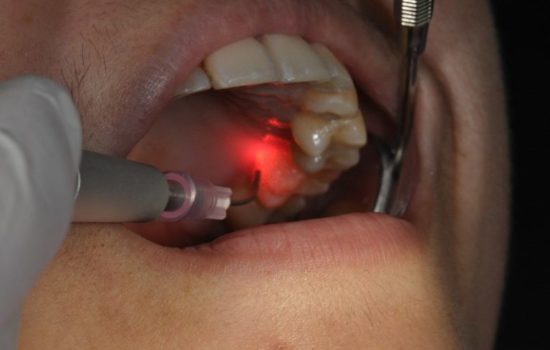
What happens if you eat the wrong foods?

Eating the wrong foods can cause some discomfort and put you at risk of breaking your brackets or wires which will require unscheduled trips to your orthodontist and may increase your treatment time.

Additionally, if you frequently eat foods that can get stuck in your braces or are high in sugar content you will create an environment that encourages plaque and bacteria to thrive which may cause lasting damage to your teeth.

Foods to eat with braces

The best foods to eat with braces are low in sugar and do not require excessive chewing. This includes…

  • Bread
  • Mashed potatoes
  • Soup
  • Cheese
  • Pancakes
  • Puddings
  • Rice
  • Pasta

Foods for first week of braces

It’s normal to feel some discomfort during the first week of getting braces as your mouth adjusts to the new appliance. During this time, you should eat soft foods such as yoghurt, boiled vegetables, stewed fruit and thin soups to avoid putting additional pressure on your brackets.

Foods to avoid with braces

Anyone who wears fixed braces should avoid excessive snacking and should aim to eat a healthy and balanced diet. Foods to avoid with braces include…

  • Chewy foods such as hard rolls and liquorice
  • Crunchy foods such as chips and popcorn
  • Sticky foods such as caramel, bubble gum and snickers
  • Hard food such as nuts and pretzels
  • Sugary foods such as lollies
  • Foods that you need to bite into forcefully such as apples, raw carrots and corn

Can you eat chocolate?

Yes, you can eat chocolate with braces. However, this must be done in moderation, due to the high sugar content of chocolate. When you can, try to reach for dark chocolate, instead of milk chocolate varieties.

Can you eat pizza?

Pizza lovers can still enjoy their favourite food. But they should be careful when eating the crust because it requires a lot of chewing which is not good for your braces.

Can you eat chips?

Whether you like hot potato chips or thin crisps from the packet, you don’t have to give up chips when you get braces.

Can you eat with wax on your braces?

Orthodontic wax is non-toxic and safe for consumption. It’s made for you to put in your mouth so you can definitely eat while it is applied.

Considerations for eating with braces

Regardless of what types of foods you eat with braces, it is important to keep the crevices between the teeth and around the braces very clean. That means brushing and flossing after meals to prevent the build-up of plaque and decay. Not only can failing to do so damage the teeth and gums, but it can also cause discolouration which can last a lifetime.

If you’re wanting to ensure the best results from your orthodontic treatment it is very important that you follow the advice about safe foods for braces that is set out above and ask your orthodontist if you have any questions about your specific treatment.

Caring for braces

Whether you wear metal braces, ceramic braces or lingual braces, you need to know how to look after them. If you take care of your braces properly, it’ll make them much more comfortable and effective, meaning you’re a step closer to the perfect smile each day!

So what can you be doing to make sure you’re keeping your oral health in check while you’re wearing braces?

Perfect your brushing technique

Brushing is important whether or not you wear braces, but it becomes especially important when you’re undergoing orthodontic treatment. When you wear braces, it’s much easier for pesky pieces of food and plaque to get trapped in the brackets and cause problems, so you should use a toothbrush with a soft head to access those hard-to-reach areas. If you prefer to use an electric toothbrush, that’s fine too.

Start off by brushing at the gum line of your teeth, holding your toothbrush at a 45 degree angle towards your gums. Once you’ve cleaned your gum line, hold your toothbrush at a downward angle on the top of your brackets, and then at an upward angle to clean the bottom of your brackets.

Although generally people only need to brush twice a day, if you wear braces then we’d always recommend brushing after every meal. Keeping a toothbrush and a tube of toothpaste handy in your bag is an easy way to make sure your mouth is clean and sparkling!

Floss, floss, floss!

Flossing while wearing braces can be a bit of a feat, but it’s a step in your oral hygiene routine that shouldn’t be ignored. Flossing helps to remove any plaque build-up, as well as any smaller food particles that are stuck in your braces or between your teeth. If you find it tricky to floss with flossing tape, try using floss threaders for braces or interdental brushes.

You can buy these in the supermarket or pharmacy, and they can help you manoeuvre around your brackets.

Remember to be gentle when you’re flossing. Try not to apply too much pressure or go too quickly as you could damage your braces, which would mean a trip back to see the orthodontist!

Avoid certain foods

Very few foods are actually off-limits when you wear braces, but your orthodontist will give you a list of foods you should avoid while undergoing treatment. A heads up – anything chewy, sticky, crunchy or hard is likely to be on the list.

Plus, if you’re the sort of person who’s always nibbling on your nails or chewing pen lids, you’ll need to curb that habit pretty quickly too! These types of habits and foods can break or bend the braces which is never a good thing.

You should also avoid sugary foods and drinks as these can cause staining and decay around your brackets. These stains can be permanent, and will become more obvious later when the braces are removed, which will not help you to achieve the perfect smile.

If you’re wearing braces, you’ll want to do everything in your power to make sure you’re going to get the best result. Keeping your teeth clean, taking the time to floss, and thinking about the food you eat are simple but effective steps to make sure you’ll have a perfect smile when the braces come off!

6 Ways to Keep Your Gums Healthy

6 Ways to Keep Your Gums Healthy

  • Gum disease
  • Floss
  • Get regular cleanings
  • Quit smoking
  • Brush twice a day
  • Use fluoride toothpaste
  • Use mouthwash

What’s so great about gums?

When it comes to your mouth’s health, it’s not all about how straight your teeth are or how bright your smile is. You can’t forget about your gums! Even if you’re cavity-free and have the pearliest chompers in town, that doesn’t mean you’re immune to gum disease. Since it’s usually painless, most people have no idea that anything is wrong with their gums.

What is gum disease?

Gum disease starts when plaque builds up under and along the gum line. Plaque is a sticky film-like substance that’s filled with bacteria. It can cause infections that hurt the gum and bone, leading to gum disease and tooth decay. Plaque also can cause gingivitis, the earliest stage of gum disease. Gingivitis causes your gums to become:

  • inflamed
  • tender
  • red
  • swollen
  • prone to bleeding

Fortunately, since the bone and tissue holding the teeth in place aren’t impacted, this damage is Reversible

You can also develop periodontitis, an advanced form of gum disease. Periodontitis impacts the bones that hold your teeth in place. Left untreated, it can ruin the gums, bones, and tissues connected to your teeth.

The final stage of gum disease is advanced periodontitis. This is when the fibers and bone supporting your teeth are destroyed. It can impact your bite, and teeth may need to be removed.

According to the American Dental Association (ADA), signs that you might have gum disease include:

  • consistently bad taste or breath
  • separating or loose permanent teeth
  • gums that easily bleed
  • gums that are swollen, red, or tender
  • gums that have pulled away from your teeth

Gum disease is preventable. Here are a few ways you can help keep your gums healthy.
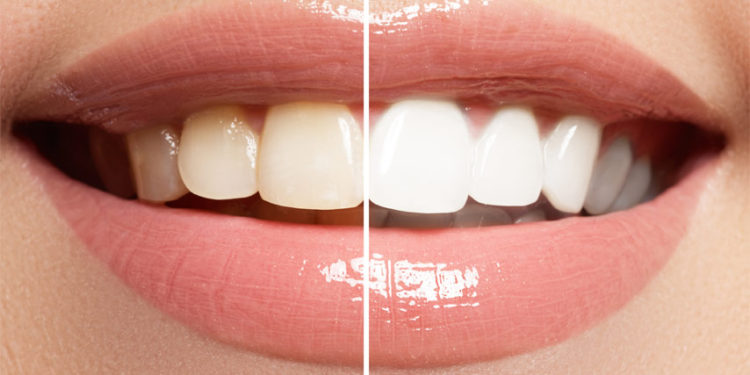
1. Floss

Floss at least once a day. This helps remove the plaque and food that’s beyond your toothbrush’s reach, according to the ADA. It doesn’t matter when you floss. Do it at night, do it in the morning, or do it after lunch… just do it!

2. Get regular dental cleanings

Your dentist can detect early gum disease symptoms if you see them on a regular basis. That way symptoms can be treated before they become more serious. A professional cleaning is the only way to remove tartar. It can also get rid of any plaque you missed when brushing or flossing. If you have gingivitis, brushing, flossing, and regular dental cleanings can help reverse it.

3. Quit smoking

Yet another reason for smokers to quit: Smoking is strongly associated with the onset of gum disease. Since smoking weakens your immune system, it also makes it harder to fight off a gum infection, say the Centers for Disease Control and Prevention (CDC)Trusted Source. Plus, smoking makes it more difficult for your gums to heal once they’ve been damaged.

4. Brush twice a day

Brush your teeth after every meal. This helps remove the food and plaque trapped between your teeth and gums. Scrub your tongue too, since it can harbor bacteria. Your toothbrush should have soft bristles and fit in your mouth comfortably.

Consider a battery-powered or electric toothbrush. These can help reduce gingivitis and plaque more than manual brushing. Swap toothbrushes or toothbrush heads every three to four months, or sooner if the bristles start to fray.

5. Use fluoride toothpaste

As for toothpaste, store shelves are lined with brands that claim to reduce gingivitis, freshen breath, and whiten teeth. How do you know which one is best for healthy gums? Make sure to choose toothpaste that contains fluoride and has the ADA seal of acceptance. After that, the flavor and color is up to you!

You can purchase toothpaste that contains fluoride online.

6. Use a therapeutic mouthwash

Usually available over the counter, therapeutic mouthwashes can help reduce plaque, prevent or reduce gingivitis, reduce the speed that tarter develops, or a combination of these benefits, according to the ADA. Plus: A rinse helps remove food particles and debris from your mouth, though it’s not a substitute for flossing or brushing. Look for the ADA seal, which means it’s been deemed effective and safe.

It doesn’t matter whether your brush, floss, or rinse first. Just do a good job and use the right products.

Importance of Brushing With Tooth Paste

Brushing with toothpaste is important for several reasons. 

  • First and foremost, a toothpaste and a correct brushing action work to remove plaque, a sticky, harmful film of bacteria that grows on your teeth that cause cavities, gum disease, and eventual tooth loss if not controlled. 
  • Second, toothpaste contains fluoride, which makes the entire tooth structure more resistant to decay and promotes remineralization, which aids in repairing early decay before the damage can even be seen. 
  • Third, special ingredients in toothpaste help to clean and polish the teeth and remove stains over time. Fourth, toothpaste help freshen breath and leave your mouth with a clean feeling.

What type of toothpaste should I use?

 As long as your toothpaste contains fluoride, the brand you buy really does not matter, neither does whether or not it is in the paste, gel or even powder form or containing a certain flavor. All fluoride toothpaste work effectively to fight plaque and cavities and clean and polish tooth enamel. Your toothpaste brand should bear the ADA (American Dental Association) seal of approval on the container, which means that adequate evidence of safety and efficacy have been demonstrated in controlled, clinical trials.

If your teeth are hypersensitive to hot or cold, consider trying a toothpaste designed for sensitive teeth. These “desensitizing” toothpaste, which contains strontium chloride or potassium nitrate, protect exposed dentin by blocking the tubes in the teeth that are connected to nerves. Desensitizing pastes must be used for at least one month before any therapeutic effects are felt.

Toothpaste containing baking soda and/or hydrogen peroxide (which are both good cleansing agents) give the teeth and mouth a clean, fresh, pleasant feeling that can offer an incentive to brush more, but fluoride is the true active ingredient at work protecting your teeth. Some prefer a tartar-control toothpaste containing pyrophosphates to prevent the build-up of soft calculus (tartar) deposits on their teeth. New pastes offer advanced whitening formulas aimed at safely removing stains to make teeth brighter and shinier, although they can’t nearly match the effectiveness of a professional bleaching formula administered or prescribed by a dentist.

How much should I use?

Contrary to what toothpaste commercials show, the amount of paste or gel needed on your brush for effective cleaning does not have to be a heaping amount. Simply squeeze a pea-sized dab of paste on the top half of your brush. If you brush correctly, holding the toothbrush at a 45-degree angle and brush inside, outside and between your teeth, the paste should foam enough to cover all of your teeth. Children under age 6, however, should be given a very small, baby pea-sized dab of toothpaste on their brush.

Is brushing with toothpaste enough to fight cavities and gum disease?

No. Although brushing thoroughly after each meal helps, flossing your teeth every day to remove plaque and food particles between teeth and at the gumline is just as important. Studies show that plaque will regrow on teeth that are completely clean within three to four hours of brushing.

8 Tips to Improve Dental Hygiene

A healthy mouth absolutely provides us nutrition for the physical body, but more importantly, it also improves our social interaction and encourages self-esteem. 

Our mouth serves as a “window” to the rest of the body, providing signals of general health diseases. For example, pale or bleeding gums can be a sign of blood disorders or low bone level in the lower jaw might be an early sign of osteoporosis. Poor oral health is significantly associated with major chronic diseases. 

Evidence from population-based studies significantly concludes a robust connection between poor oral health and cardiovascular disease, diabetes, kidney disease, oral cancer, adverse pregnancy outcomes, stomach ulcers, obesity and many more health diseases. 

Two main diseases which affect our Oral Health are Dental Caries (bacterial invasion of the tooth which demineralizes its surface and results in holes) and Gum Disease(bacterial invasion along the gum line causing an inflammatory response damaging the tissues and bones that support the teeth.) 

8 Tips to prevent tooth decay and gum disease: 

  1. Brush your teeth twice a day.

Don’t underestimate its importance. This is a simple step that should never be overlooked. Brushing your teeth in the morning and more importantly again at night is important to remove plaque build-up and bacteria that lead to tooth decay and periodontal disease. The Modifies Bass technique where you should hold the brush head at 45 degrees angle, partly on the gums, and gently move the brush in tiny circular motions or small horizontal strokes 20 times on each tooth shall improve your oral hygiene significantly. Note: Do not brush too vigorously as it can damage your gums and teeth. 

2. Floss daily.

Your brushing is not complete without flossing. Floss can reach the crevices too small for your brush bristles, so it’s a necessary step for a clean mouth. 

3. Oral Irrigators.

These are newer cleaning aids which pump water in a steady or pulsating manner and flushing out food and bacterial byproducts. 

4. Skip the sugar.

Sugary and starchy foods cause are action in your mouth that leads to tooth decay. Sugar reacts with the bacteria in your saliva to form an acid that erodes your tooth enamel, the outer protective layer of your teeth.

5. Swish with mouthwash.

For an added boost to your oral hygiene routine, rinse with an anti-bacterial mouthwash which is prescribed by your dentist. 

6. Use fluoride toothpaste.

Fluoride helps strengthen your tooth enamel to combat tooth decay.

7. Brush your tongue.

Don’t neglect your tongue! Your tongue harbour’s bacteria too, so use your toothbrush or a tongue scraper to give it a cleaning.

8. Pay attention to your mouth and gums.

This is the image description

 Note when your gums look inflamed or if you spot blood while brushing. Don’t ignore aches and pains. Consult your dentist to make sure it’s not a symptom of something serious.

Parents play a very important role in making sure that oral hygiene practices are taught early in childhood. Restrict bottle feeding to meal times. Avoid putting your baby to sleep with a bottle. The milk or juice that pools in the mouth will bathe teeth in the sugars on which bacteria feed. Before their teeth grow in, get your baby accustomed to regular oral care by wiping their gums twice per day with a clean, soft, thin cloth, such as a handkerchief. 
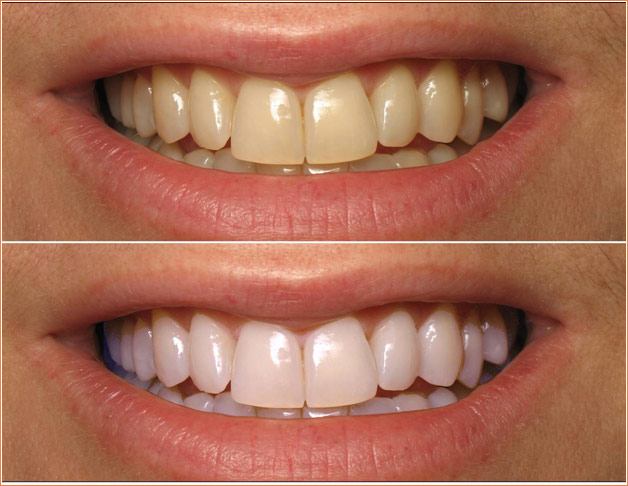
After your baby’s teeth erupt, switch to a baby toothbrush moistened with water. Don’t use toothpaste until your child is old enough to spit it out. Swallowing toothpaste while their teeth are developing can cause a condition called fluorosis, which occurs from absorbing too much fluoride and causes their teeth to look mottled or grainy. Your smile is one of the first things people notice. Good Oral Health changes far more than your outward appearance. It renews your confidence. It changes the way you view yourself. What’s more? it changes the way others see you.
Symptoms of Infected Wisdom Teeth

Wisdom teeth are the last teeth to break through the gums. They grow at the very back of a person’s mouth. There are normally four wisdom teeth in total, with one in each of the furthest corners of the top and bottom gums.

Symptoms of wisdom teeth infection

  • Red or swollen gums
  • Tender or bleeding gums
  • Jaw pain
  • Swelling around the jaw
  • Bad breath
  • An unpleasant taste in your mouth
  • Difficulty opening your mouth

Prevention

You can’t keep an impaction from occurring, but keeping regular six-month dental appointments for cleaning and checkups enables your dentist to monitor the growth and emergence of your wisdom teeth. Regularly updated dental X-rays may indicate impacted wisdom teeth before any symptoms develop.

Treatment for wisdom teeth infection

Infections caused by wisdom teeth can be treated:

  • by improving oral hygiene in the area
  • by having the area cleaned by a dentist
  • sometimes, by the prescription of antibiotics 

However, the infection may keep coming back if problem teeth are not removed. People who have other health problems, especially people with lower immunity, may have complications from these infections.

Some Facts About Proper Tooth Brushing

Brushing your teeth is one of the most important daily routines that you perform. But most of the time, we do not know how to brush properly. We often neglect the importance of proper brushing.

The duration, frequency, and technique of brushing determine your overall oral health, and hence it is crucial that you get it right. Brushing techniques like Sulcular, Charter, and Stillman are advised. It is also vital to know what kind of toothpaste and toothbrush are good for our teeth. Here are some of the brushing techniques, the type of toothbrush and toothpaste you must use, and how long you should brush for. Brushing Techniques More than the toothbrush and toothpaste you use, the technique you use for brushing has a more significant impact on your oral health. There are different brushing techniques, some for regular users and special ones for kids, or those with a recession. Regardless of what method you use, brushing for 2 minutes is recommended.

1. Sulcular Technique: This is a commonly advised technique. It is considered useful as it removes the debris from your teeth before it hardens to tartar.  Hold the brush at an angle of 45° to the teeth, with the bristles at the neck of the tooth below the gums. Direct the bristles towards the gums. Apply gentle force, without exerting too much pressure on the tooth and use back and forth strokes to brush two-three teeth at a time. Before you move to the next set of teeth, you should have made at least 10-15 strokes. Alternatively, you can also use a circular motion. Repeat this same process for all the teeth. As much attention you give to the front portion of your teeth, it is equally essential to brush the inner surfaces, called the lingual side. Hold the brush vertically while cleaning the lingual side. It is difficult to reach the posterior teeth, especially if you are using a larger sized toothbrush. But since maximum chewing happens with your molars, it is essential to focus on cleaning them. This technique, also called the bass technique can be modified by guiding the bristles towards the incisal or occlusal surfaces of the teeth. 

2. Charter Technique: The Charter technique of brushing is a technique meant for patients with gum problems. If your gums are receded, exposing the root surfaces, this technique is ideal. People with a prosthesis or braces also benefit from this technique. Unlike the Sulcular method, place the bristles in the direction of the occlusal surface, at an angle of 45 degrees. The rest of the technique is almost similar to the Charter technique where you can use circular or back and forth strokes to brush.Cover all the surfaces of all the teeth and do not miss the inner surfaces of all teeth.

3. Stillman Technique: For interdental plaque removal, the Stillman technique is effective. This can be considered an extension of the Bass technique. After you clean the area around the gums with back and forth strokes, move your brush towards the occlusal or incisal surface and repeat the back and forth strokes. 

TOOTHBRUSH

Most dentists recommend that you use a soft bristled toothbrush. This is because a toothbrush will hard bristles will be abrasive for the tooth enamel, and also for your gums. Strictly do not share your toothbrush with anyone, even your spouse or a close family member. Your mouth has millions of bacteria which will travel through your toothbrush. After every cycle of brushing, clean and rinse your brush correctly. Keep your toothbrush in an upright position and allow air-drying. Microbes are more likely to grow and flourish in a moist environment.So, if you store a toothbrush without drying, it is expected to be more contaminated.Just like most other objects, the efficacy of a toothbrush reduces as with usage. Change your toothbrush every three months, or even earlier if the bristles begin to show fraying.There are ways to keep the toothbrush bacteria free or at least reduce the microbial population in your toothbrush. One such method is soaking the brush in Listerine or Hydrogen Peroxide solution (2.5%- 3%).You should never put your brush in a microwave or any other heating device to kill the microbes. Such high temperatures will damage the bristles. FDA approved toothbrush sanitizers are also available.

 Toothpaste 

Any fluoridated toothpaste is okay for you as long as you use it in the right quantity and with the proper brushing technique. The amount that is just enough for you is the size of a pea. For children, the amount equivalent to a rice grain is enough. People have toothpaste preferences of a specific flavor, brand or price range.If you have some specific issues like sensitivity, gingivitis or exposed root surfaces, your dentist will prescribe a special toothpaste for you.  Other supplements to brushing In addition to brushing, there are other aids that you can use to enhance your oral hygiene status. You must also clean your tongue with a brush or a tongue cleaning aid to keep it bacteria and odor free. Dental floss, mouthwash, interdental cleaning aids, plaque disclosing agents – these are all examples of additional cleaning aids.

GENERAL PROCEDURE OF DISIMPACTION

1. DISIMPACTION is initiated by administration of local or general anesthetic as decided by dentist with patient’s consent.

2. Once anesthetized, In second step, the gums are incised and underlying bone is partially removed by surgical instruments to gain access to the impacted tooth.

3. In third step, it is decided by dental surgeon whether to remove the tooth as single structure or whether to split in multiple sections. 

4.Now after ensuring  the complete removal of all the pieces of wisdom tooth, the gum is approximated and sutures (stitches) are placed. The number of suture is decided by the dentist and depends on the size of incision.  5.Once the removal is completed, the dentist gives particular set of instructions to the patient so that the patient  can recover quickly along with the help of antibiotics and pain killers.

Generally the instructions are

1. Instructions for 1st  24 hours

(a) Patient is advised not to

  • Spit
  • Gargle
  • Brush

(b)Patient should be on liquid or semisolid diet preferably ice-creams, curds, lassi etc.

2. Instructions for remaining 3-5 days

  • Usually the patient is asked,
  • Not to have hot, hard and spicy
  • Not to use straw
  • Must clean the mouth specially the extraction area using warm water with salt
  • Not to miss any dosage of medication / prescription 
  • Not to open the mouth very wide
  • To come back for follow up after medication are over.

Usually in 3-5 days the primary healing may be completed, but for completion of healing of jaw bone it may take up to 4 weeks.However the patient will be able to continue his/ her daily activities without any trouble within third day of the surgery.As the surgical procedure is painless and while recovery the pain is controlled by medicines. However, patients cooperation to keep the surgical site clean after having food is of utmost importance.

RCT / Endodontics

Endodontics

General dentists are great for those times when you need to have your teeth cleaned or a cavity filled. In some cases though, you’re better off consulting a specialist. Orthodontists, for example, specialize in straightening and aligning the teeth, periodontists focus on the gums and bone, and endodontists focus on endodontics, or issues concerning the roots of the teeth. While general dentists can perform the procedures and treatments offered by specialists, dental specialists have received additional years of training and have decided to focus their practice on treating specific dental conditions.

Here’s a crash course on endodontists and when you may have to visit this specialist.

Understanding Endodontics

As the American Dental Association points out, the term “endodontics” derives from the Greek words “endo,” which means “inside,” and “odont,” which means tooth. So the job of an endodontist is to treat the inside of the teeth.

Often, the goal in endodontics is to save the tooth. Instead of simply pulling a diseased or damaged tooth, an endodontist clears the infection and decay to protect the interior of the tooth from further damage. Root canals are the treatment endodontists are most well-known for performing on a patient’s tooth.

During a root canal, the endodontist performs local anesthesia on the gum tissue around the tooth and then removes the infected tissue and pulp from inside the tooth. He or she then deep cleans the chamber that held the pulp and the roots, removing any lingering bacteria. Once all traces of infection are gone and the interior of the tooth is fully dry, the endodontist fills the chamber and roots with a special material called gutta-percha. Depending on how the exterior of the tooth looks, the endodontist will work with the dentist who will finish the treatment by placing a crown or other type of dental restoration on the tooth to protect it.

An endodontist can also perform surgery to correct a tooth that didn’t fully heal after a root canal or can perform an apicoectomy, a surgery that removes the tip of a tooth’s roots. Although the work endodontists do is often associated with infection and severe decay, they can also work to save teeth that have been damaged by injury.

When Should You See an Endodontist?

If you have pain in a tooth or teeth or a history of injury to the teeth that can affect the roots and pulp, your general dentist is likely to refer you to an endodontist. Why see an endodontist when a general dentist is usually capable of and allowed to perform root canals and other treatments?

For one thing, endodontists have more training in root canals than general dentists. They not only have an extra two years of education beyond dental school, as the American Association of Endodontists (AAE) points out, they are also better trained in and experienced with using advanced technology to improve your comfort during the treatment and to improve the results of the treatment. The average endodontist performs about 25 root canals each week, while a general dentist usually performs two per week.

It’s very likely that your general dentist will advise you to see an endodontist if he or she thinks you need to be seen by this dental specialist for further evaluation. As the AAE notes, about half of all general dentists refer patients in need of a root canal to an endodontist. You can also choose to schedule an appointment with an endodontic specialist if you have pain in your teeth, notice that a tooth is cracked or if a tooth has been knocked out or shifted out of position.

Your general dentist can help keep your teeth and gums clean and healthy and can be a great resource when you have problems with your teeth. You also have the power to keep your teeth healthy at home with a great oral hygiene routine, which may include brushing with a toothpaste like Colgate TotalSF Advanced Deep Clean, which helps prevent plaque, gingivities, tartar build-up and cavities. But if you need a specific treatment, such as a root canal, you’re usually better off calling in the help of a specialist.

Attributes of an Endodontist

Having advanced training in this specialty involves at least two extra years of study and clinical hours beyond the conventional four years of dental school. After completion, this specialist is uniquely qualified to best treat an infected tooth and alleviate pain. A practicing endodontist will, on average, do 25 or more root canals or other procedures related to a tooth infection per week. This schedule makes them efficient and flexible since they do not perform other routine dental procedures. Additionally, most will see patients on the same or next day, and many have Saturday and evening hours.

This expert care is why you may be referred to an endodontist. They regularly attend continuing education classes and seminars to stay abreast of the latest technology for diagnosis and treatment. This includes the use of microscopes, lasers, ultrasonic instruments and imaging tools that are digital, 3D and fiber optic. Using these advanced technologies helps ensure that the tooth or teeth can be saved and function successfully in the future.

Endodontic Treatments and Procedures

The most common referral to an endodontist is for a root canal: a procedure that cleans the infected pulp area, relieving pain and saving the tooth. Most infections in the pulp of the tooth are caused by advanced decay or a deep cavity that was prepped and treated in proximity to the pulp. Endodontics also involves re-treatment of a root canal that didn’t clear up the initial infection, or a surgical procedure at the tip of the root. Traumatic injury to teeth can also cause tooth pulp to become necrotic and require a root canal to retain the tooth or teeth.

Endodontists are great at saving teeth, however occasionally a tooth or teeth may have complications beyond their abilities. The good news is that these specialists possess the skills and advanced diagnostic tools to determine the best treatment for you. This could mean a referral for an extraction and tooth replacement to restore your smile, but only after all treatment options are explored. Doing everything to save your tooth is an endodontist’s first priority because the general belief is your natural tooth is best! Keep your mouth healthy by practicing optimal home care, like brushing and flossing and regular dental visits. However, even with proper oral hygiene, problems and infections can still occur. During treatment, brushing with a toothpaste for sensitivity can be helpful. Relieving your pain and maintaining your smile is your dentist’s first priority, and he or she will not hesitate to refer you to the champion of tooth saving: the endodontist!