When we think about taking care of our teeth, most of us follow a standard mental checklist: brush twice a day, floss occasionally, and avoid eating too much sugar. If nothing hurts and there is no visible cavity, we assume our oral health is in perfect condition.
However, your mouth is a complex ecosystem. Dental issues rarely start with severe, sudden pain. Instead, they begin with subtle, quiet warnings—hidden signs that are incredibly easy to overlook or dismiss as temporary inconveniences.
Ignoring these minor changes can lead to serious consequences, including progressive gum disease, tooth loss, systemic health infections, and expensive corrective treatments. At Stavya Dental Hospital, we believe that prevention and early detection are the cornerstones of a healthy smile.
In this comprehensive guide, we will uncover the top hidden signs of oral health problems that most people ignore, why they happen, and when you should seek professional care.
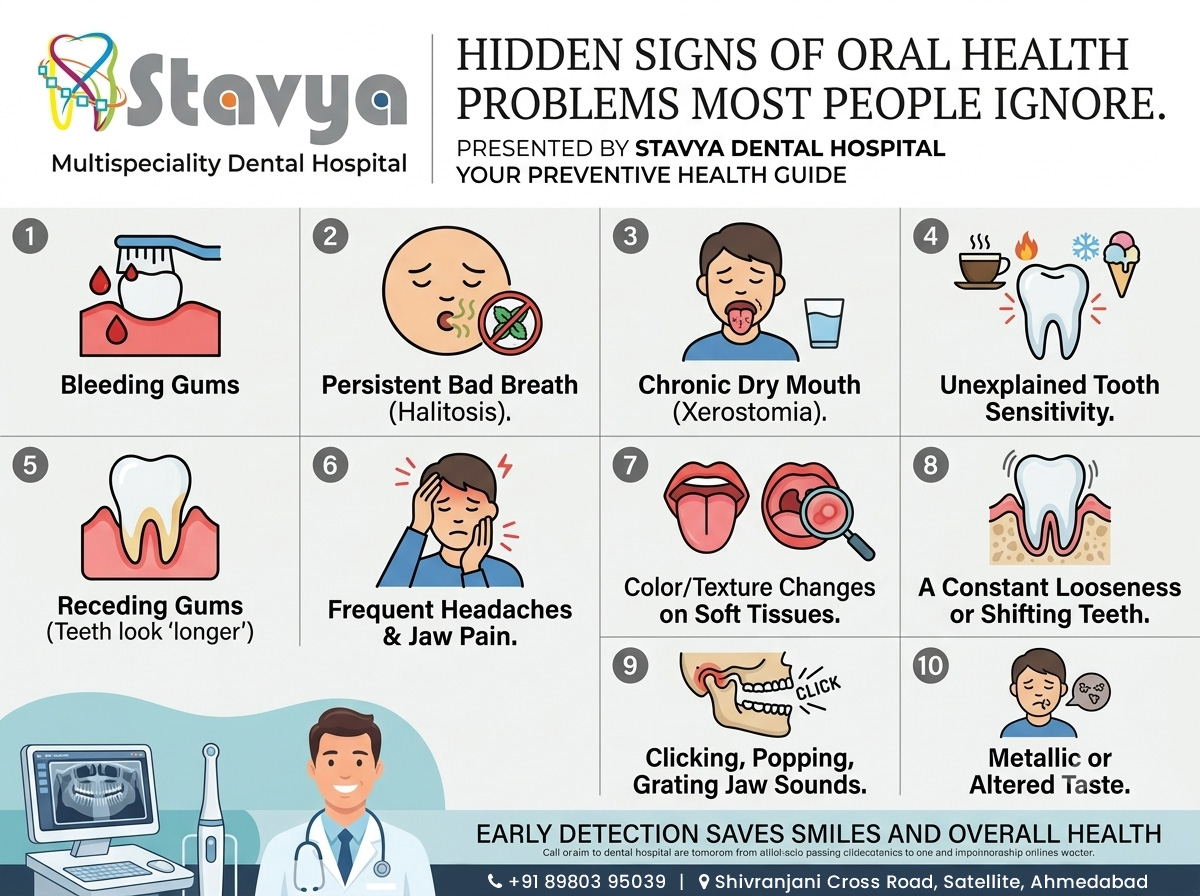
1. Bleeding Gums During Brushing or Flossing
One of the most common myths in oral hygiene is that a little bit of blood in the sink is normal, especially if you brush too hard or haven’t flossed in a while.
The Reality: Healthy gums do not bleed. If your gums bleed when you brush or floss, it is the primary warning sign of gingivitis—the earliest stage of gum (periodontal) disease. Gingivitis is caused by the buildup of plaque, a sticky film of bacteria that hardens into tartar if not removed. The bacteria irritate and inflame the gum tissue, making it fragile.
If left untreated, gingivitis can progress to periodontitis, which destroys the bone and tissue supporting your teeth, eventually leading to loose teeth.
2. Chronic Bad Breath (Halitosis) That Doesn’t Go Away
Everyone experiences “morning breath” or temporary bad breath after eating garlic or onions. But if you find yourself constantly reaching for mints, mouthwash, or gum, and the odor returns within minutes, it’s not just a social inconvenience—it’s a dental warning sign.
The Reality: Chronic bad breath (halitosis) is often caused by volatile sulfur compounds produced by bacteria living in your mouth. These bacteria thrive in hidden places: deep inside cavities, under ill-fitting crowns, in the pockets formed by gum disease, or on the back of your tongue.
Masking the smell with mouthwash only hides the symptom while the underlying bacterial infection continues to worsen.
3. Persistent Dry Mouth (Xerostomia)
Feeling thirsty after a workout or on a hot day is normal. However, a chronically dry, sticky mouth—where you feel like you don’t have enough saliva—is a condition known as xerostomia.
The Reality: Saliva is your mouth’s natural defense mechanism. It washes away food particles, neutralizes harmful acids produced by bacteria, and provides essential minerals to remineralize your tooth enamel.
When your saliva production drops, your risk of rapid tooth decay, gum disease, and oral infections (like thrush) skyrockets. Dry mouth can be caused by dehydration, certain medications, lifestyle habits, or underlying medical conditions like diabetes.
4. Unexplained Tooth Sensitivity to Hot, Cold, or Sweet
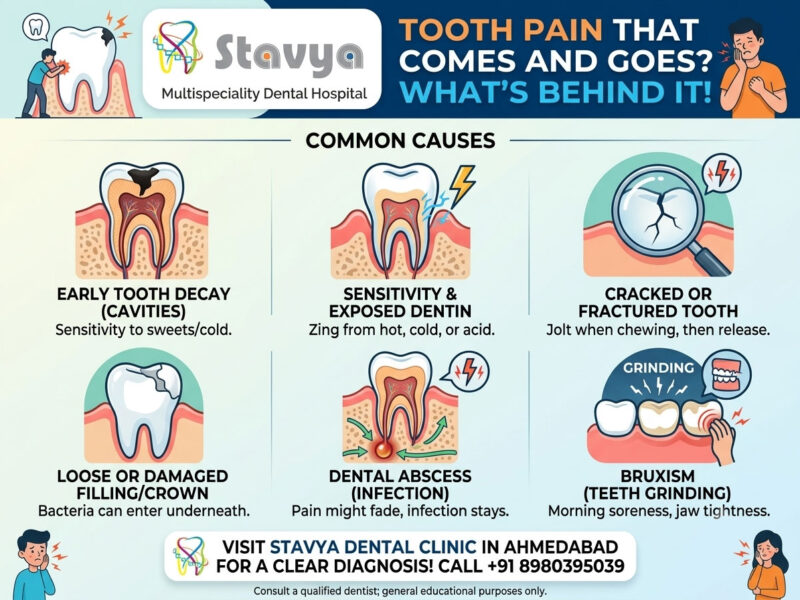
It is common to feel a brief flash of discomfort when biting into an ice cream cone or drinking piping hot coffee. However, if this sensitivity is new, localized to a specific tooth, or lingers for several seconds after you’ve finished eating or drinking, it demands attention.
The Reality: Sensitivity occurs when the protective outer layer of your tooth (enamel) thins out, or when the gums recede, exposing the underlying layer called dentin. Dentin contains thousands of microscopic tubules that lead directly to the tooth’s nerve center.
Lingering sensitivity can indicate:
- An undetected cavity or micro-crack in the tooth.
- Worn-out dental fillings.
- Receding gums exposing the tooth roots.
- Early stages of an infection in the dental pulp.
5. Receding Gums (Teeth Looking “Longer”)
Do your teeth look longer than they used to? Do you notice a slight notch or groove near the gumline when you run your tongue over your teeth?
The Reality: Gum recession is a slow, gradual process where the gum tissue pulls away from the tooth, exposing the root underneath. Because it happens so slowly, most people don’t notice it until it reaches an advanced stage.
Exposed roots lack the hard protection of enamel, making them highly vulnerable to decay, root cavities, and severe sensitivity. Gum recession is often driven by aggressive brushing habits, teeth grinding, or chronic periodontal disease. Once gum tissue is lost, it does not grow back on its own.
6. Frequent Headaches, Jaw Soreness, or Neck Pain
Many people suffer from chronic morning headaches or tension in their neck and shoulders, attributing it to stress, poor posture, or lack of sleep. They rarely think to consult a dentist for these symptoms.
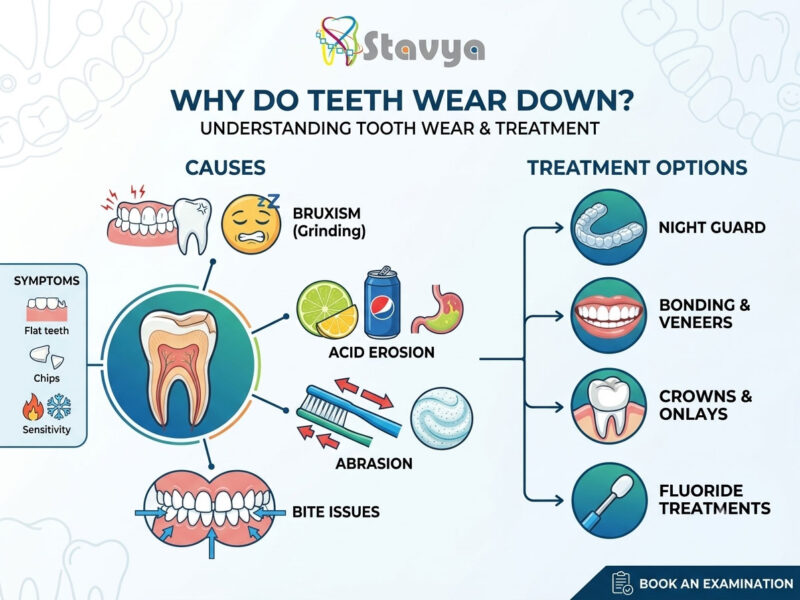
The Reality: These aches are classic signs of bruxism (habitual teeth grinding or clenching) or a Temporomandibular Joint (TMJ) disorder. Bruxism often happens unconsciously during sleep.
The immense pressure placed on your teeth and jaw joints strains the surrounding facial muscles, leading to referred pain in the head, neck, and upper back. Over time, grinding can flatten, chip, or fracture your teeth, destroying your enamel and misaligning your bite.
7. Changes in the Texture or Color of Your Tongue and Inner Cheeks
We often focus entirely on our teeth when looking in the mirror, ignoring the soft tissues of the mouth. However, your tongue, inner cheeks, and the roof of your mouth can hold vital clues about your health.
The Reality: Look out for white patches (leukoplakia), bright red patches, or persistent sores that do not heal within 10 to 14 days. While many oral sores are harmless canker sores caused by stress or minor trauma, non-healing patches can be early indicators of oral fungal infections, viral conditions, or even oral cancer. Early detection of oral soft-tissue abnormalities significantly improves treatment outcomes.
8. A Constant Looseness or Shifting of Teeth
If you are an adult, your teeth should feel firmly anchored in your jawbone. If you notice a slight wiggle when you touch a tooth, or if it feels like your teeth are gradually shifting positions or changing your bite, this is a red flag.
The Reality: Shifting or loose teeth indicate that the underlying support structures—the alveolar bone and the periodontal ligaments—are being compromised. The most common culprit is advanced periodontal disease, where bacterial infections eat away at the bone holding the teeth in place. Bone loss is irreversible, making immediate intervention crucial to save the tooth.
9. Clicking, Popping, or Grating Sounds in the Jaw
When you yawn, chew food, or speak, does your jaw make a distinct clicking or popping sound? Does your jaw ever feel like it briefly gets “stuck” or locked in an open or closed position?
The Reality: This indicates a mechanical issue within your temporomandibular joints (the joints connecting your lower jaw to your skull). This could mean the cartilage disc inside the joint has slipped out of place or that there is localized inflammation. While it may not always be painful initially, ignoring it can lead to chronic jaw pain, difficulty chewing, and permanent joint damage.
10. A Metallic or Altered Taste in Your Mouth
If you notice a persistent metallic, sour, or bitter taste in your mouth that lingers even after brushing your teeth or using mouthwash, it shouldn’t be ignored.
The Reality: An altered sense of taste (dysgeusia) is frequently linked to a hidden oral infection. It can be caused by pus draining from a silent tooth abscess, blood leaking from infected gum pockets, or a breaking down of old dental restorations (like silver amalgam fillings). It can also indicate dry mouth or a side effect of certain medications.
The Danger of the “No Pain, No Problem” Mentality
The biggest mistake patients make is equating the absence of pain with the absence of disease. Unlike many other parts of the body, your teeth do not have a robust system of early-warning pain receptors for mild issues.
By the time a tooth actually starts to ache intensely, the decay has usually bypassed the enamel and dentin and reached the living nerve inside the pulp. At this point, simple, conservative treatments like a minor filling are no longer options. Instead, you may require a root canal treatment, a dental crown, or even an extraction.
Regular dental checkups act as an early-warning radar system, catching these hidden signs long before they develop into painful, complex emergencies.
How to Perform a 2-Minute Oral Health Self-Audit at Home
While you should never attempt to self-diagnose, performing a quick self-audit in front of a well-lit mirror once a month can help you spot changes early. Ask yourself these questions:
- Look at your gums: Are they pale pink and firm, or are they red, puffy, and rolled at the edges?
- Look at your teeth: Do any teeth look longer? Do you see any dark spots, white chalky lines, or chips?
- Feel your bite: Do your upper and lower teeth come together normally, or does it feel different?
- Check your tongue and cheeks: Are there any unusual spots, bumps, or sores that have been there for over two weeks?
- Evaluate your comfort: Do you feel a dull ache in your jaw when you wake up in the morning?
If you answer “yes” to any of these questions or notice anything unusual, it’s time to book a professional evaluation.
Why Choose Stavya Dental Hospital for Your Oral Health Journey?
At Stavya Dental Hospital, your smile and long-term well-being are our highest priorities. We understand that visiting the dentist can sometimes feel intimidating, which is why we have built a practice centered on patient comfort, state-of-the-art technology, and compassionate care.
Here is what sets us apart:
- Comprehensive Diagnostic Technology: We utilize advanced digital X-rays and intraoral cameras that allow us to see hidden decay between teeth, micro-fractures, and early bone loss that are completely invisible to the naked eye.
- Expert Team of Specialists: From preventive cleanings and routine fillings to advanced root canals, dental implants, orthodontics, and gum therapies, our highly experienced team covers all aspects of oral healthcare under one roof.
- Patient-Centric, Pain-Free Approach: We prioritize minimally invasive techniques to ensure your treatment is as comfortable, stress-free, and pain-free as possible.
- Focus on Education: We don’t just treat problems; we help you understand why they occurred and give you the tools and knowledge to maintain a flawless smile at home.
Don’t Wait for Pain to Strike: Schedule Your Checkup Today!
Your oral health is a vital window into your overall bodily health. Conditions like gum disease have been scientifically linked to systemic issues, including heart disease, diabetes complications, and respiratory infections. Taking care of your mouth is an essential step in taking care of your entire body.
If you have noticed any of the hidden signs mentioned in this article—or if it has been more than six months since your last professional dental cleaning and examination—don’t wait for pain to sound the alarm.
Take proactive control of your health today. Connect with our expert team at Stavya Dental Hospital to schedule your comprehensive oral consultation.
- Visit Our Website: www.stavyadental.com
- Call / Book an Appointment: +91 8980395039