Healthy gums are the literal foundation of a beautiful smile. While we often focus heavily on keeping our teeth white and cavity-free, the periodontal tissues holding those teeth in place are just as critical. When plaque and tartar are allowed to accumulate along the gumline, they can trigger a progressive infection known as periodontal disease (gum disease).
If left untreated, advanced gum disease destroys the supporting bone structure, leading to painful abscesses, chronic halitosis, and ultimately, tooth loss. When gum disease reaches an advanced stage (periodontitis), standard non-surgical deep cleanings—like scaling and root planing—are no longer enough. At this point, surgical intervention is required to clean the deep, infected pockets beneath the gumline.
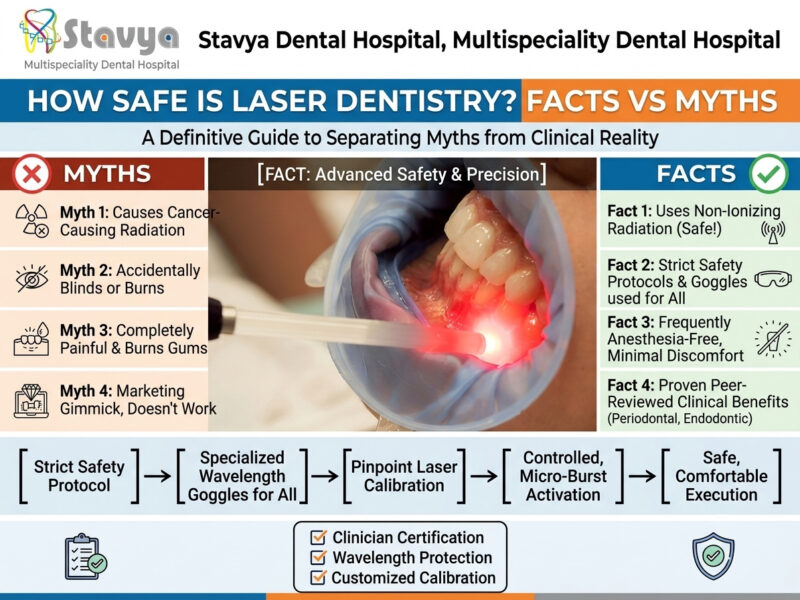
Historically, the mention of “gum surgery” brought to mind images of scalpels, incisions, heavy bleeding, and stitches. Fortunately, modern medical technology has introduced an advanced alternative: Laser Gum Surgery.
At Stavya Dental Hospital, we pride ourselves on offering patients the most cutting-edge, gentle, and effective periodontal therapies available. If you have been diagnosed with advanced gum disease, understanding the differences between Traditional Pocket Reduction Surgery and Laser Periodontal Therapy can help you make an informed, confident decision about your care.
Understanding Traditional Gum Surgery (Osseous Surgery)
To fully appreciate the innovations behind laser treatments, it helps to understand how traditional periodontal surgery is performed. Known clinically as flap surgery or osseous surgery, this method has been the gold standard of periodontal care for decades.
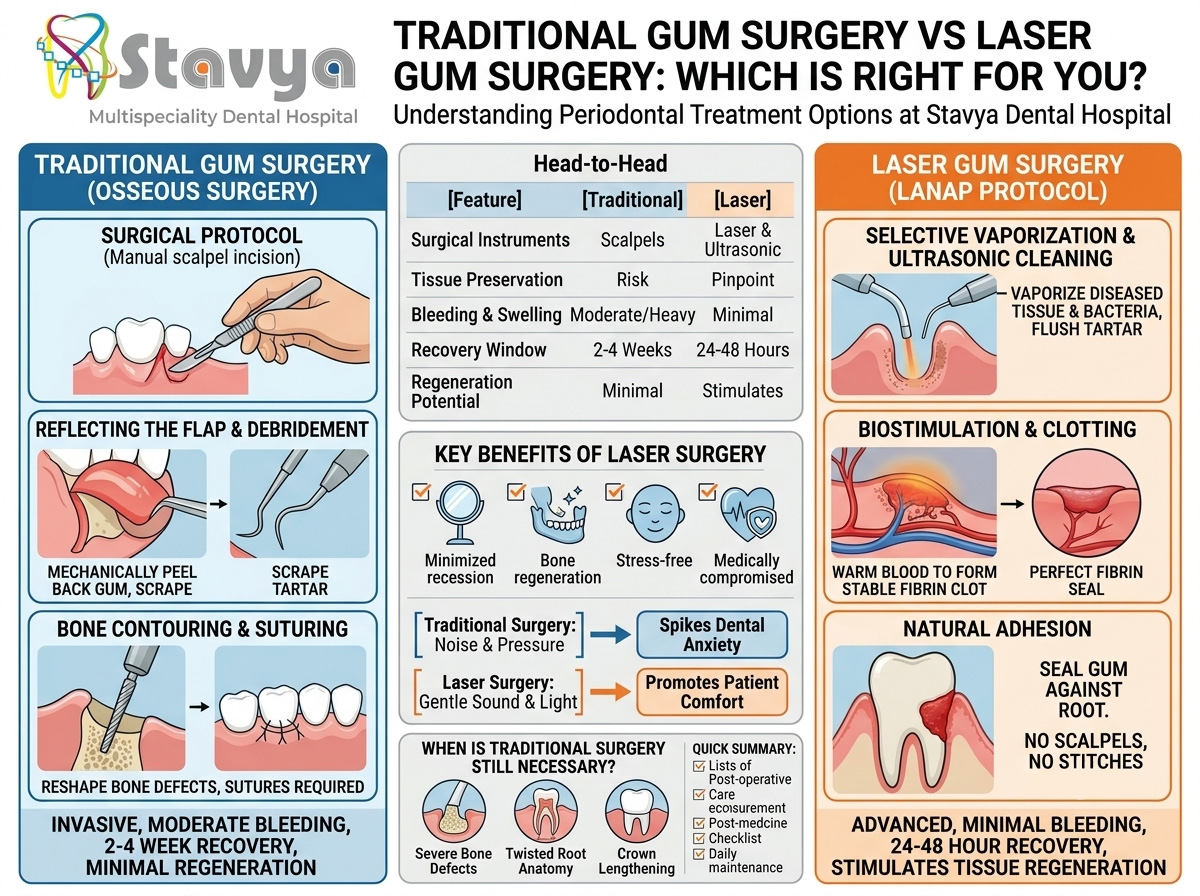
The Surgical Protocol
- The Incision: The periodontist uses a manual steel scalpel to make precise cuts along the gumline.
- Reflecting the Flap: The gum tissue is mechanically peeled back or “reflected” away from the teeth and underlying bone. This creates a surgical “flap” that gives the clinician a direct line of sight to the infected root surfaces and damaged bone.
- Debridement & Scaling: Using hand curettes and ultrasonic scalers, the surgeon manually scrapes away calcified tartar, plaque, and diseased granulation tissue clinging to the tooth roots.
- Bone Contouring: If the bacterial infection has eaten away portions of the jawbone, creating sharp, irregular defects, the surgeon uses a high-speed mechanical bur to smooth and reshape the bone.
- Suturing: Once the area is thoroughly cleaned, the gum flap is pulled back down and tightly anchored into place around the teeth using dental sutures (stitches).
While traditional surgery is highly effective at reducing pocket depths and stopping the progression of bone loss, it is inherently invasive. It requires deep local anesthesia, causes post-operative swelling, and involves a multi-week recovery timeline.
Understanding Laser Gum Surgery (LANAP Protocol)
Laser gum surgery represents a major paradigm shift in how we manage advanced periodontal disease. Instead of relying on physical blades to cut open the mouth, this method utilizes specialized, highly calibrated dental lasers—most notably the Nd:YAG laser used in the LANAP (Laser-Assisted New Attachment Procedure) protocol.
The Laser Protocol
Rather than cutting away healthy tissue to reach an infection, the laser fiber-optic tip is gently inserted directly into the pre-existing pocket between the tooth and the gum.
- Selective Vaporization: The specific wavelength of the laser light is highly absorbed by dark pigments. Because periodontal pathogens and diseased, necrotic tissues are heavily pigmented, the laser instantly vaporizes them while leaving the healthy, pink gum tissue entirely untouched.
- Ultrasonic Cleaning: Once the bacteria and diseased tissue are cleared away, an ultrasonic scaler is used to gently flush out calcified tartar deposits from the root surface.
- Biostimulation & Clotting: The laser is passed through the pocket a second time on a different setting. This thermal energy targets the blood vessels at the base of the pocket, sterilizing the zone completely and warming the blood to form a highly stable, sterile fibrin clot.
- Natural Adhesion: This sticky fibrin clot acts as a natural biological glue, sealing the gum tissue tightly back against the clean root surface. No scalpels are used, and absolutely no stitches are required.
Head-to-Head Comparison: Traditional vs Laser Gum Surgery
When deciding which surgical approach to take, evaluating how each method impacts the clinical outcome and your personal comfort is essential.
| Feature / Metric | Traditional Flap Surgery | Advanced Laser Gum Surgery |
| Surgical Instruments | Scalpels, manual scrapers, and mechanical bone drills. | Focused fiber-optic laser light beams and ultrasonic waves. |
| Tissue Preservation | High risk of losing healthy tissue; may cause gum recession. | Pinpoint accuracy; selectively destroys only diseased tissues. |
| Bleeding & Swelling | Moderate to heavy bleeding; requires sutures to control. | Minimal to no bleeding; laser instantly cauterizes blood vessels. |
| Post-Operative Pain | Requires prescription pain medication and a soft diet for weeks. | Mild soreness; usually managed with over-the-counter anti-inflammatories. |
| Recovery Window | 2 to 4 weeks for complete soft-tissue healing. | 24 to 48 hours; most patients return to work the next day. |
| Regeneration Potential | Focuses on stopping disease; rarely regenerates lost bone. | Stimulates stem cells to grow new bone and periodontal ligaments. |
Deep Dive into the Benefits of Laser Gum Surgery
For patients looking for a more comfortable, predictable alternative to traditional surgeries, lasers offer an array of unique physiological and psychological advantages.
1. Minimal Post-Operative Gum Recession
A major side effect of traditional flap surgery is that cutting and stitching the gums often causes them to shrink or recede as they heal. This exposes the sensitive root surfaces of your teeth, making them highly susceptible to hot and cold sensitivity, root cavities, and making the teeth appear longer (a “toothy” smile). Because lasers do not remove healthy tissue, gum recession is virtually eliminated, preserving your natural smile cosmetics.
2. True Bone and Tissue Regeneration
Traditional surgery is primarily subtractive—it cuts away diseased tissue to halt an infection. Laser therapy, by contrast, is regenerative. The specific energy of the laser stimulates dormant stem cells inside the jawbone and periodontal ligament fibers. Clinical studies have proven that laser therapy can actively trigger the body to rebuild the jawbone and attachment fibers that were previously destroyed by bacteria.
3. A Stress-Free, Quiet Experience
Dental anxiety is incredibly common, and much of it is triggered by the sounds and sensations of oral surgery. The high-pitched whine of bone drills, the pressure of scraping, and the sight of surgical needles can make traditional surgery intimidating.
[Traditional Surgery: Noise & Pressure] ➡️ [Spikes Dental Anxiety]
                      VS
[Laser Surgery: Gentle Sound & Light]   ➡️ [Promotes Patient Comfort]
A dental laser operates with a gentle, rhythmic whispering or clicking sound. Because there is no mechanical vibration or pressure, patient anxiety levels drop dramatically.
4. Exceptional Safety for Medically Compromised Patients
Traditional surgery can be risky for patients with underlying medical conditions. For instance, individuals taking blood thinners (aspirin, warfarin) or those with diabetes or heart conditions must often alter their medications prior to scalpel-based surgeries to prevent dangerous bleeding or infection. Because lasers cauterize blood vessels and sterilize the area on contact, it is incredibly safe for patients with systemic health conditions, requiring far fewer medical disruptions.
When Is Traditional Flap Surgery Still Necessary?
While laser dentistry is a fantastic, highly versatile option, it is important to understand that it is not a magical cure-all for every single clinical scenario. There are specific advanced conditions where traditional osseous surgery remains the ideal treatment choice:
- Severe Bone Defects: If the jawbone has degraded into deeply complex, craters or sharp angles, a periodontist may need to open a traditional surgical flap to physically place bone grafts and barrier membranes to rebuild the foundation.
- Anatomical Restrictions: If the root anatomy of a multi-rooted tooth (like a molar) is highly twisted or complex, a traditional flap provides the maximum visibility required to ensure every single microscopic trace of tartar is eliminated.
- Crown Lengthening Requirements: If a tooth is broken off beneath the gumline and needs to be exposed so a crown can be placed, traditional manual recontouring of the gum and bone is still the standard protocol.
During your comprehensive periodontal evaluation at Stavya Dental Hospital, our specialists utilize advanced digital X-rays and periodontal probing to determine exactly which methodology matches your unique clinical needs.
Post-Operative Care: What to Expect After Treatment
Your recovery routine will vary depending on the type of gum surgery you undergo.
Recovery After Traditional Surgery
- You will need to eat a strict soft-food diet (smoothies, yogurts, soups) for 1 to 2 weeks to avoid tearing your stitches.
- You must avoid brushing or flossing the surgical site directly until the sutures are removed by your dentist.
- You may experience noticeable facial swelling and bruising, requiring regular ice pack applications.
Recovery After Laser Surgery
- Because your gums are sealed with a natural blood clot rather than stitches, you must avoid eating hard, crunchy, or sharp foods (like chips or nuts) for the first week to keep from disrupting the healing seal.
- You can resume light daily activities immediately; most patients experience nothing more than a mild, passing soreness.
- You will be instructed to use a specialized, ultra-soft toothbrush or an antimicrobial rinse to keep the area clean without aggressively disturbing the gum line.
Step Up Your Periodontal Maintenance Checklist
Regardless of which surgery you choose, maintaining your results requires long-term commitment. Use this daily checklist to prevent gum disease from returning:
- [ ] Interdental Cleaners: Use custom-sized interdental brushes or a high-quality water flosser to flush out debris from between your teeth daily.
- [ ] Antimicrobial Support: Incorporate a dentist-recommended chlorhexidine or essential-oil mouthwash to keep bacterial counts low.
- [ ] The Power Brush: Switch to an electric toothbrush with a pressure sensor to thoroughly clean your teeth without aggressively scrubbing your delicate gums.
- [ ] Strict Prophylaxis: Commit to routine professional cleanings and periodontal maintenance checks every 3 to 4 months following your surgery.
Experience Advanced Periodontal Care at Stavya Dental Hospital
Facing gum disease can feel overwhelming, but you don’t have to navigate it with fear or discomfort. At Stavya Dental Hospital, our elite team of periodontists and dental specialists is dedicated to saving your natural teeth using the least invasive, most comfortable technologies available.
By utilizing advanced laser dentistry wavelengths alongside traditional clinical excellence, we tailor our treatments to provide rapid healing, minimal discomfort, and highly predictable results. We walk with you through every stage of your treatment with complete transparency, empathy, and unparalleled clinical care.
Schedule Your Advanced Gum Assessment Today
Don’t let bleeding, swollen gums threaten the longevity of your smile. Reach out to our dedicated patient care team today to book your comprehensive periodontal evaluation.
- Official Website: www.stavyadental.com
- Direct Hotline / Appointments: +91 8980395039