A toothache that comes and goes can be easy to dismiss — especially when life gets busy and the pain seems to settle down on its own. But at Stavya Dental Clinic, we see the same story play out often: a “manageable” toothache quietly turns into a dental infection, and by the time a patient walks in, what could have been a simple filling has become a much bigger problem.
So what actually happens if a tooth infection is left untreated? The honest answer is that it doesn’t stay contained. A dental infection is a bacterial infection, and like any bacterial infection in the body, it can spread if it isn’t treated — sometimes with consequences far beyond the tooth itself. This guide walks through exactly how an untreated tooth infection progresses, the warning signs at each stage, and why prompt treatment matters so much more than most people realize.
What Is a Tooth Infection, Exactly?
A tooth infection (also called a dental abscess) usually begins when bacteria get inside the tooth — through a deep cavity, a crack, or a failed old filling — and reach the soft pulp tissue at the tooth’s core, where the nerves and blood vessels live. Once bacteria reach the pulp, the body’s immune response kicks in, and pus begins to collect at the root tip, forming an abscess.
If you’ve been noticing symptoms like tooth pain that’s worse in the morning or a cavity you’ve been putting off, it’s worth understanding that decay doesn’t stop progressing on its own. In fact, we’ve written before about how long a cavity can actually wait before it becomes a bigger problem — and an untreated infection is often the next chapter of that same story.
The Early Warning Signs
Before an infection becomes an emergency, the body usually sends signals. Recognizing them early is the single best way to avoid the complications discussed later in this article.
- Persistent, throbbing tooth pain that doesn’t fully go away with over-the-counter painkillers
- Sensitivity to hot and cold that lingers well after the stimulus is removed
- Pain when chewing or biting down on the affected tooth
- Swelling in the gum, face, or jaw near the tooth
- A bad taste in the mouth or persistent bad breath from draining pus
- A visible pimple-like bump on the gum (a sinus tract, which is the body’s way of draining the infection)
- Fever or general fatigue, indicating the infection is affecting the whole body
If any of these sound familiar, it’s worth booking a comprehensive dental checkup sooner rather than later — catching an infection at this stage is far easier to treat than waiting for it to progress.
Stage by Stage: How an Untreated Infection Progresses
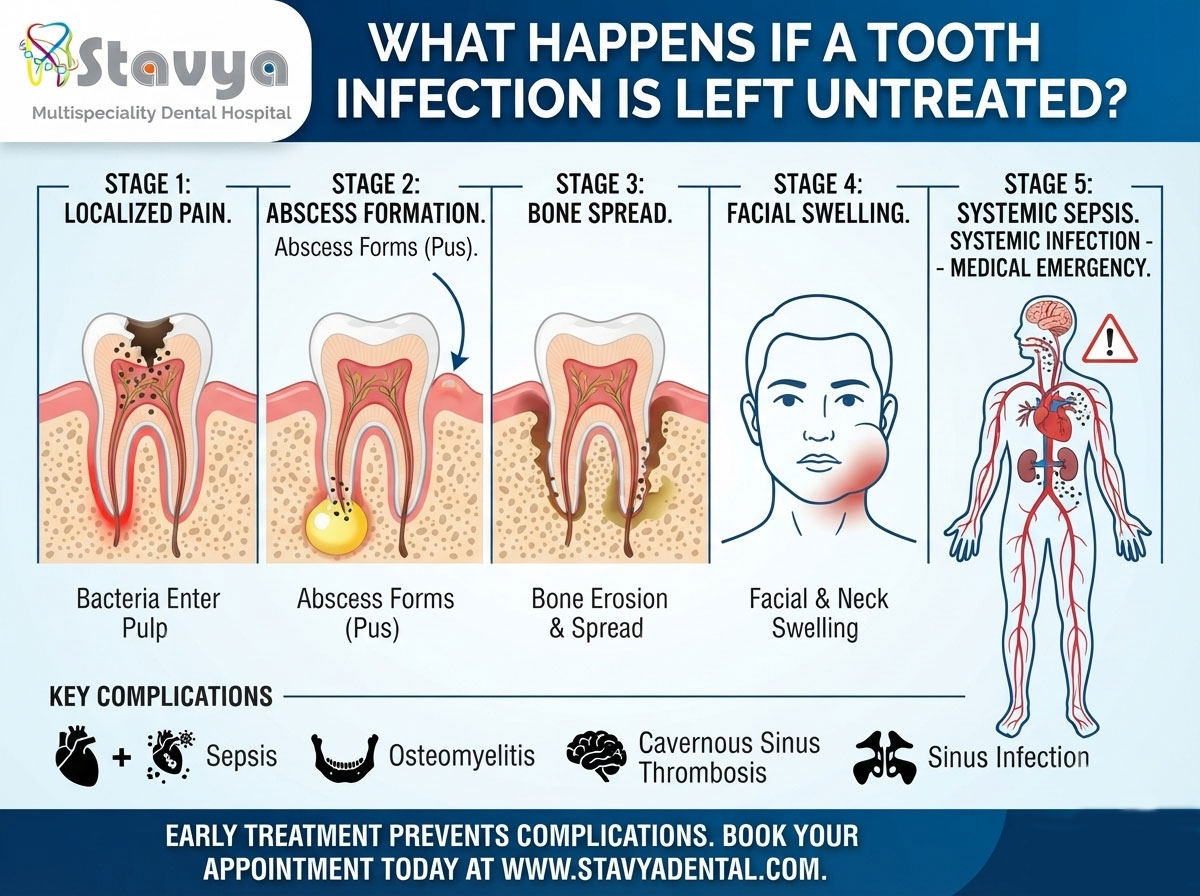
Stage 1: Localized Pain and Sensitivity
At the earliest stage, the infection is usually confined to the pulp of the tooth. Pain tends to be sharp and triggered by specific stimuli — hot drinks, cold air, or pressure while chewing. This is often when patients still consider skipping the dentist because “it’s not that bad yet.” Unfortunately, once bacteria have reached the pulp, the tooth cannot heal itself. Antibiotics alone won’t resolve it either, because the infected pulp tissue has no blood supply left to deliver medication to. Treatment at this stage typically involves root canal therapy to remove the infected tissue and seal the tooth.
Stage 2: Abscess Formation
As the infection continues untreated, pus builds up at the root tip, forming a dental abscess. Pain often becomes constant and throbbing rather than triggered only by stimuli, and you may notice localized swelling in the gum. An X-ray at this stage — the kind of imaging we perform in our radiology department — typically shows a dark spot at the root tip, confirming the infection has spread beyond the tooth itself into the surrounding bone.
Stage 3: Spread to Surrounding Bone and Tissue
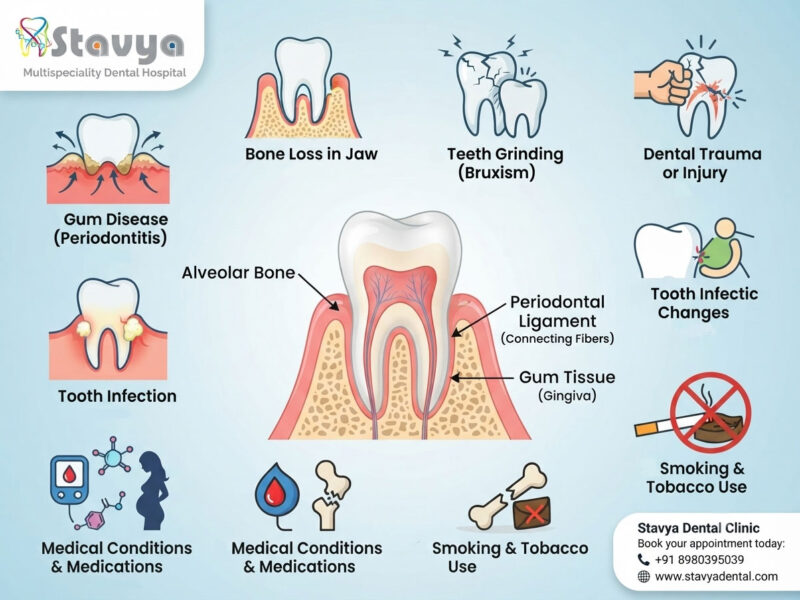
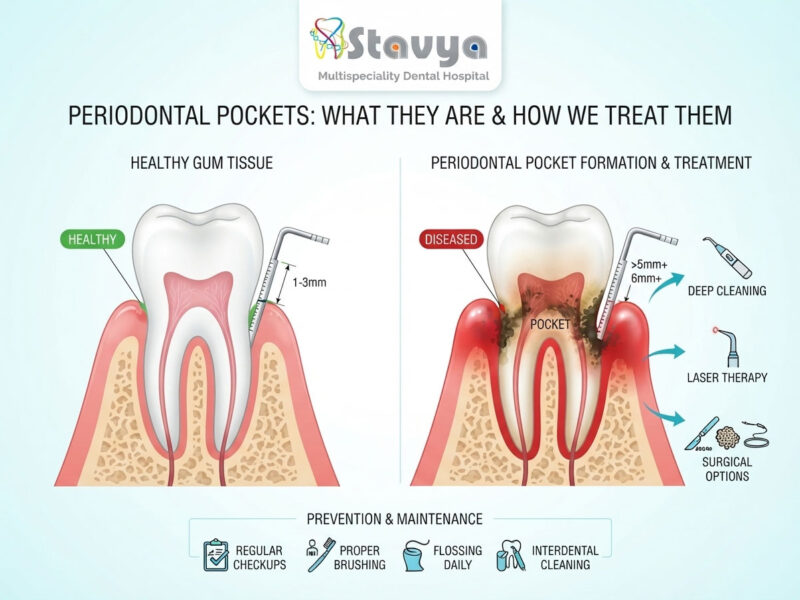
Left untreated further, the infection begins eroding the bone that supports the tooth and can spread into nearby gum tissue, affecting the health of neighboring teeth as well. This is also when infections can start to involve the periodontal structures around the tooth, deepening pockets and threatening the tooth’s stability. At this point, saving the tooth may still be possible with root canal treatment and, in some cases, a supporting crown — but the window is closing.
Stage 4: Facial and Neck Swelling
Once the infection spreads beyond the local bone, it can track into the soft tissues of the face, cheek, and neck. Swelling can become visibly noticeable, sometimes affecting the eye or making it difficult to fully open the jaw. This stage is a genuine dental emergency and requires immediate care — draining the infection, and often extraction if the tooth can no longer be saved. Our extraction and disimpaction team handles these cases when preservation of the natural tooth is no longer a safe option.
Stage 5: Systemic Infection (Sepsis)
This is the stage no one wants to reach, but it does happen when a tooth infection goes ignored for too long. Bacteria can enter the bloodstream, triggering a body-wide inflammatory response known as sepsis — a life-threatening medical emergency. Warning signs include high fever, rapid heartbeat, confusion, difficulty breathing, and a general feeling of being seriously unwell. Sepsis requires immediate hospital-level care, not just a dental visit. While this outcome is rare, it underscores why “just living with” tooth pain is never a safe long-term strategy.
Specific Complications of an Untreated Tooth Infection
Beyond the general progression above, an untreated dental infection can lead to several specific complications:
Ludwig’s Angina — A severe, rapidly spreading infection of the floor of the mouth that can obstruct the airway. It’s considered a medical emergency.
Osteomyelitis — Infection of the jawbone itself, which can require extensive treatment and, in severe cases, surgical bone removal.
Sinus Infections — Upper tooth infections, especially in the back teeth, sit close to the sinus cavities. An untreated infection can spread upward, causing sinus pain and congestion that’s frequently mistaken for a purely sinus-related issue.
Cavernous Sinus Thrombosis — A rare but serious complication where infection spreads to a vein at the base of the brain, which can become life-threatening without urgent treatment.
Tooth and Bone Loss — Even without a dramatic medical emergency, prolonged infection steadily destroys the bone anchoring the tooth, often making extraction unavoidable and complicating future tooth replacement options like implants.
Damage to Neighboring Teeth — Bacteria don’t stay neatly confined to one tooth. Adjacent teeth can develop their own decay or infection from prolonged bacterial exposure in the area.
Why “Waiting It Out” Rarely Works
It’s a common misconception that if the pain from a tooth infection fades, the problem has resolved. In many cases, the opposite is true — the nerve inside the tooth has died, which removes the sensation of pain even though the infection is still very much active and spreading through the bone. This is one of the more dangerous myths in dentistry, because patients often interpret reduced pain as recovery, when it may actually signal the infection entering a more advanced, silent stage.
Similarly, some patients rely on antibiotics from a doctor to “clear up” the infection without addressing the tooth itself. Antibiotics can help control the spread of infection temporarily, but they don’t remove the underlying source. Without treating the tooth — through root canal therapy, a filling for a smaller area of decay, or extraction if necessary — the infection typically returns.
How Stavya Dental Clinic Treats Tooth Infections
At Stavya Dental Clinic, our approach depends on how far the infection has progressed:
- Root Canal Treatment: For infections confined to the pulp and root, our RCT/Endodontics team removes infected tissue, disinfects the canal system, and seals the tooth — often topped with a crown for long-term strength.
- Drainage and Antibiotics: For active abscesses with swelling, we may drain the infection first to relieve pressure and prescribe antibiotics to control spread before definitive treatment.
- Extraction: When a tooth is too damaged to save, our extraction and disimpaction service removes it safely, with tooth replacement options discussed afterward.
- Periodontal Care: When infection has affected the surrounding gum and bone, our periodontics team addresses pocket depth and tissue health alongside the primary treatment.
- Digital Radiology: Every infection case starts with precise imaging through our in-house radiology services, so we can see exactly how far the infection has spread before deciding on a treatment plan.
When to See a Dentist Immediately
Don’t wait for the “textbook” symptoms to escalate. Book an urgent appointment if you notice:
- Facial or jaw swelling, especially if it’s spreading
- Fever alongside tooth pain
- Difficulty swallowing or breathing
- Pain that’s severe, constant, and unresponsive to painkillers
- A visible bump or drainage on the gum near a painful tooth
If you’ve been dealing with jaw pain while chewing or ongoing discomfort you’ve been putting off, treat it as your cue to get checked rather than wait it out.
The Bottom Line
A tooth infection left untreated doesn’t resolve on its own — it progresses, and in the worst cases, it can become life-threatening. What starts as sensitivity to hot or cold can, over time, spread to the jawbone, surrounding tissue, and even the bloodstream. The good news is that the earlier an infection is caught, the more conservative and comfortable the treatment tends to be — often just a root canal rather than an extraction or emergency intervention.
At Stavya Dental Clinic, we’d always rather see you for a toothache today than an emergency next week. If something feels off with your teeth or gums, don’t wait for it to get worse.
Book Your Appointment Today
Visit www.stavyadental.com or explore more oral health guides on our blog — including our related posts on dentistry, dental treatment, and root canal treatment.