A chipped tooth is one of the most common reasons people walk into Stavya Dental Clinic without an appointment. It usually happens in a split second — biting down on something harder than expected, a small accident, a fall, or just months of quiet grinding finally catching up with a weak spot in the enamel. The tooth doesn’t always hurt right away, which is exactly why so many people delay treatment and end up asking the same question at their next visit: do I need a filling-style repair, or do I actually need a crown?
The honest answer is: it depends on how much of the tooth is damaged, where the chip is, and whether the underlying structure — the dentin, the nerve, the root — is still healthy. In this guide, we’ll walk through exactly how that decision gets made, so you know what to expect before you ever sit in the chair.
Why Do Teeth Chip in the First Place?
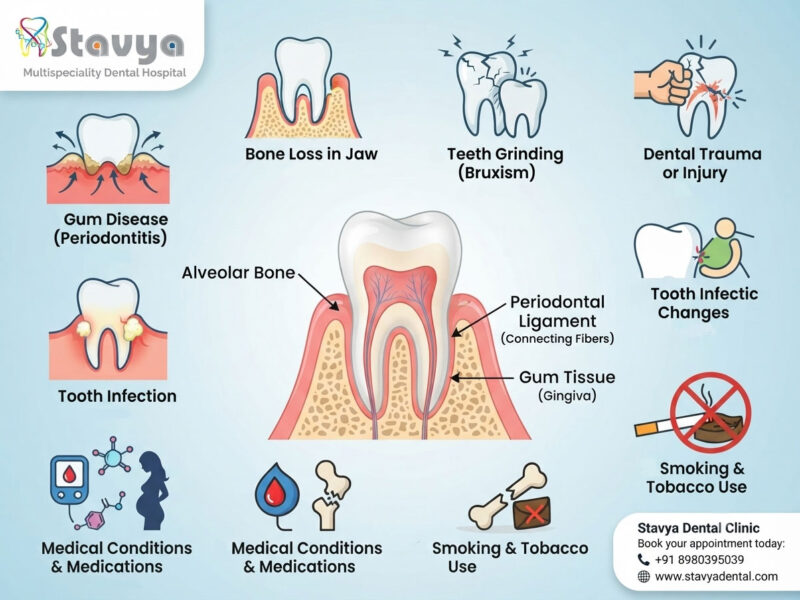
Enamel is the hardest substance in the human body, but it isn’t indestructible. The most common causes we see at our clinic include:
- Biting down on hard foods — ice, hard candy, nuts, or accidentally biting into something like a pit or bone
- Teeth grinding (bruxism) — often happening at night, gradually weakening enamel until a piece breaks off
- Trauma or falls — a sports injury, a fall, or an accidental knock to the face
- Old, large fillings — teeth that already have significant filling material are structurally weaker and chip more easily
- Untreated cavities — decay hollows out the tooth from the inside, making the outer structure more likely to fracture
A small chip on the edge of a front tooth is a very different situation from a chip that runs into the biting surface of a molar, or one that exposes the sensitive inner layers of the tooth. That distinction is the entire basis for how bonding vs. a crown gets decided.
How Dentists Actually Decide: Bonding or Crown?
When you come in with a chipped tooth, the assessment usually comes down to four questions:
- How much tooth structure is missing? A small chip affecting only the enamel is a very different repair than one that has taken away a significant portion of the tooth.
- Is the chip on a front tooth or a back tooth? Front teeth deal mostly with biting, not heavy chewing force — back teeth (molars) absorb far more pressure every time you eat.
- Is there any pain, sensitivity, or visible nerve exposure? This can signal that the damage goes deeper than the enamel.
- Is there an existing large filling or root canal on that tooth? Teeth that have already been heavily treated are more fragile and often need more protection, not less.
Once we know the answers, the choice between bonding and a crown becomes fairly straightforward.
When Dental Bonding Is Enough
Composite bonding is often the right call, and it’s worth understanding why it’s such a widely used solution for minor chips.
What Bonding Actually Involves
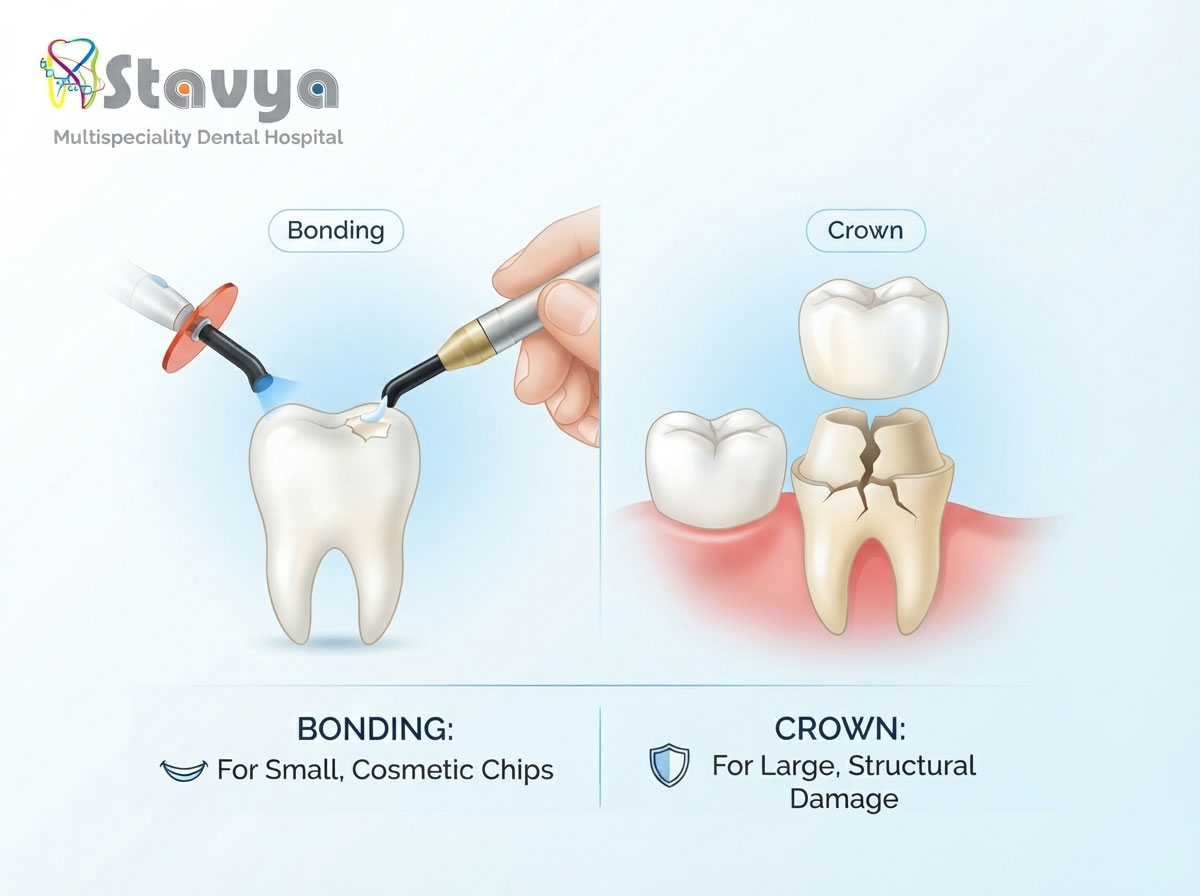
The dentist applies a tooth-colored composite resin directly to the chipped area, shapes it to match the natural contour of the tooth, and hardens it using a curing light. No lab work, no waiting period — it’s typically finished in a single visit.
When It’s the Right Choice
Bonding is usually sufficient when:
- The chip is small to moderate and limited mostly to the enamel
- The chip is on a front tooth, where biting force is lower
- There’s no pain, sensitivity, or visible nerve involvement
- The rest of the tooth structure is healthy and intact
- The concern is largely cosmetic — restoring the look of the tooth rather than rebuilding its function
Why Patients Often Prefer It
- Speed — completed in one appointment, often under an hour
- Minimal to no enamel removal — unlike a crown, bonding doesn’t require reshaping the entire tooth
- Lower cost — one of the more affordable cosmetic dental procedures available
- Little to no discomfort — anesthesia usually isn’t necessary for minor bonding
We cover this in more depth in our composite bonding resources, and it’s one of the core procedures within our broader aesthetic dentistry services.
The Limitation Worth Knowing
Bonding material, while durable, is not as strong as a natural tooth or a crown. It can chip again under heavy biting force, staining over time (coffee, tea, tobacco), and generally has a shorter lifespan — usually 5–10 years compared to the much longer lifespan of a crown. That’s the trade-off: bonding is faster and less invasive, but it’s a cosmetic-level repair, not a structural one.
When a Crown Is Actually Needed
A crown becomes the right call when the damage goes beyond what a surface repair can reliably handle.
What a Crown Actually Does
A dental crown is a full-coverage cap that fits over the entire visible portion of the tooth, restoring both its strength and its shape. Rather than patching a section of the tooth, it protects what remains of the natural structure from further fracture.
When It’s the Right Choice
A crown is generally necessary when:
- A significant portion of the tooth is missing or fractured — not just a small surface chip
- The chip has reached the dentin or is close to the nerve, causing pain or sensitivity to hot, cold, or pressure
- The chip is on a molar or premolar, where chewing forces are much higher and bonding is more likely to fail
- The tooth already has a large filling or a previous root canal, meaning the remaining structure is fragile and needs full coverage to prevent it from cracking further
- There’s a visible crack line, not just a chip — cracks can spread and eventually split the tooth if left uncapped
Why Crowns Hold Up Better in These Cases
Because a crown covers and reinforces the entire tooth rather than just filling a gap, it distributes biting force evenly and protects any remaining natural structure underneath. This is exactly why crowns typically last far longer — often well over a decade with proper care — and why they’re the standard recommendation whenever structural integrity, not just appearance, is the concern.
If you’re also weighing a crown against a bridge for a different kind of tooth damage, our earlier post on dental crowns vs. bridges breaks down that separate decision in detail.
How Crowns Are Made Today
Modern crown fabrication looks very different than it did even five years ago. At Stavya Dental Clinic, most crowns are now designed using digital scanning and CAD software, then produced with in-house 3D printing or milling — cutting turnaround time significantly compared to the traditional lab-and-mold process. We covered this shift in detail in The Rise of 3D Printing in Dentistry, including how it improves the fit and comfort of the final restoration.
Bonding vs. Crown: A Side-by-Side Comparison
| Factor | Dental Bonding | Dental Crown |
|---|---|---|
| Best for | Minor chips, mostly cosmetic | Significant damage, structural repair |
| Tooth location | Usually front teeth | Front or back teeth, especially molars |
| Enamel removal | Little to none | Requires reshaping the tooth |
| Visits required | Usually 1 | Typically 1–2 (faster with digital/in-house fabrication) |
| Durability | ~5–10 years | 10–15+ years with proper care |
| Cost | Lower | Higher, but more durable long-term |
| Repair scope | Surface-level | Full-coverage, structural |
Neither option is “better” in an absolute sense — the right one depends entirely on how much of the tooth is actually left to protect.
What Happens If You Ignore a Chipped Tooth?
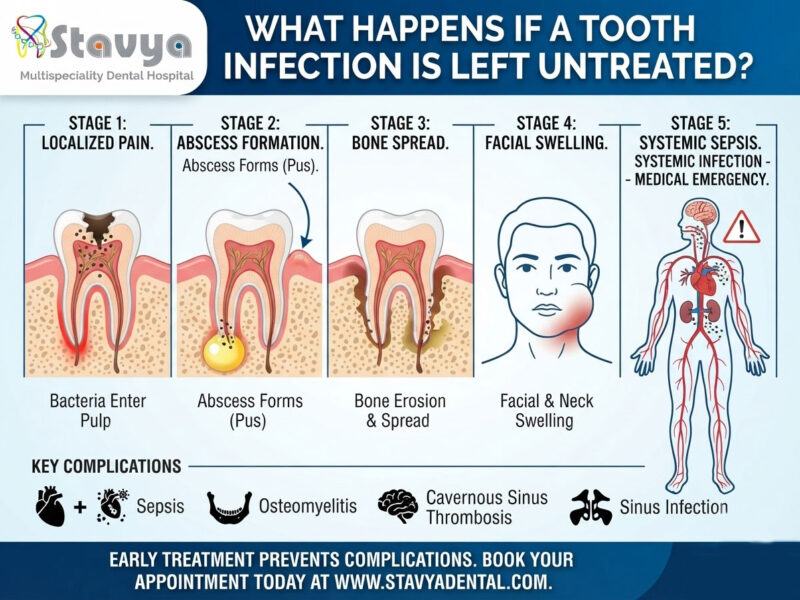
This is the part patients underestimate most. A chip that doesn’t hurt can feel easy to put off, but untreated dental damage rarely stays the same size. Sharp edges can cut the tongue or cheek, exposed dentin becomes increasingly sensitive, and small cracks tend to spread under normal biting pressure — eventually turning a bonding-level repair into a crown-level (or worse) problem. We’ve written more about this pattern in How Long Can a Cavity Actually Wait Before It Becomes a Bigger Problem? — the same logic applies to chips and cracks.
In some cases, what looks like a simple chip is a sign of a more urgent issue underneath. If you’re dealing with pain, swelling, or a tooth that feels loose, it’s worth reading our guide on Dental Emergency or Can It Wait? 10 Situations That Need Urgent Care to understand whether same-day care is needed.
How We Approach It at Stavya Dental Clinic
Every chipped tooth gets examined individually — there’s no default treatment we apply across the board. Our process typically looks like this:
- Visual and digital examination — checking the extent of the chip, and X-rays if there’s any suspicion the damage extends below the visible surface
- Sensitivity and bite assessment — to rule out nerve involvement or an uneven bite caused by the missing structure
- A straightforward recommendation — bonding when it will genuinely hold up long-term, and a crown when the structural risk makes that the safer, more durable option
- Same-visit or fast-turnaround treatment — bonding is completed in a single appointment, and crowns benefit from our in-house digital design and printing process, which significantly shortens the traditional wait time
We’d rather recommend the simpler, less expensive option when it’s genuinely enough — and be upfront when it isn’t.
Frequently Asked Questions
Can a chipped tooth heal on its own? No. Enamel does not regenerate once it’s chipped. The tooth won’t repair itself, and depending on the size of the chip, delaying treatment can allow the damage to worsen over time.
Does bonding hurt? Typically not. Since bonding usually doesn’t involve removing tooth structure or reaching the nerve, anesthesia is often unnecessary and the procedure is generally painless.
How do I know if my chip needs a crown instead of bonding? The clearest signs are pain or sensitivity, a chip on a molar rather than a front tooth, a chip involving a large portion of the tooth, or an existing large filling on that same tooth. If any of these apply, a dental evaluation is the safest next step rather than guessing.
Can bonding be upgraded to a crown later if needed? Yes. Bonding doesn’t rule out a crown down the line — if the tooth continues to weaken or the bonding fails repeatedly, a crown remains a straightforward next step.
Is a crown noticeably different from a natural tooth? Not with modern materials. Crowns today are designed and shaded to match surrounding teeth closely, particularly with digital design methods that account for the exact color and shape of neighboring teeth.
Don’t Guess — Get It Looked At
A chipped tooth rarely gets better on its own, and the right fix depends entirely on details that are hard to judge without an in-person exam — sensitivity, depth, and the condition of the tooth underneath the visible chip. If you’ve recently chipped a tooth, book a consultation with Stavya Dental Clinic and we’ll tell you plainly whether bonding will genuinely hold up, or whether a crown is the safer long-term choice. You can also reach us directly through our contact page to schedule a visit.