A throbbing tooth at midnight. A chipped incisor after a fall. A crown that suddenly pops off mid-meal. Dental problems rarely announce themselves at a convenient hour, and one of the most common questions we hear at Stavya Dental Clinic is simple: is this a real emergency, or can it wait until my regular appointment?
The honest answer is — it depends. Some dental problems are cosmetic annoyances that can comfortably wait a week or two. Others can lead to permanent tooth loss, spreading infection, or serious health complications if you delay treatment by even a few hours. Knowing the difference can save your tooth, your money, and sometimes a trip to the emergency room.
This guide walks through 10 situations that genuinely require urgent dental care, what to do while you’re getting to the clinic, and how to tell when a dental issue is safe to schedule normally instead.
What Actually Counts as a Dental Emergency?
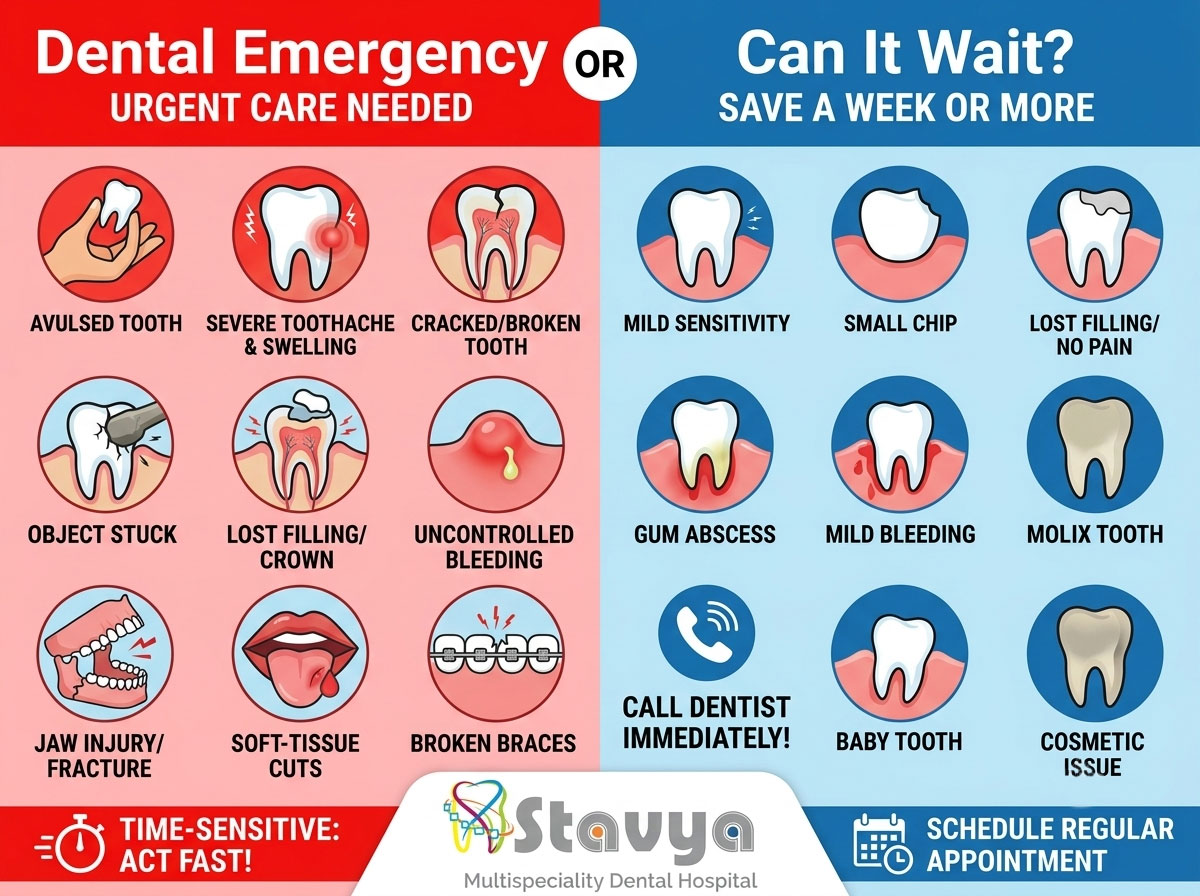
A true dental emergency is any situation involving severe pain, uncontrolled bleeding, risk of infection spreading, or a real chance of losing a tooth permanently. If you’re unsure, a good rule of thumb is this: if waiting could make the outcome significantly worse, treat it as urgent and call your dentist immediately rather than waiting to “see how it feels” in the morning.
Here are the 10 situations where that rule applies.
1. A Knocked-Out (Avulsed) Tooth
This is the single most time-sensitive dental emergency there is. A permanent tooth that’s been knocked out has the best chance of being saved if it’s re-implanted within 30–60 minutes.
What to do immediately:
- Pick the tooth up by the crown (the chewing surface), never the root.
- Rinse it gently with water if it’s dirty — don’t scrub it or use soap.
- If possible, try to place it back in the socket facing the right way. If that’s not possible, keep it in a container of milk or your own saliva — never dry, and never in tap water.
- Get to a dentist immediately. Every extra minute reduces the chances of the tooth surviving.
If the tooth can’t be saved, treatments like dental implants or crowns and bridges can restore both function and appearance afterward.
2. Severe Toothache With Swelling
A dull, occasional ache is common and rarely urgent. But a sharp, throbbing toothache accompanied by facial swelling, fever, or a bad taste in your mouth usually points to a deep infection or abscess that needs same-day attention.
Left untreated, a dental infection can spread to the jaw, neck, or even the bloodstream — a rare but genuinely dangerous complication. Most cases like this are resolved with root canal treatment (RCT/Endodontics), which removes the infected tissue and saves the natural tooth in the majority of cases.
Warning signs you shouldn’t ignore: facial swelling, difficulty swallowing or breathing, fever, or swelling that’s spreading toward your eye or throat. These need same-day or emergency-room-level attention.
3. A Cracked or Broken Tooth
Not every chip is an emergency — but a break that exposes the inner (pulp) layer of the tooth, causes sharp pain, or leaves a jagged edge that’s cutting your tongue or cheek needs prompt care.
What to do:
- Rinse your mouth with warm water.
- Save any broken tooth fragments if you can.
- Apply a cold compress to reduce swelling.
- Avoid chewing on that side until you’re seen.
Depending on severity, treatment may involve fillings, a crown, or root canal therapy if the crack reaches the nerve.
4. Something Stuck Between Your Teeth
Usually not urgent — but if flossing doesn’t dislodge it and you’re in significant pain, swelling, or the object is a hard, sharp fragment (like bone or glass), don’t keep digging at it with pins or sharp objects, as this can damage your gums and push the object deeper. A dentist has the right tools to remove it safely.
5. A Lost Filling or Crown
If a filling or crown falls out without pain, it can usually wait a few days for a normal appointment. But if the exposed tooth is sensitive to hot, cold, or air, or if you can see a dark hole where decay has clearly progressed, treat it as urgent — the exposed area is vulnerable to further decay and infection until it’s sealed again.
In the meantime, dental wax or even sugar-free chewing gum can temporarily cover the area. Avoid chewing on that side.
6. Gum Abscess or Facial Swelling With Pus
A pimple-like bump on the gums, especially one that’s tender, draining pus, or accompanied by a bad taste, is a sign of infection that needs prompt treatment — typically drainage plus antibiotics if needed, followed by periodontal care to address the underlying cause.
Don’t attempt to pop or drain it yourself. This can push the infection deeper into surrounding tissue.
7. Bleeding Gums That Won’t Stop
Occasional light bleeding while brushing is common and usually not urgent — it’s often a sign of gingivitis that a regular cleaning can address. But bleeding that is heavy, spontaneous, or doesn’t stop after 10–15 minutes of gentle pressure (especially after an extraction or injury) needs immediate attention, as it could indicate a clotting issue or an unhealed extraction site.
8. Jaw Injury or Suspected Fracture
If you’ve been in an accident, a fall, or a sports collision and you can’t open or close your mouth normally, your bite suddenly feels “off,” or you notice significant swelling or bruising along the jawline, this needs urgent evaluation — potentially at both a dental clinic and a hospital. Digital radiology and X-rays are often used to quickly confirm whether there’s an underlying fracture before treatment begins.
9. Cuts or Injuries to the Lips, Tongue, or Cheeks
Soft-tissue injuries — a bitten tongue, a cut lip, or a gash inside the cheek — bleed a lot because the mouth has a rich blood supply, which can make them look worse than they are. Rinse gently with warm salt water and apply gentle pressure with clean gauze. If bleeding doesn’t slow within 15 minutes, or the cut is deep/gaping, you need urgent care, possibly including stitches.
10. Broken Braces, Wires, or Appliances Causing Pain or Injury
A wire poking into the cheek or gum, or a bracket that’s come loose and is causing cuts, isn’t usually a “wait and see” situation — the ongoing irritation can lead to sores or infection. In the short term, you can cover the sharp end with orthodontic wax or a small piece of cotton, but you should still get it looked at promptly rather than living with it for weeks.
When It’s Probably Safe to Wait
Not every dental issue needs an emergency visit. These situations can usually be scheduled as a normal appointment:
- Mild tooth sensitivity to hot or cold that comes and goes
- A small chip in the enamel with no pain and no sharp edges
- A lost filling with no sensitivity or visible decay
- Mild, occasional gum bleeding during brushing
- A loose baby tooth in children with no pain (a normal part of development — see our guide on pediatric dental care)
- Cosmetic concerns, like slight discoloration or a minor gap
If you’re ever unsure which category your situation falls into, it’s always better to call and ask than to guess.
Why Fast Action Matters
The theme across almost every situation above is the same: time works against you in a dental emergency. A tooth that could have been saved with prompt root canal treatment may need extraction if you wait too long. An infection that could have been resolved with a short course of antibiotics can spread and require hospitalization if ignored. Even something as simple as a lost filling can turn into a much bigger (and more expensive) problem if the exposed tooth is left vulnerable for weeks.
This is also why regular check-ups matter as much as emergency response — many “sudden” emergencies, like a cracked tooth or a failing filling, are actually the end result of a smaller problem that went unnoticed for months. You can read more about what typically happens during a routine visit in our post on common dental treatments and what to expect at your dentist visit.
How Stavya Dental Clinic Handles Dental Emergencies
At Stavya Dental Clinic, urgent cases are prioritized — from knocked-out teeth and severe infections to broken crowns and jaw injuries. Our clinic is equipped with in-house digital radiology for fast, accurate diagnosis (read more about how digital radiology reduces the need for repeat X-rays), along with dedicated departments for root canal treatment, extractions, periodontics, and crowns & bridges — so whatever the emergency, we can diagnose and start treatment without sending you elsewhere.
If you’re dealing with wisdom tooth pain or swelling, our post debunking 10 common myths about wisdom tooth extraction is also worth a read.
Frequently Asked Questions
Can a toothache wait until morning? A mild, dull ache can usually wait for a same-day or next-day appointment. A severe, throbbing toothache with swelling or fever should be treated as an emergency and addressed as soon as possible, even outside regular hours.
What should I do immediately if my tooth gets knocked out? Handle it by the crown only, keep it moist (in milk or saliva), and get to a dentist within 30–60 minutes for the best chance of saving it.
Is a chipped tooth always an emergency? No. A small, painless chip in the enamel can usually wait for a regular appointment. A break that exposes the inner tooth, causes sharp pain, or has jagged edges needs prompt attention.
Does emergency dental treatment hurt more than regular treatment? Not typically — emergency visits use the same anesthesia and pain-management techniques as routine treatment. The discomfort people associate with emergencies is usually from the untreated problem itself, not the treatment.
How do I know if my child’s dental issue is an emergency? Persistent pain, swelling, a knocked-out permanent tooth, or an injury with heavy bleeding all warrant urgent care. A wobbly baby tooth or minor discomfort from teething is usually not an emergency — see our guide on pediatric dental care for more.
The Bottom Line
When in doubt, don’t wait it out. Dental emergencies rarely resolve on their own, and the situations outlined above — from knocked-out teeth to spreading infections — tend to get more complicated, more painful, and more expensive to treat the longer they’re left untreated.
If you’re experiencing any of the situations above, contact Stavya Dental Clinic for urgent care, or visit our blog for more guides on keeping your family’s teeth healthy year-round.
Suggested internal categories for this post: Dental Treatment, Dentistry, Teeth, Root Canal Treatment, Dental Clinic
This article is general information, not a diagnosis. Every mouth is different, so please see a dentist for advice about your own teeth.