Your teeth are the hardest structures in your body, built to last a lifetime of biting and chewing. Yet many people notice, sometimes in their thirties or forties, that their teeth look shorter, flatter, thinner, or more yellow than they used to. Edges chip, biting surfaces look flat, and cold drinks suddenly sting.
This is tooth wear, and it is far more common than most people realise. So, why do teeth wear down, and what can be done about it? In this guide, Stavya Dental Clinic explains the main causes, the warning signs, the treatment options, and how to protect the teeth you have.
What Is Tooth Wear?
Tooth wear is the gradual, permanent loss of tooth structure that is not caused by decay or injury. Some wear is a normal part of ageing. After decades of chewing, enamel naturally thins. But when wear is faster than expected, or begins at a young age, it is considered pathological and needs attention.
Enamel is the thin, hard, protective outer layer of each tooth. Beneath it lies dentin, a softer, yellower layer that contains tiny channels leading to the nerve. Once enamel is gone, it does not grow back, and the exposed dentin wears down much faster. That is why untreated tooth wear tends to speed up over time.
The Four Main Types of Tooth Wear
Dentists usually group tooth wear into four types. Many patients have more than one at the same time.
1. Attrition: tooth-on-tooth wear
Attrition is wear caused by teeth rubbing against each other. It typically flattens the biting surfaces and edges, and is commonly linked to grinding and clenching.
2. Erosion: acid wear
Erosion is the chemical loss of enamel caused by acid that does not come from bacteria. Acid softens the enamel surface, making it thinner and more vulnerable. Common sources include acidic food and drinks and stomach acid.
3. Abrasion: wear from outside forces
Abrasion is caused by something mechanical rubbing the tooth, such as aggressive tooth brushing, abrasive toothpaste, or habitual biting of hard objects. It often shows up as notches near the gumline.
4. Abfraction: stress at the neck of the tooth
Abfraction describes small, wedge-shaped defects near the gumline that some dentists link to heavy bite forces flexing the tooth. Its exact role is still debated, and it often occurs together with other types of wear.
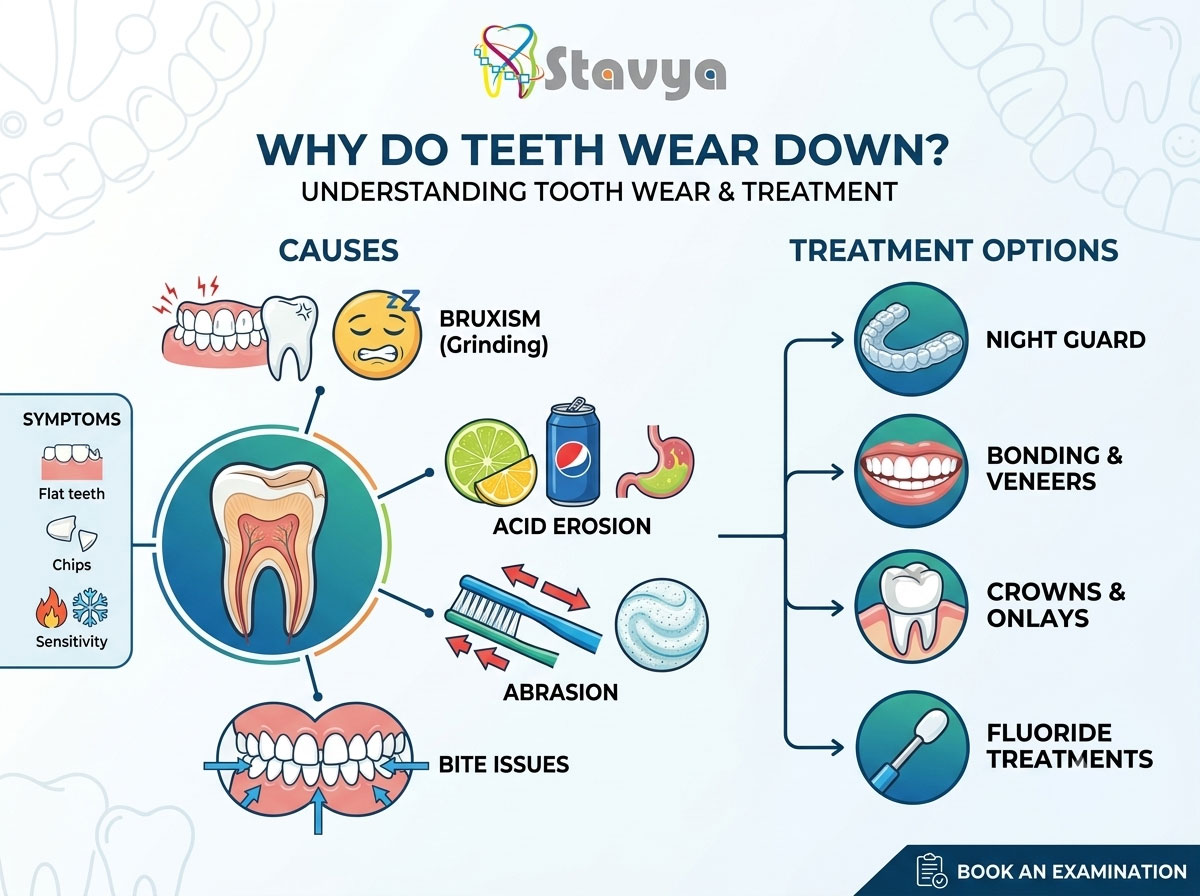
Why Do Teeth Wear Down? The 10 Most Common Causes
1. Teeth grinding and clenching (bruxism)
Bruxism is one of the most common causes of tooth wear. Many people grind or clench their teeth without knowing, especially during sleep or at times of stress. The forces involved can be far greater than normal chewing, and over time they flatten, chip, and crack teeth.
If you wake up with sore teeth or a tight jaw, read our guide on why teeth hurt when you wake up.
2. Acidic foods and drinks
Soft drinks, energy drinks, sports drinks, fruit juices, citrus fruit, vinegar-based foods, and wine are all acidic. Frequent exposure softens enamel. Sipping slowly over a long period is more damaging than drinking quickly, because your teeth stay under acid attack for longer.
3. Acid reflux and vomiting
Stomach acid is much stronger than the acids in food. People with chronic acid reflux (GERD), frequent vomiting, or certain eating disorders may see significant erosion, particularly on the inner surfaces of the upper teeth. If this applies to you, your dentist can work with your doctor on a combined plan.
4. Aggressive brushing
Brushing harder does not clean better. Hard bristles, heavy pressure, and a rough scrubbing technique can wear away enamel and push the gums back, exposing the sensitive root surface. Brushing straight after acidic food or drink can make this worse, because the enamel is temporarily softened.
5. Abrasive toothpaste and whitening products
Some toothpastes marketed for stain removal, charcoal products, and homemade scrubs can be more abrasive than they appear. Used daily, they may thin enamel over time. Ask your dentist to recommend a suitable toothpaste.
6. Dry mouth
Saliva neutralises acid, washes away food, and helps repair early enamel damage. If your mouth is often dry because of medication, medical conditions, mouth breathing, or dehydration, your teeth lose an important natural protection and wear faster.
7. Bite problems and misaligned teeth
If your teeth do not meet evenly, some of them take more force than they should. Crowding, a deep bite, or missing teeth can all concentrate stress on certain teeth, wearing them down faster. Orthodontic treatment such as braces or Invisalign can sometimes help even out the load.
8. Habits that damage teeth
Chewing ice, biting pens or fingernails, holding objects in your teeth, opening bottles or packets with your teeth, and chewing very hard foods all chip and wear enamel.
9. Ageing
After many years of use, some wear is expected. What matters is the rate. A dentist can compare your teeth over time and tell you whether your wear is within a normal range.
10. Genetics and enamel quality
Some people are born with thinner or weaker enamel, or with conditions that affect how enamel forms. These patients may show wear earlier and more severely.
Signs and Symptoms of Worn Teeth
Tooth wear often develops slowly, so you may not notice it until it is advanced. Look out for:
- Flat or shortened teeth: the edges look level, or your smile looks smaller than before
- Thin, translucent edges on your front teeth
- Chips and cracks appearing on teeth
- Sensitivity to hot, cold, sweet, or acidic foods
- Yellowing as the yellower dentin shows through
- Cupping or small dents on the chewing surfaces
- Notches near the gumline
- Rough or sharp edges that catch your tongue
- Jaw pain, headaches, or tired facial muscles, especially in the morning
- Changes in how your bite fits together
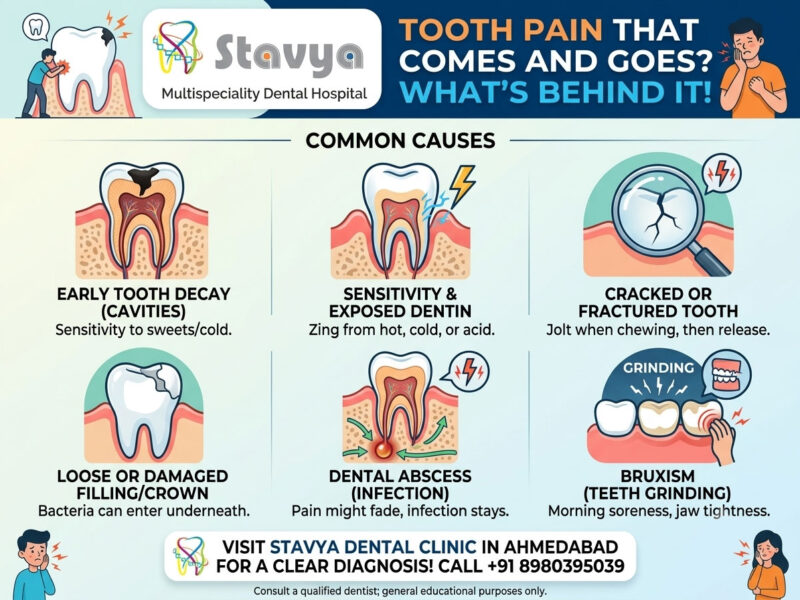
If you notice several of these signs, a dental examination is the best next step. Sensitivity that comes and goes can have other causes too, which we explain in tooth pain that comes and goes.
Why You Should Not Ignore Tooth Wear
Tooth wear is not just a cosmetic issue. Left untreated, it can lead to:
- Increasing sensitivity as dentin is exposed
- Cavities, because worn and exposed surfaces are more vulnerable. See can cavities be reversed to learn how early decay appears.
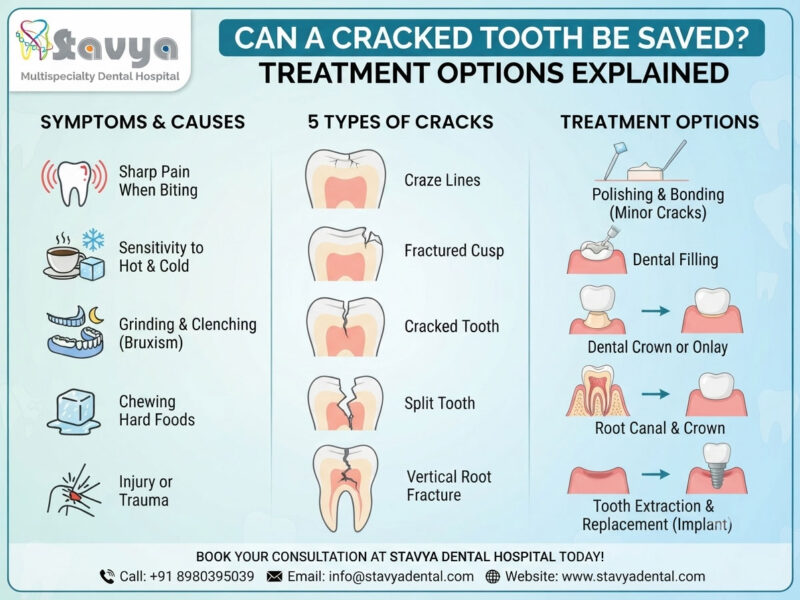
- Cracked or broken teeth. Our guide on whether a cracked tooth can be saved explains your options.
- Nerve damage or infection if wear reaches the pulp, which may need root canal treatment
- Changes to your bite and face shape if many teeth are worn
- A more expensive and complex repair the longer you wait
The earlier tooth wear is found, the simpler and more conservative the treatment usually is.
How Dentists Diagnose Tooth Wear
At Stavya Dental Clinic, a diagnosis begins with a careful conversation and a thorough examination.
- Your history: diet, drinks, brushing habits, acid reflux, grinding, medications, and any jaw or headache symptoms
- Clinical examination: your dentist checks the pattern and severity of wear, the condition of your gums, and how your teeth meet
- Bite assessment: to see how forces are distributed across your teeth
- Imaging: digital radiology helps check the nerves, roots, and underlying structures. In complex cases, 3D imaging such as CBCT may be considered. You can read how it differs from standard X-rays in our guide to CBCT vs traditional dental X-rays.
- Photographs and records: these let your dentist monitor changes over time
The key goal is to find out why the teeth are wearing, not just to repair what has already been lost.
Treatment Options for Worn Teeth
There is no single treatment for tooth wear. The right plan depends on the cause, how severe the wear is, and your goals for comfort, function, and appearance. The aim is always to treat the cause first and then restore the damage.
1. Prevention and monitoring (early wear)
If wear is mild and not causing symptoms, your dentist may simply recommend changing the habits that cause it and monitoring your teeth at regular check-ups. This may include dietary advice, a gentler brushing technique, and a suitable toothpaste.
2. Fluoride and desensitising treatments
Fluoride varnish, desensitising toothpaste, and professional treatments can strengthen enamel and reduce sensitivity while you address the underlying cause.
3. Night guard or occlusal splint
If grinding is the cause, a custom-made night guard protects your teeth by cushioning the forces while you sleep. It does not stop the habit, but it prevents the damage. A custom guard fits far better than an over-the-counter version.
4. Dental sealants and protective coatings
Sealants can protect vulnerable chewing surfaces, especially in children and young adults. Read our guide to dental sealants.
5. Tooth-coloured fillings
Small areas of worn enamel or notches near the gumline can often be repaired with tooth-coloured fillings that restore shape and cover sensitive dentin.
6. Composite bonding
For worn front teeth, composite bonding adds tooth-coloured resin to rebuild length and shape. It is usually minimally invasive and can often be completed in a single visit. If you are weighing it against other cosmetic options, read composite bonding vs veneers.
7. Porcelain veneers
Veneers are thin shells bonded to the front of teeth to restore their shape, colour, and length. They can be a good option for moderate wear in the visible zone. Explore our aesthetic dentistry services and dental veneers category.
8. Crowns and onlays
When a tooth has lost a lot of structure, a crown (cap) or onlay can rebuild it and protect it from further damage. Modern restorations are designed digitally for accuracy. To see how, read about 3D printing in dentistry for crowns and bridges, or visit our crowns and bridges page.
9. Gum treatment for exposed roots
If wear is accompanied by gum recession, your dentist may recommend gum care, which can include periodontal treatment or laser-assisted treatment where clinically appropriate. Our article on how safe laser dentistry is answers common questions.
10. Bite correction and full-mouth rehabilitation
For severe, widespread wear, treatment may involve correcting the bite and rebuilding several teeth in a planned sequence. This is a more complex process that needs careful assessment and a personalised plan.
11. Replacing teeth that cannot be saved
In advanced cases, a tooth may be too damaged to restore. Options such as dental implants can then be discussed.
Which Treatment Is Right for Me?
| Situation | Possible approach |
|---|---|
| Mild wear, no symptoms | Monitoring, diet and brushing advice |
| Sensitivity from exposed dentin | Fluoride, desensitising products, small fillings |
| Grinding at night | Custom night guard, stress management |
| Worn front teeth | Composite bonding or veneers |
| Heavily worn back teeth | Onlays or crowns |
| Acid reflux or erosion | Medical review, protective care, then restoration |
| Severe, widespread wear | Planned full-mouth rehabilitation |
This table is a general guide. Your dentist will choose a plan after examining your teeth and understanding the cause.
How to Protect Your Teeth From Wearing Down
Whether or not you already have wear, these habits can help protect your teeth for the long term:
- Treat grinding early. Ask your dentist about a night guard if you wake up with jaw tightness or sore teeth.
- Limit acidic foods and drinks, and avoid sipping them slowly through the day. Use a straw where possible and rinse with water afterwards.
- Wait about 30 minutes after acidic food or drink before brushing.
- Use a soft-bristled brush with light pressure and fluoride toothpaste.
- Choose non-abrasive toothpaste. Ask your dentist for advice.
- Stay hydrated and discuss dry mouth with your dentist or doctor.
- Break harmful habits, such as chewing ice, biting pens, and opening packets with your teeth.
- Manage acid reflux with your doctor.
- Keep regular check-ups. Wear is much easier to manage when it is caught early. See how often you should get a professional dental cleaning.
- Replace missing teeth. Gaps can shift the load onto the remaining teeth.
Can Worn Enamel Grow Back?
No. Once enamel is lost, the body cannot regrow it. Early enamel softening can sometimes be reversed with fluoride and good habits, but lost structure must be protected or restored by your dentist. That is why prevention and early treatment matter so much.
Tooth Wear in Children and Teenagers
Children can also experience tooth wear. Baby teeth have thinner enamel, so they wear more quickly. Common causes include grinding, acidic drinks, and reflux. If you notice worn or sensitive teeth in your child, a visit to a children’s dentist is a good idea. Our pedodontics team can advise.
Common Myths About Tooth Wear
Myth 1: Worn teeth are just a natural part of getting older. Some wear is normal, but significant or rapid wear is a sign of an underlying cause that should be assessed.
Myth 2: If it doesn’t hurt, it’s not a problem. Tooth wear is often painless until it is advanced.
Myth 3: Brushing harder keeps teeth cleaner. Hard brushing can damage enamel and gums without cleaning better.
Myth 4: Whitening toothpaste is always safe to use daily. Some products are more abrasive than others. Check with your dentist.
Myth 5: Worn teeth can’t be repaired. Modern dentistry offers many ways to rebuild shape, function, and appearance.
Why Choose Stavya Dental Clinic for Tooth Wear Treatment?
At Stavya Dental Clinic in Ahmedabad, we focus on finding and treating the cause of tooth wear, not just repairing the surface. When you visit us, you can expect:
- A thorough diagnosis, including a review of your habits, diet, bite, and medical history
- Digital diagnostics to see the full picture. Learn more about our radiology services.
- Conservative, personalised treatment that preserves as much natural tooth as possible
- A full range of restorative options under one roof, including fillings, aesthetic dentistry, crowns and bridges, orthodontics, and dental implants
- Clear explanations of every option, so you can make a confident decision
Frequently Asked Questions
Why do teeth wear down? Teeth wear down because of grinding and clenching, acidic foods and drinks, acid reflux, aggressive brushing, abrasive products, dry mouth, bite problems, harmful habits, ageing, and sometimes genetics.
Can worn teeth be fixed? Yes. Depending on severity, treatment can include fluoride, night guards, fillings, bonding, veneers, onlays, crowns, or a full-mouth rehabilitation plan.
Is tooth wear reversible? Lost enamel does not grow back. Early softening can be strengthened with fluoride, and lost structure can be restored with dental treatment.
How do I know if I grind my teeth? Signs include flattened or chipped teeth, morning jaw tightness, headaches, and sensitivity. A partner may also hear you grinding at night. Your dentist can confirm it during an exam.
What is the best treatment for worn front teeth? It depends on how much structure is lost. Composite bonding is often used for milder wear, and veneers or crowns for more extensive wear.
Does tooth wear cause sensitivity? Yes. As enamel thins, the dentin beneath is exposed and can react to hot, cold, sweet, or acidic foods.
Can acid reflux damage teeth? Yes. Stomach acid can erode enamel, especially on the inner surfaces of the upper teeth. Tell your dentist and your doctor if you have reflux.
How can I stop my teeth from wearing down? Treat grinding, reduce acidic drinks, brush gently, use suitable toothpaste, stay hydrated, and see your dentist regularly.
Is a night guard worth it? For people who grind or clench, a custom night guard is one of the most effective ways to protect their teeth from further wear.
Final Thoughts: Don’t Wait Until Your Teeth Wear Away
So, why do teeth wear down? In most cases it is a combination of grinding, acid, brushing habits, and bite forces, often building up quietly over many years. The good news is that tooth wear is manageable. When it is caught early, the cause can be addressed and your teeth protected. When it has already progressed, modern dentistry offers many ways to rebuild comfort, function, and appearance.
If your teeth look shorter, feel sensitive, or show chips and flat spots, don’t wait for pain. A simple examination can tell you what is happening and what to do next.
Book Your Dental Examination at Stavya Dental Clinic
Worried about worn, sensitive, or chipped teeth? Schedule an examination with Stavya Dental Clinic today. Our team will identify the cause, explain your options clearly, and create a treatment plan that protects your smile.
📞 Call: +91 8980395039 📧 Email: info@stavyadental.com