Most of us have heard the advice: see your dentist every six months. But is that really right for everyone? Some people sail through years with healthy gums, while others build up tartar within weeks and struggle with bleeding or bad breath no matter how carefully they brush.
The honest answer to how often you should get a professional dental cleaning is that it depends on your mouth, your habits, and your health. This guide from Stavya Dental Clinic explains the standard schedule, who needs more frequent visits, what actually happens during a cleaning, and how to know whether your current routine is enough.
What Is a Professional Dental Cleaning?
A professional dental cleaning, also called scaling and polishing or a dental prophylaxis, is a preventive treatment carried out by a dentist or dental hygienist. It removes the plaque, tartar (calculus), and surface stains that regular brushing and flossing cannot fully remove at home.
It is different from a comprehensive dental checkup, where the dentist examines your teeth, gums, bite, and jaw for signs of disease. In practice, the two are often done on the same visit. The cleaning keeps your mouth healthy, and the checkup catches problems early.
Why brushing and flossing alone are not enough
Even the most careful brusher misses some areas. Plaque is a soft, sticky film of bacteria that forms on your teeth within hours of eating. If it is not removed within a day or two, it begins to harden into tartar, a rough, yellowish deposit that clings firmly to the tooth surface and sits below the gumline.
Once tartar forms, no toothbrush can remove it. Only professional instruments can. Left in place, tartar irritates the gums, traps more plaque, and creates the conditions for cavities, gum disease, and persistent bad breath.
So, How Often Should You Get a Professional Dental Cleaning?
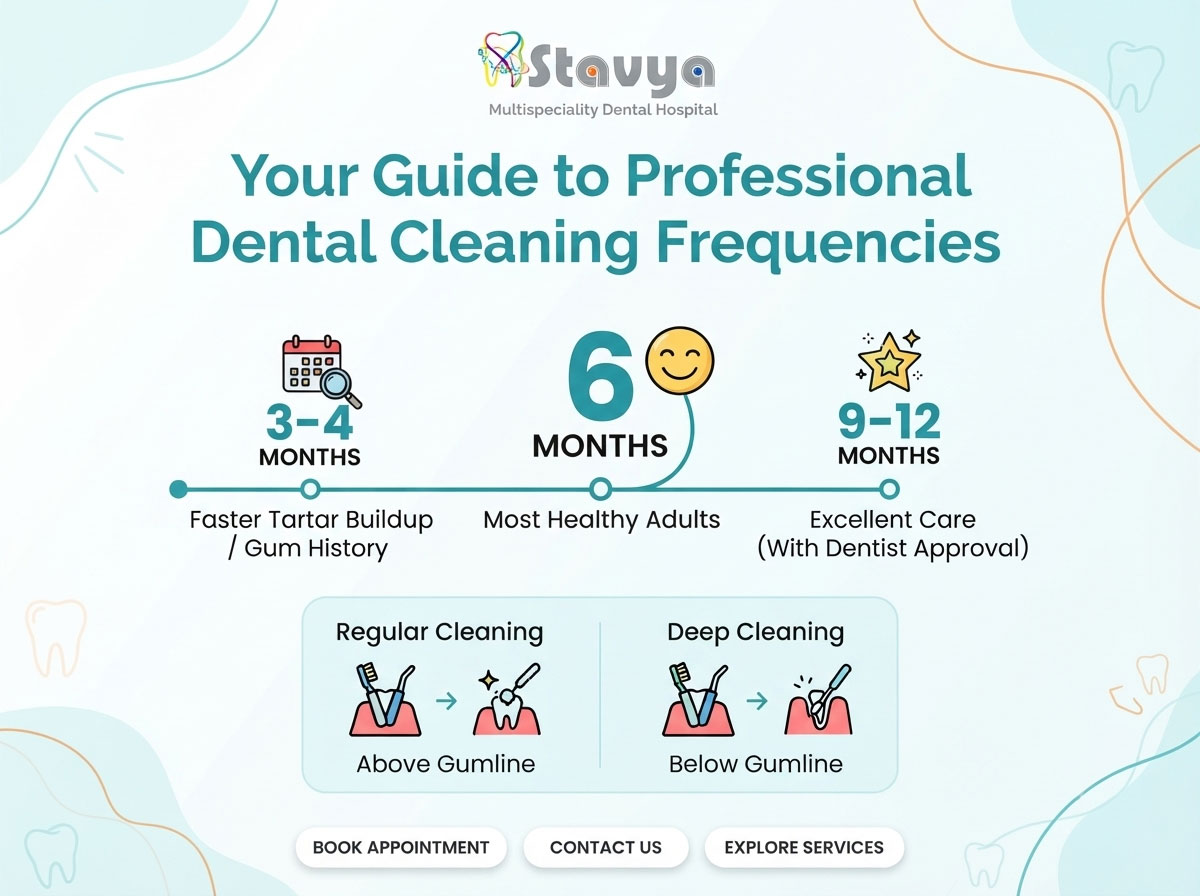
For most healthy adults, the standard recommendation is once every six months, or twice a year. This interval is a practical guideline. It is frequent enough to stop tartar from building up and short enough to catch small problems before they become painful or expensive.
But six months is a starting point, not a rule for everyone. Here is how the schedule typically varies:
| Your situation | Typical cleaning frequency |
|---|---|
| Healthy gums, low cavity risk, good home care | Every 6 months (some dentists may suggest every 6–12 months) |
| Fast tartar build-up or frequent stains | Every 3–4 months |
| History of gum disease (gingivitis or periodontitis) | Every 3–4 months |
| Diabetes or other conditions affecting gum health | Every 3–4 months, as advised by your dentist |
| Smokers or tobacco users | Every 3–4 months |
| Braces, aligners, or other orthodontic appliances | Every 3–6 months |
| Dental implants | Every 3–6 months, based on your dentist’s advice |
| Children | Every 6 months, or as the dentist recommends |
| Pregnancy | Usually every 6 months, with extra attention to gum health |
Your dentist will confirm your ideal interval after examining your gums, measuring pocket depths, and reviewing your history. The numbers above are general guidance, not a substitute for a personal assessment.
Who Needs More Frequent Dental Cleanings?
Some people need to visit more often than twice a year. If you fall into any of the groups below, ask your dentist about a customised schedule.
1. People with gum disease
If you have had gingivitis or periodontitis, bacteria can return to the pockets around your teeth quickly. More frequent cleanings, often every three to four months, help keep the infection under control. You can learn more in our guide on what periodontal pockets are and how they are treated, or explore our periodontics services.
2. People who form tartar quickly
Some mouths simply produce more tartar, thanks to saliva chemistry, tooth alignment, or diet. If your dentist finds heavy deposits at every visit, a shorter interval will make each cleaning easier and more comfortable.
3. Smokers and tobacco users
Smoking and tobacco use stain teeth heavily, increase plaque build-up, and raise the risk of gum disease and oral cancer. Regular professional cleanings and screenings are especially important.
4. People with diabetes
High blood sugar can weaken the body’s defences against gum infection, and gum disease in turn can make blood sugar harder to control. Many dentists recommend closer follow-up for diabetic patients.
5. People with braces or aligners
Brackets and wires create many tiny spaces where food and plaque hide. If you wear braces or are using Invisalign or invisible braces, regular cleaning keeps your teeth healthy while they move. Without it, you risk white spot marks and gum swelling.
6. People with dental implants, crowns, or bridges
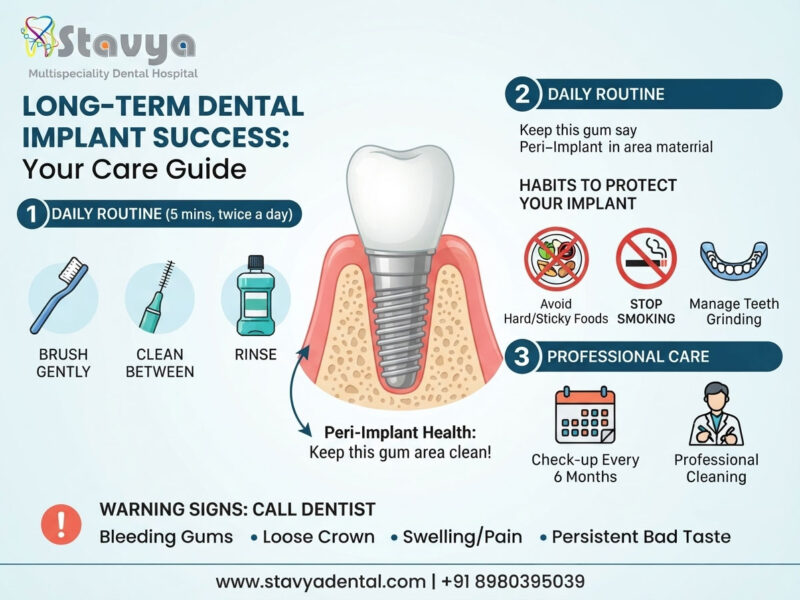
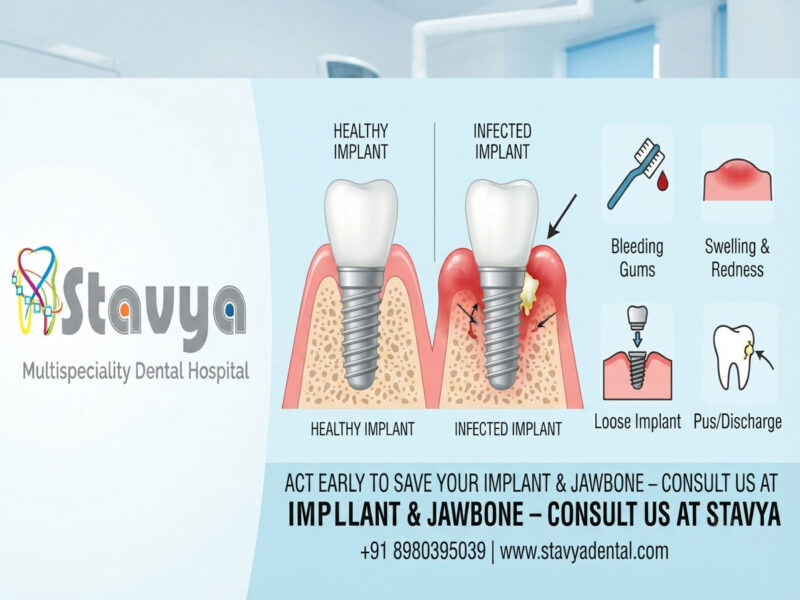
Implants do not decay, but the gum and bone around them can still become infected. Regular professional maintenance is essential. Read our guides on how to clean and maintain dental implants and dental implant infection warning signs.
7. People with a dry mouth
Saliva helps wash away bacteria and neutralise acids. If you have a dry mouth because of medication, medical conditions, or mouth breathing, you are at higher risk of decay and may benefit from more frequent visits.
8. People with a high cavity risk
If you get frequent cavities, snack often, or drink sugary or acidic drinks, your dentist may suggest closer follow-up along with preventive treatments such as fluoride or dental sealants.
Can Some People Go Longer Between Cleanings?
A small number of patients with excellent oral hygiene, healthy gums, no history of decay, and very little tartar may be advised to visit every nine or twelve months. But this should always be a decision made with your dentist, not a way to skip appointments because nothing hurts.
Many serious dental problems cause no pain in the early stages. Cavities, gum disease, and even oral cancer can develop silently. Waiting for symptoms often means waiting until treatment becomes more complicated and more costly.
What Happens During a Professional Dental Cleaning?
A routine cleaning is quick, comfortable, and usually takes 30 to 60 minutes. Here is what to expect at Stavya Dental Clinic.
Step 1: Initial examination
The dentist or hygienist first looks at your teeth and gums for signs of decay, inflammation, or other concerns. If you have not had recent imaging, they may recommend X-rays. Our digital radiology uses low-dose imaging that reveals problems between teeth and below the gumline. You can read how digital radiology reduces the need for repeat X-rays.
Step 2: Scaling
Using ultrasonic scalers and fine hand instruments, the clinician removes plaque and tartar from above and just below the gumline. The ultrasonic tip vibrates to break tartar loose while a gentle water spray flushes debris away. You may hear a buzzing sound and feel mild vibration, but it should not be painful.
Step 3: Polishing
A soft rubber cup and a mildly abrasive polishing paste remove surface stains from tea, coffee, tobacco, and food, leaving teeth smooth and bright. A smoother surface also makes it harder for plaque to stick again.
Step 4: Flossing and rinsing
The clinician flosses between your teeth to remove any remaining debris and checks that your gums are healthy. You then rinse to clear away loose particles.
Step 5: Fluoride treatment (when needed)
For patients at higher risk of cavities, a fluoride varnish or gel may be applied to strengthen enamel.
Step 6: Personalised advice
You will receive guidance on brushing technique, interdental cleaning, diet, and your recommended return interval. This is also a good moment to ask about teeth whitening or aesthetic dentistry if stains are a concern.
Regular Cleaning vs Deep Cleaning: What’s the Difference?
These two terms are often confused.
- Regular cleaning (prophylaxis): a preventive treatment for people with healthy gums or mild gingivitis. It removes plaque and tartar mainly above the gumline.
- Deep cleaning (scaling and root planing): a treatment for gum disease. It cleans below the gumline and smooths the root surfaces so the gums can reattach and heal. It is often done in sections over more than one visit, sometimes with local anaesthesia.
If your dentist finds deep pockets, bleeding, or bone loss, a standard cleaning will not be enough. In more advanced cases, treatments such as laser gum therapy may be considered. Our comparison of traditional gum surgery vs laser gum surgery explains the options.
Benefits of Getting Regular Professional Dental Cleanings
Prevents gum disease
Gum disease starts quietly with red, puffy, or bleeding gums. Regular cleaning removes the bacteria that cause it before it spreads to the bone. If teeth already feel loose, read why your teeth may be becoming loose.
Reduces the risk of cavities
Removing plaque and tartar lowers the bacterial load in your mouth, which protects enamel. Early decay can sometimes be caught while it is still reversible. See can cavities be reversed and what early tooth decay looks like.
Freshens breath
Persistent bad breath often comes from bacteria trapped in tartar and gum pockets. A professional cleaning removes the source rather than masking it.
Brightens your smile
Polishing lifts surface stains from tea, coffee, tobacco, and food. It does not change your natural tooth shade the way whitening does, but many patients are delighted by how much brighter their teeth look.
Detects problems early
During every cleaning, your dentist can spot cracks, worn fillings, early decay, and signs of infection. Catching issues early may mean a simple filling instead of a root canal, or a quick repair instead of a major procedure. If an issue is ignored, an infection can spread. Read what happens if a tooth infection is left untreated.
Supports your overall health
Research has linked gum disease with conditions such as diabetes and heart disease. Keeping gums healthy supports your general well-being, though more studies are still exploring exactly how these links work.
Saves money over time
Preventive care costs far less than restorative treatment. A routine cleaning is a small investment compared with treating advanced gum disease, extractions, or dental implants later on.
Warning Signs You Need a Cleaning Sooner
Do not wait for your next scheduled visit if you notice any of the following:
- Gums that bleed when you brush or floss
- Red, swollen, or tender gums
- Persistent bad breath or a bad taste
- Visible yellow or brown deposits near the gumline
- Teeth that feel rough or “furry” even after brushing
- Gums pulling away from the teeth
- Teeth that feel loose or sensitive
- Waking up with sore teeth. This can have several causes, which we cover in why teeth hurt when you wake up.
These signs can point to gum disease, decay, or other conditions. A prompt examination makes treatment simpler.
Does Professional Dental Cleaning Hurt?
For most people, a routine cleaning is comfortable. You may feel pressure, vibration, or mild sensitivity, especially if your gums are inflamed or your teeth are sensitive. If you are nervous or have had a difficult experience before, tell your dentist. Numbing gel, gentler techniques, and a slower pace can help.
Bleeding during or after a cleaning is common when gums are inflamed. It usually settles within a few days as the gums become healthier and your home care improves.
How to Keep Your Teeth Clean Between Visits
Professional cleaning works best when you support it at home. Follow these habits:
- Brush twice a day for two minutes with a soft-bristled brush and fluoride toothpaste.
- Clean between your teeth daily with floss, interdental brushes, or a water flosser.
- Brush gently along the gumline at a 45-degree angle. Hard scrubbing can wear enamel and push gums back.
- Clean your tongue to reduce odour-causing bacteria.
- Limit sugary snacks and drinks, and avoid constant sipping on sweet or acidic beverages.
- Replace your toothbrush every three months, or sooner if the bristles fray.
- Avoid tobacco in all forms.
- Drink water after meals to rinse away food particles.
Dental Cleaning for Children
Children benefit from regular professional care too. Cleanings help remove plaque in hard-to-reach areas, while the dentist can apply fluoride or sealants and monitor how the teeth and jaws are developing. Early visits also help children feel comfortable at the dentist. Learn more about our pedodontics (children’s dentistry) services.
Common Myths About Dental Cleaning
Myth 1: Cleaning damages the enamel. Professional scaling and polishing are safe and do not harm healthy enamel when performed correctly.
Myth 2: Cleaning makes gaps between teeth. The gaps were already there, filled by tartar. Once the deposits are removed, you may notice the spaces more clearly. Your teeth have not been loosened or damaged.
Myth 3: If I brush well, I do not need a cleaning. Brushing cannot remove hardened tartar or reach every area below the gumline.
Myth 4: Cleaning whitens teeth permanently. It removes surface stains but does not change the natural shade of your teeth. For a whiter result, ask about whitening.
Myth 5: I only need to see a dentist when I have pain. Most dental diseases are painless until they are advanced.
What Does a Professional Dental Cleaning Cost?
The cost depends on the amount of tartar, the condition of your gums, whether X-rays are needed, and whether you need a regular or a deep cleaning. At Stavya Dental Clinic, we examine your mouth first and explain the treatment and its cost before we begin, so there are no surprises. For a personalised estimate, contact our team.
Why Choose Stavya Dental Clinic for Professional Dental Cleaning?
At Stavya Dental Clinic, we believe prevention is the most comfortable and affordable kind of dentistry. When you visit us in Ahmedabad, you can expect:
- A thorough, gentle cleaning using modern ultrasonic equipment
- A personalised recall schedule based on your gum health, habits, and medical history
- Digital diagnostics to spot hidden problems early. For complex cases, we use advanced 3D cone beam CT imaging.
- A full range of care under one roof, from fillings and root canal treatment to crowns and bridges, braces, and implants
- Clear communication so you always understand what we find and why we recommend it
Frequently Asked Questions
How often should you get a professional dental cleaning? Most healthy adults should have one every six months. People with gum disease, heavy tartar, diabetes, braces, implants, or who smoke may need one every three to four months.
Is it okay to get a dental cleaning once a year? Some low-risk patients may be advised to visit once a year, but only after a dentist confirms that their gums and teeth are healthy. Do not make this decision on your own.
How long does a dental cleaning take? A routine cleaning usually takes 30 to 60 minutes. A deep cleaning may take longer and may be split across more than one visit.
Can I skip a cleaning if my teeth look fine? It is not recommended. Tartar below the gumline and early gum disease are often invisible and painless.
Is dental cleaning safe during pregnancy? Routine cleanings are generally considered safe, and pregnancy can make gums more sensitive. Tell your dentist if you are pregnant so they can adjust your care.
Will my teeth feel sensitive after a cleaning? Some people notice temporary sensitivity, especially after heavy tartar removal. It usually settles within a few days.
What is the difference between a cleaning and a checkup? A cleaning removes plaque, tartar, and stains. A checkup is an examination of your teeth, gums, and mouth to find problems. They are usually done together.
At what age should my child have their first cleaning? Bring your child for a first visit by their first birthday or when the first tooth appears. The dentist will advise when cleanings should begin.
Final Thoughts: Make Professional Cleaning a Habit
So, how often should you get a professional dental cleaning? For most people, every six months is the right rhythm. For others, every three to four months keeps gum disease and cavities at bay. The right answer depends on your mouth, and the only way to know is to be examined.
A clean, healthy smile is built on small, regular habits: good brushing, daily interdental cleaning, a balanced diet, and consistent professional care. If it has been more than six months since your last visit, or if you notice bleeding gums, bad breath, or tartar build-up, now is the perfect time to book.
Book Your Dental Cleaning at Stavya Dental Clinic
Ready for a fresh, healthy smile? Schedule your professional dental cleaning and checkup with Stavya Dental Clinic today. Our team will examine your teeth and gums, remove build-up gently, and create a care plan that fits you.
📞 Call: +91 8980395039 📧 Email: info@stavyadental.com