You brush twice a day. You might even floss, use mouthwash, and carry mints in your bag “just in case.” And yet, an hour after brushing, the smell is back — or worse, you never noticed it left. If this sounds familiar, you’re not doing anything wrong with your technique. The real issue is that most of the bacteria responsible for bad breath aren’t living in the places a toothbrush actually cleans.
At Stavya Dental Clinic, persistent bad breath — known clinically as halitosis — is one of the most common concerns patients bring to us, and also one of the most misunderstood. People assume it means poor hygiene, but in our experience, some of the cleanest brushers we see still struggle with it. That’s because the true causes usually sit just out of reach of a toothbrush: your tongue, your saliva, your gums, or sometimes somewhere outside your mouth entirely.
This guide breaks down exactly why brushing alone often isn’t enough, what’s really going on when breath odor persists, and what actually works to fix it.
Why Brushing Alone Doesn’t Solve Bad Breath
Brushing is designed to clean the flat surfaces of your teeth. It does that job well. But most bad breath doesn’t originate on the flat surface of a tooth — it comes from bacteria living in places brushing simply doesn’t reach: the back of the tongue, the pockets between gums and teeth, and the tight spaces between teeth where food debris settles.
When bacteria break down trapped food particles, dead cells, and proteins in these hidden areas, they release compounds called volatile sulfur compounds (VSCs) — the actual chemical source of bad breath. Brushing your teeth for two minutes does very little to disturb bacteria colonies living in these deeper, rougher, or less accessible areas.
Here’s a closer look at where the odor is actually coming from.
1. Tongue Bacteria: The Most Overlooked Cause
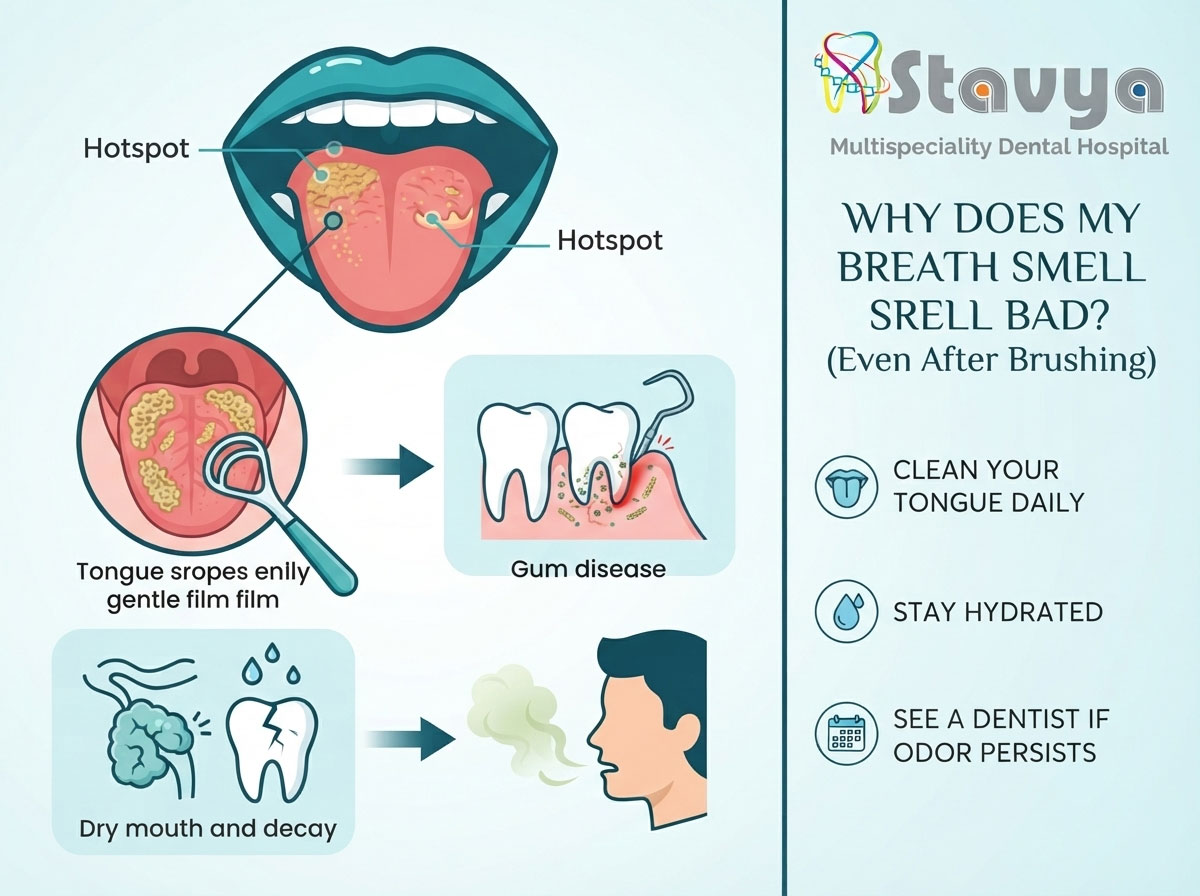
If there’s one single reason most people deal with bad breath despite brushing, it’s this one. The surface of your tongue — especially toward the back — is rough, uneven, and full of tiny grooves. That texture is exactly what anaerobic bacteria need to thrive. They feed on trapped food debris and shed cells, and in the process, they produce the sulfur compounds responsible for most everyday bad breath.
A toothbrush glides over the tip of the tongue at best. The back third — where bacteria concentrate the most — usually goes untouched. This is exactly why people who brush diligently but skip tongue cleaning often can’t figure out why their breath still smells.
The fix: Use a dedicated tongue scraper (or the ridged side of your toothbrush) every time you brush. Gently scrape from the back of the tongue forward, rinse, and repeat two or three times. It takes less than 30 seconds and often produces a noticeable difference within days.
2. Dry Mouth: Why Breath Is Worse at Certain Times
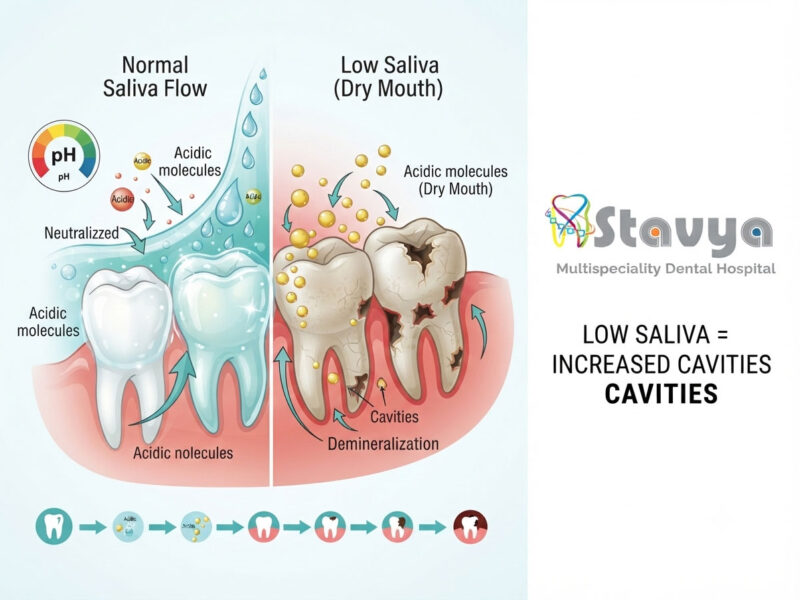
Saliva does more than keep your mouth comfortable — it’s constantly washing away bacteria, neutralizing the acids they produce, and helping clear away food particles all day long. When saliva flow drops, none of that happens as effectively, and odor-causing bacteria multiply faster than usual.
This is part of why breath is almost always worse first thing in the morning — saliva production naturally slows down while you sleep, especially if you breathe through your mouth. It’s also why certain medications, dehydration, and habits like sleeping with your mouth open can make bad breath noticeably worse, even for people who brush perfectly.
If dry mouth is a regular issue for you rather than just a morning problem, it’s worth understanding what’s actually happening to your saliva and enamel over time — we’ve covered this in detail in our article on dry mouth and tooth decay, since low saliva doesn’t just affect your breath — it puts your teeth at risk too.
The fix: Stay hydrated throughout the day, limit caffeine and alcohol (both are dehydrating), and if you consistently wake up with dry mouth, mention it at your next dental visit — it can sometimes be linked to medications or breathing patterns worth addressing.
3. Gum Disease: A Cause That Doesn’t Always Come With Pain
This is the one that surprises people most, because gum disease doesn’t always announce itself with obvious pain. Early gum disease (gingivitis) and its more advanced form (periodontitis) create pockets between the gums and teeth where bacteria collect and thrive — largely undisturbed by brushing, since bristles can’t reach down into these pockets.
The bacteria living there produce their own distinct, persistent odor, completely separate from how clean the visible surface of your teeth looks. This is one of the most common hidden explanations when someone says, “I brush constantly, and it still doesn’t help.” In fact, if you’ve noticed any bleeding when you brush or floss, puffy or reddened gums, or breath that seems to worsen despite good habits, it’s worth reading through our breakdown of warning signs you need to see a dentist immediately — gum-related symptoms are on that list for a reason.
Unlike tongue bacteria or dry mouth, gum disease isn’t something you can fully resolve at home once it’s established — it needs professional treatment. At Stavya Dental Clinic, our Periodontics treatments are specifically designed to clean out these bacterial pockets and treat the underlying gum inflammation, which in turn resolves the odor at its actual source rather than masking it. For more advanced or recurring cases, we also use Laser Treatment, which allows for more precise, minimally invasive treatment of infected gum tissue with faster healing than traditional methods.
The fix: A professional cleaning and gum evaluation. Mouthwash can mask the smell temporarily, but it won’t treat bacteria living below the gumline.
4. Trapped Food and Tooth Decay
Food particles that get wedged between teeth — especially in tight spaces or around old fillings — don’t always get dislodged by brushing. Left in place, they slowly break down, feeding bacteria and contributing to persistent odor. Over time, this same trapped debris and bacterial activity is also one of the ways small cavities form and grow, which is worth knowing if you’re not in the habit of flossing regularly. We go into more detail on how quickly this can escalate in our post on how long a cavity can actually wait before it becomes a bigger problem.
Existing dental work can play a role too. Fillings that have worn down, cracked, or developed small gaps at the edges create spaces where bacteria and food particles collect, often undetected until a checkup. If you suspect a filling might be the source, our Fillings page covers when and how these are typically replaced. Similarly, crowns or bridges that no longer fit as precisely as they once did can trap bacteria at the margins — something our Crowns / Bridges team regularly checks for during routine visits.
The fix: Floss daily — brushing alone cleans less than half of your tooth surfaces. If you notice a specific tooth seems to be the source of the odor, or if you have older fillings or crowns, it’s worth having them evaluated.
5. Causes That Have Nothing to Do With Your Mouth
Not every case of bad breath originates in the mouth at all. Postnasal drip, chronic sinus infections, and acid reflux (GERD) can all produce breath odor that has nothing to do with dental hygiene. In these cases, bacteria or stomach acid create odor-causing compounds that get expelled through the mouth and nose, regardless of how clean your teeth and gums are.
This is usually the explanation when a dentist examines your mouth, finds no signs of decay or gum disease, and everything looks structurally healthy — yet the odor persists. If that happens, it’s a reasonable next step to check in with a physician about sinus or digestive causes, since dental treatment alone won’t resolve something originating elsewhere.
How to Figure Out Which Cause Applies to You
A simple way to narrow things down at home:
- Smell noticeably worse in the morning, better after eating or drinking water? Likely dry mouth.
- Bleeding gums, puffiness, or a metallic taste alongside the odor? Likely early gum disease — worth a dental check sooner rather than later.
- A white or yellow coating visible on your tongue? Tongue bacteria is almost certainly playing a major role.
- Smell seems to come from one specific area or tooth? Possibly trapped food, a failing filling, or decay near that tooth.
- Everything above checked out fine at the dentist, but the smell continues? Worth investigating sinus or digestive causes with a doctor.
If you’re genuinely unsure, a dental exam is the fastest way to rule dental causes in or out — our Radiology diagnostics can also help identify decay or infection hiding below the surface that wouldn’t be visible during a routine visual check.
What Actually Helps (Beyond Mouthwash)
Mouthwash and mints treat the symptom, not the cause — which is why the effect never lasts. Here’s what tends to make a real, lasting difference:
- Clean your tongue daily, not just your teeth — this alone resolves a large share of everyday bad breath cases.
- Floss every day, not just before dental visits — brushing simply can’t reach between teeth.
- Stay hydrated throughout the day to keep saliva doing its job.
- Get a professional cleaning every six months — tartar buildup harbors bacteria that home brushing can’t remove.
- Have your gums checked specifically if odor persists — gum disease is common, often silent, and very treatable once identified.
- Review fillings and crowns periodically — older dental work can develop small gaps that trap bacteria without any visible warning sign.
When It’s Time to See a Dentist
If you’ve tried tongue cleaning, consistent flossing, and better hydration for two to three weeks with no real improvement, it’s a strong sign that the cause is something a home routine can’t fix on its own — most often gum disease, a cavity, or an issue with existing dental work. Waiting it out rarely resolves these causes, since bacteria living below the gumline or inside a cavity won’t clear up with better brushing alone.
It’s also worth remembering that breath odor is sometimes only one part of a bigger picture. If it’s showing up alongside other symptoms — bleeding gums, tooth pain, or visible swelling — it’s worth reviewing our guide on dental emergencies and situations that need urgent care to understand how urgently it should be addressed.
How Stavya Dental Clinic Diagnoses and Treats Persistent Bad Breath
When a patient comes to us with ongoing bad breath, we don’t just prescribe a stronger mouthwash — we work through the actual possible sources systematically: checking gum health for signs of periodontal disease, examining existing fillings and restorations for gaps, using Radiology imaging to spot decay or infection that isn’t visible on the surface, and reviewing saliva flow and tongue coating as part of a standard oral exam.
Where gum disease is the cause, our Periodontics treatments and, where needed, Laser Treatment are used to clear out the infection at its source rather than temporarily masking the odor. Where decay or an aging restoration is responsible, our Fillings and Crowns / Bridges teams handle the repair directly. The goal is always to identify the actual cause first — because until that’s clear, no amount of mouthwash, mints, or extra brushing will produce a lasting fix.
Frequently Asked Questions
Why does my breath smell bad even right after I brush? Brushing cleans your teeth, but most odor-causing bacteria live on the tongue and in gum pockets — areas brushing doesn’t effectively reach. That’s why the smell can return quickly even with a thorough brushing routine.
Can bad breath be a sign of gum disease if my gums don’t hurt? Yes. Gum disease frequently develops without pain in its early stages. Persistent bad breath is often one of the first noticeable signs, even before bleeding or discomfort appears.
Does mouthwash actually fix bad breath? Mouthwash can mask odor temporarily, but it doesn’t address the underlying bacteria living on the tongue, in gum pockets, or around decay. That’s why the smell typically returns within a few hours.
Is bad breath in the morning normal? Some morning breath is normal and related to reduced saliva flow overnight. However, if it’s unusually strong, lingers well after breakfast, or is accompanied by a dry mouth throughout the day, it’s worth mentioning at your next dental visit.
When should I see a dentist about bad breath? If tongue cleaning, flossing, and better hydration don’t improve things within two to three weeks, or if you notice bleeding gums, tooth pain, or a specific tooth that seems to be the source, it’s time for a dental evaluation.
The Bottom Line
Persistent bad breath despite good brushing habits almost always has an identifiable, treatable cause — it’s just rarely the one people assume. Whether it’s bacteria on the tongue, reduced saliva flow, early gum disease, trapped food, or something happening outside the mouth entirely, the fix depends on knowing exactly what you’re dealing with.
If home adjustments haven’t made a difference, Stavya Dental Clinic can help pinpoint the actual cause in a single visit — often something simple to treat once it’s properly identified. Book an appointment or explore more oral health guides on our blog.