Have you noticed the edges of your front teeth starting to look glassy, thin, or almost see-through when you smile in natural light? You’re not imagining it — and you’re not alone. Translucent or transparent-looking teeth are one of the most common concerns patients bring up during check-ups at Stavya Dental Clinic, yet very few people understand why it happens or what it means for their long-term oral health.
The short answer: translucency isn’t a stain or a random cosmetic quirk. It’s almost always a sign that your tooth enamel — the hard, protective outer layer of your teeth — has thinned out enough that the layer underneath (called dentin) is starting to show through. Understanding why that’s happening is the first step to stopping it from getting worse.
In this guide, we’ll walk through the real causes of translucent teeth, how to tell if it’s something to worry about, and the treatment options available to restore both the strength and appearance of your smile.
What Does “Translucent Teeth” Actually Mean?
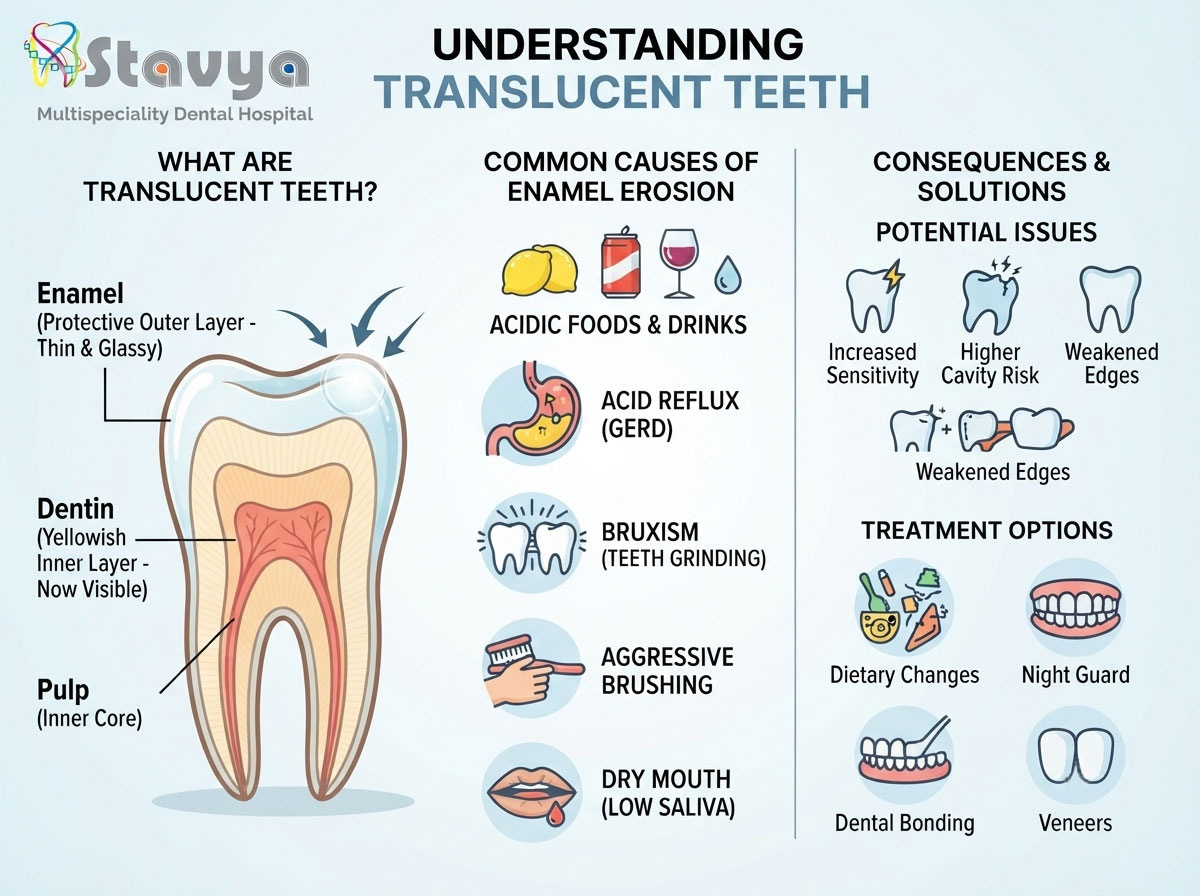
Every tooth has three main layers:
- Enamel — the hard, opaque, protective outer shell
- Dentin — the softer, yellowish layer underneath that gives teeth their natural colour
- Pulp — the innermost layer containing nerves and blood vessels
Healthy enamel is naturally slightly translucent, but it’s thick and dense enough that the dentin underneath doesn’t show through in an obvious way. When enamel wears thin — through erosion, damage, or genetic factors — light starts passing through the edges of the tooth more easily, creating that glassy, see-through appearance, usually most visible at the biting edges of the front teeth.
This is not just a cosmetic issue. Thinning enamel also means your teeth are more vulnerable to sensitivity, chipping, cavities, and further structural damage — which is why it’s worth understanding the root cause rather than just the appearance.
Top Causes of Translucent or Transparent Teeth
1. Acid Erosion From Diet
This is, by far, the most common cause. Acidic foods and drinks gradually dissolve the mineral structure of enamel over time. Frequent culprits include:
- Citrus fruits and juices (lemon, orange, grapefruit)
- Carbonated soft drinks
- Wine
- Vinegar-based dressings and pickles
- Sports and energy drinks
The damage is cumulative — a glass of orange juice here and there won’t cause noticeable erosion, but daily exposure over months or years can measurably thin your enamel, especially at the edges of your front teeth where erosion is most visible.
2. Acid Reflux (GERD)
Stomach acid is far more corrosive than anything in your diet. People with chronic acid reflux or GERD — especially if it goes untreated — often develop enamel erosion on the inner surfaces of their teeth first, which can eventually affect the biting edges too. If you’re dealing with translucent teeth alongside frequent heartburn, it’s worth mentioning to both your doctor and your dentist.
3. Bulimia or Frequent Vomiting
Similar to acid reflux, repeated exposure to stomach acid from vomiting — whether due to an eating disorder, chronic illness, or pregnancy-related morning sickness — is a well-documented cause of significant enamel erosion, often concentrated on the back of the upper front teeth.
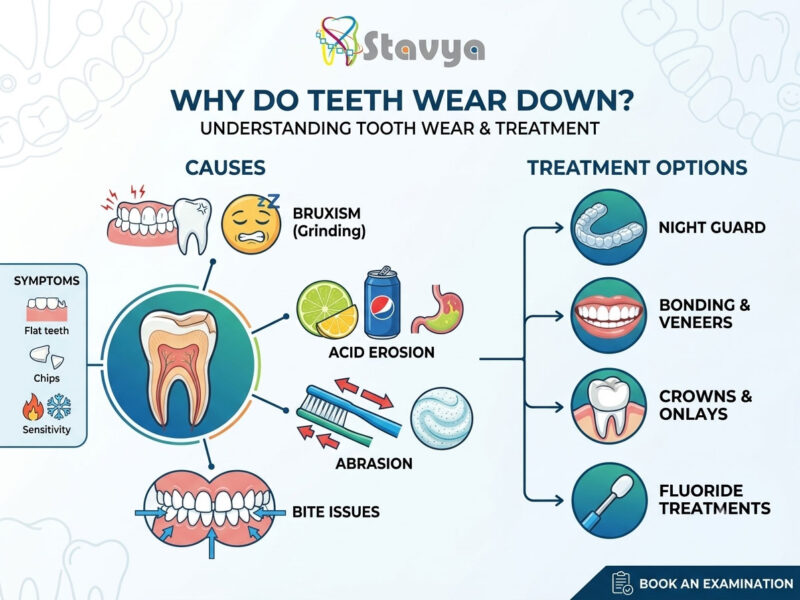
4. Bruxism (Teeth Grinding and Clenching)
Grinding your teeth, especially at night, wears down enamel through direct mechanical friction rather than chemical erosion. Over time, this thins the biting edges of your teeth and can cause a translucent, sometimes uneven appearance. Many patients don’t even realise they grind their teeth until a dentist points out the wear patterns. We’ve covered this in more detail in our post on teeth grinding at night and when to consider a night guard — worth a read if you wake up with jaw soreness or headaches.
5. Overzealous Brushing
Yes, you can brush too hard. Using a hard-bristled toothbrush, applying excessive pressure, or brushing immediately after consuming something acidic (when enamel is temporarily softened) can accelerate enamel wear. The fix is simple: a soft-bristled brush, gentle circular motions, and waiting at least 30 minutes after acidic food or drink before brushing.
6. Dry Mouth (Reduced Saliva Flow)
Saliva does more than keep your mouth comfortable — it constantly neutralises acid and helps remineralize enamel. Conditions or medications that reduce saliva production (certain antihistamines, blood pressure medications, antidepressants, or conditions like Sjögren’s syndrome) leave enamel more vulnerable to erosion over time.
7. Genetics and Developmental Conditions
Some people are simply born with thinner or weaker enamel. Conditions like amelogenesis imperfecta (a genetic disorder affecting enamel formation) or dentinogenesis imperfecta (affecting dentin) can cause naturally translucent, discoloured, or fragile teeth from a young age — completely unrelated to diet or oral hygiene habits.
8. Natural Aging
As we age, enamel naturally thins through decades of everyday wear — chewing, minor acid exposure, and general use. This is why translucent edges are more commonly noticed in patients over 40, even those with excellent oral hygiene.
9. Fluorosis or Enamel Hypoplasia
Excessive fluoride exposure during childhood tooth development (fluorosis), or enamel that didn’t form properly due to illness or nutritional deficiency during childhood (hypoplasia), can also result in patches of thin, translucent, or mottled enamel.
Is Translucent Teeth Dangerous, or Just Cosmetic?
It depends on the stage. In the early stages, translucency is largely a cosmetic and early-warning sign. Left unaddressed, however, progressive enamel loss can lead to:
- Increased tooth sensitivity to hot, cold, or sweet foods
- Higher cavity risk, since dentin is more porous than enamel
- Chipping or cracking at the weakened edges
- Changes in bite if wear is uneven across teeth
This is why it’s worth getting translucent teeth evaluated rather than just monitoring it yourself — a dentist can determine whether you’re in early, manageable stages or whether active treatment is needed. If you’ve been putting off a check-up, our guide on how long a cavity can wait before it becomes a bigger problem explains why delaying dental issues rarely works in your favour.
How Dentists Diagnose the Cause
At Stavya Dental Clinic, diagnosing translucent teeth starts the same way most treatment decisions do — with a proper clinical exam and, when needed, X-rays to assess enamel thickness and rule out deeper structural issues. Our dentists will typically ask about:
- Your diet and frequency of acidic food/drink consumption
- Any history of acid reflux or digestive issues
- Whether you grind or clench your teeth
- Your brushing habits and toothbrush type
- Any medications that might cause dry mouth
- Family history of similar dental issues
This diagnostic step matters because the right treatment depends entirely on the cause — treating grinding-related wear the same way you’d treat acid erosion won’t solve the underlying problem. We talk more about why an accurate diagnosis should always come before treatment in our post on how to choose the right dental treatment for your needs.
Treatment Options for Translucent Teeth
The good news: translucent or thinning teeth are very treatable, and options range from simple lifestyle changes to full cosmetic restoration, depending on severity.
Address the Root Cause First
- Dietary adjustments — reducing frequency of acidic foods/drinks, using a straw for acidic beverages, rinsing with water afterward
- Managing acid reflux — in coordination with your physician
- Night guards — for bruxism-related wear, custom-fitted to stop further grinding damage
- Switching toothbrushes — to a soft-bristled brush with proper technique
- Saliva substitutes or hydration strategies — for dry mouth-related erosion
Restorative and Cosmetic Treatments
- Dental Bonding — a tooth-coloured composite resin is applied to rebuild the worn edges, restoring both strength and a natural appearance. This is often the first-line treatment for mild to moderate translucency.
- Dental Veneers — thin porcelain or composite shells bonded to the front of teeth, ideal for more noticeable translucency or when a full smile makeover is also desired. You can browse examples of this kind of transformation in our cosmetic dentistry advances post.
- Dental Crowns — for more significant enamel loss or structural weakness, a crown fully covers and protects the tooth. Learn more about this option on our Crowns / Bridges service page.
- Fillings — in cases where erosion has led to actual cavity formation alongside translucency, composite fillings restore both function and appearance. More detail on our Fillings service page.
- Laser Treatment — modern laser dentistry can be used for precise, minimally invasive restoration work with faster healing times. See our Laser Treatment services for more information.
- Root Canal / Endodontic Care — in rarer, more advanced cases where enamel and dentin loss has affected the tooth’s nerve, root canal therapy may be needed. Details available on our RCT / Endodontics page.
For most patients, treatment starts conservatively and only escalates if needed — which aligns with the minimally-invasive-first approach we always recommend. You can explore our full range of options on the Aesthetic Dentistry service page.
Can You Prevent Translucent Teeth From Getting Worse?
Yes — and prevention is far easier than reversal, since enamel doesn’t regenerate once it’s lost. A few habits make a meaningful difference:
- Limit frequency, not just quantity, of acidic food and drink exposure
- Use a straw for acidic or sugary drinks to reduce contact with front teeth
- Wait before brushing after consuming acidic foods (30+ minutes)
- Use a soft-bristled toothbrush and avoid aggressive brushing pressure
- Wear a night guard if you grind your teeth
- Stay hydrated to support natural saliva production
- Get regular dental check-ups — catching early erosion is far easier to manage than advanced wear
When Should You See a Dentist?
Book a consultation if you notice:
- Visibly see-through or glassy edges on your front teeth
- Increased sensitivity to hot, cold, or sweet foods
- Teeth that appear to be getting shorter or more worn over time
- Rough or uneven edges you can feel with your tongue
- Any of the risk factors above (reflux, grinding, dry mouth, high acidic food intake)
The earlier translucency is caught, the more conservative — and more affordable — the treatment options usually are.
Final Thoughts
Translucent teeth are your enamel’s way of signalling that something — diet, grinding, reflux, dry mouth, or genetics — has been wearing it down over time. It’s rarely an emergency, but it’s also not something to ignore, since enamel loss is permanent and progressive without intervention.
At Stavya Dental Clinic, we approach translucent teeth the same way we approach every treatment decision: identify the actual cause first, then recommend the most conservative option that restores both function and appearance. Whether that means a simple bonding procedure or a more comprehensive cosmetic solution, our team will walk you through every option before you decide.
Concerned about translucent or thinning teeth? Book a consultation with Stavya Dental Clinic today, or explore our full range of dental services to learn more.
Frequently Asked Questions
Can translucent teeth go back to normal? Enamel doesn’t regenerate once it’s lost, so translucency itself won’t reverse on its own. However, cosmetic treatments like bonding or veneers can fully restore the appearance and strength of affected teeth.
Is transparent teeth a sign of a cavity? Not directly, but the same acid erosion that causes translucency also increases cavity risk, so the two often occur together.
Are translucent teeth more common in children or adults? Both — children can have it due to genetic conditions or fluorosis, while adults more commonly develop it through diet, aging, grinding, or acid reflux over time.
Does teeth whitening make translucency worse? Whitening treatments target surface stains and don’t directly cause enamel thinning, but if enamel is already very thin, results can appear uneven. It’s best to have a dentist assess your enamel health before whitening if you’ve noticed translucency.
This article is general information, not a diagnosis. Every mouth is different, so please see a dentist for advice about your own teeth.