Dental implants are one of the most reliable solutions for replacing missing teeth. They are designed to restore chewing ability, improve appearance, support surrounding oral structures and provide a stable foundation for a dental crown, bridge or denture. However, like any surgical and restorative treatment, dental implants can occasionally fail.
If you are considering an implant or already have one, you may naturally wonder: Why do dental implants fail? What are the symptoms of dental implant failure? Can implant failure be prevented?
The good news is that implant failure is not inevitable. Many of the factors associated with implant complications can be identified and managed through careful diagnosis, appropriate treatment planning, good oral hygiene, professional maintenance and healthy lifestyle choices.
At Stavya Dental Clinic, modern diagnostic technology such as CBCT imaging, digital X-rays, OPG, intraoral scanning and other digital dental technologies can support accurate diagnosis and treatment planning. The goal is to identify potential risks before implant placement rather than discovering problems after treatment.
In this guide, we explain the major causes of dental implant failure, warning signs you should never ignore, important risk factors and practical steps that can help protect your implant for the long term.
What Does Dental Implant Failure Mean?
A dental implant consists of several components, typically including the implant fixture placed inside the jawbone, an abutment and the visible crown or prosthetic restoration.
For an implant to function successfully, the fixture needs to become sufficiently integrated with the surrounding bone. This biological process is known as osseointegration.
Dental implant failure generally means that the implant cannot continue functioning as intended because of a biological or mechanical complication. Failure can occur relatively early, before the final restoration is placed, or later after the implant has been functioning for months or years.
Research indicates that early implant failure can involve factors such as impaired bone healing, infection, inadequate primary stability and surgical trauma, while later complications can include peri-implantitis and excessive mechanical loading.
Importantly, not every problem with an implant means that the entire implant has failed. A loose crown, chipped porcelain or a loose screw may represent a prosthetic complication rather than failure of the implant fixture itself. A dentist needs to determine the actual cause.
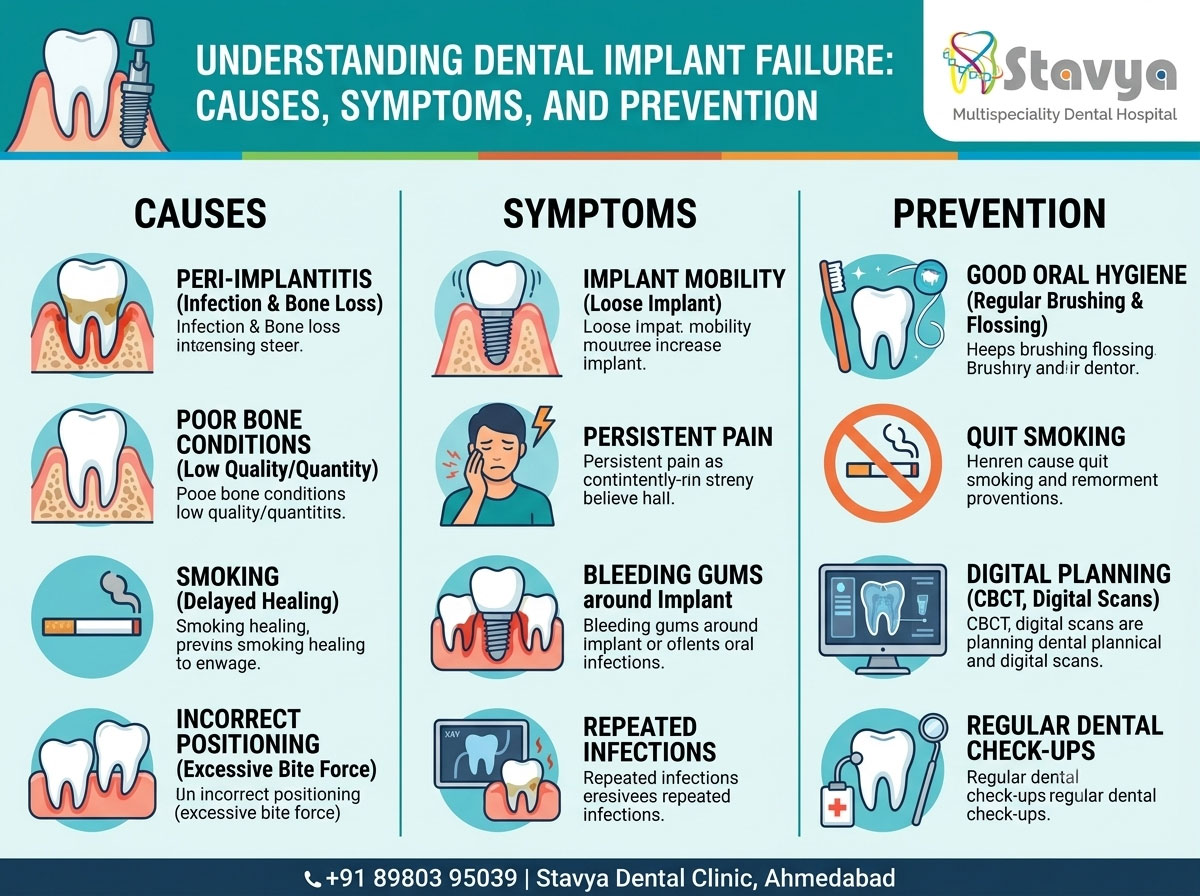
10 Common Causes of Dental Implant Failure
1. Failure of Osseointegration
One of the most important requirements for implant success is stable integration between the implant surface and surrounding bone.
If the implant does not achieve adequate integration during healing, it may remain unstable or become mobile.
Possible contributing factors include:
- Insufficient primary stability
- Poor bone quality or quantity
- Excessive movement during healing
- Surgical trauma
- Infection
- Inadequate healing conditions
- Certain patient-related factors
Recent research on early implant failure describes the causes as multifactorial, involving local, systemic and procedural factors.
This is why detailed treatment planning before implant surgery is so important.
2. Peri-Implantitis and Gum Infection
One of the major long-term threats to dental implants is peri-implantitis, an inflammatory condition affecting the tissues surrounding an implant and potentially causing supporting bone loss.
It can develop when bacterial plaque accumulates around the implant and inflammation progresses.
Risk indicators associated with peri-implant diseases include a history of periodontitis and smoking, while diabetes and other factors may also contribute to risk. A 2025 systematic review and meta-analysis identified periodontitis, smoking and diabetes among important risk indicators for peri-implant disease.
This is why maintaining healthy gums is just as important after implant treatment as it was before surgery.
3. Previous or Active Gum Disease
Patients with a history of periodontitis may have a higher risk of implant-related complications.
A 2024 systematic review and meta-analysis found that patients with a history of periodontitis had significantly greater odds of implant failure and peri-implantitis compared with patients without that history.
If you have gum disease, it should be assessed and controlled before implant placement whenever possible.
An implant should not be considered separately from the overall health of your gums and supporting bone.
4. Smoking and Tobacco Use
Smoking can negatively affect oral tissues and healing. It is also associated with an increased risk of peri-implant disease.
Research has identified cigarette smoking as an important risk factor associated with peri-implantitis.
If you smoke, discuss this honestly with your dentist before implant treatment. Your dental team can advise you about reducing or stopping tobacco use around the surgical period and beyond.
5. Poor Oral Hygiene
A dental implant cannot develop cavities like a natural tooth, but that does not mean it is immune to bacteria.
Plaque can accumulate around the implant, crown and gumline. If inflammation is allowed to continue, the tissues supporting the implant may become damaged.
Daily brushing, appropriate interdental cleaning and professional maintenance are essential components of long-term implant care.
Remember:
No cavities does not mean no implant problems.
The gums and bone around an implant still require regular attention.
6. Insufficient Bone or Poor Bone Conditions
A dental implant requires suitable bone support.
After tooth loss, the jawbone can gradually lose volume because the natural tooth root is no longer stimulating the surrounding bone. The amount and quality of available bone therefore need to be evaluated before implant placement.
Advanced 3D imaging such as CBCT can help clinicians assess the three-dimensional anatomy of the jaw, including bone dimensions and important anatomical structures.
Stavya Dental Clinic’s existing educational content explains how CBCT can assist with implant positioning and treatment planning.
In some cases, additional procedures such as bone grafting may be considered before or alongside implant placement.
7. Excessive Bite Force or Bruxism
Dental implants are strong, but they are not indestructible.
Excessive biting forces can place significant stress on the implant system and restoration. Patients who grind or clench their teeth may therefore require additional assessment and protective measures.
Bruxism has been identified among factors associated with late implant failure in systematic review literature.
If you frequently wake with jaw soreness, headaches, worn teeth or signs of tooth grinding, tell your dentist before implant treatment.
8. Incorrect Implant Position or Treatment Planning
Implant placement requires careful consideration of:
- Available bone
- Implant position
- Implant angulation
- Nerve location
- Sinus anatomy
- Adjacent teeth
- Final crown position
- Bite forces
- Gum and aesthetic requirements
Poor treatment planning can make it more difficult to achieve an ideal biological and functional result.
This is one reason modern implant dentistry increasingly relies on digital diagnostic and planning technologies.
At Stavya Dental Clinic, technologies including CBCT, digital X-rays, OPG and intraoral scanning are part of the clinic’s stated diagnostic and digital dentistry facilities.
9. Poorly Designed or Damaged Prosthetic Restoration
Sometimes the implant fixture itself is healthy while the crown, abutment or screw develops a problem.
Examples may include:
- Loose implant crown
- Loose abutment screw
- Crown fracture
- Chipped ceramic
- Poor bite adjustment
- Excessive occlusal pressure
These complications should be evaluated promptly.
A loose implant crown should never be ignored because continued movement can potentially damage components or affect the surrounding tissues.
10. Failure to Attend Follow-Up Appointments
Dental implants are not a “place it and forget it” treatment.
Regular professional examinations allow your dentist to check:
- Gum health
- Implant stability
- Plaque accumulation
- Bite and occlusion
- Crown condition
- Bone levels
- Signs of inflammation
- Prosthetic components
Professional maintenance is particularly important for patients who have previously experienced gum disease or other risk factors.
Early vs. Late Dental Implant Failure
Dental implant failure can broadly be considered early or late, depending on when the problem occurs.
Early Implant Failure
Early failure generally occurs during the healing period before normal functional loading.
Potential causes include:
- Failure of osseointegration
- Infection
- Insufficient primary stability
- Surgical trauma
- Poor healing
- Excessive movement during integration
Late Implant Failure
Late failure occurs after the implant has already integrated and functioned.
Common concerns include:
- Peri-implantitis
- Progressive bone loss
- Excessive bite forces
- Bruxism
- Mechanical complications
- Prosthetic problems
- Poor long-term maintenance
Scientific reviews describe peri-implantitis and occlusal overload among important considerations in late implant complications.
Symptoms of Dental Implant Failure
Knowing the warning signs can help you seek treatment before a manageable problem becomes more serious.
1. Implant Mobility
A properly integrated implant should not feel like a loose natural tooth.
If the implant fixture itself moves when you touch or bite on it, contact your dentist promptly.
2. Persistent Pain
Some discomfort is normal after implant surgery.
However, persistent, increasing or severe pain after the expected recovery period requires professional assessment.
3. Swelling or Redness
Persistent swelling, redness or tenderness around an implant may indicate inflammation or infection.
4. Bleeding Around the Implant
Occasional minor irritation can happen, but repeated bleeding around an implant—particularly during brushing or professional probing—should be evaluated.
5. Pus or Discharge
Pus or an unpleasant discharge around an implant can indicate infection and should not be ignored.
6. Gum Recession
Changes in gum levels around an implant can expose part of the implant surface or alter its appearance.
7. Bad Taste or Persistent Bad Breath
A persistent unpleasant taste or smell around an implant may be associated with bacterial accumulation or infection.
8. Difficulty Chewing
If your implant suddenly becomes uncomfortable while chewing or your bite feels different, schedule an examination.
9. Crown Movement
If the visible crown feels loose while the implant itself remains stable, the problem may involve the restoration or screw rather than complete implant failure.
Regardless of the cause, a loose implant restoration deserves prompt attention.
How Can You Prevent Dental Implant Failure?
Although no dental treatment can come with an absolute guarantee, several steps can significantly improve the conditions for long-term implant health.
1. Get a Complete Dental Evaluation
Before implant surgery, your dentist should evaluate your teeth, gums, bone, bite and overall oral health.
If necessary, advanced imaging can provide additional information for treatment planning.
2. Treat Gum Disease Before Implant Placement
Active periodontal disease should not be overlooked.
Controlling gum inflammation and establishing good oral hygiene can create a healthier environment for implant treatment.
3. Follow Post-Operative Instructions Carefully
After implant surgery, follow your dentist’s instructions regarding:
- Oral hygiene
- Diet
- Medications
- Physical activity
- Smoking
- Follow-up appointments
Do not disturb the surgical site unnecessarily during healing.
4. Maintain Excellent Oral Hygiene
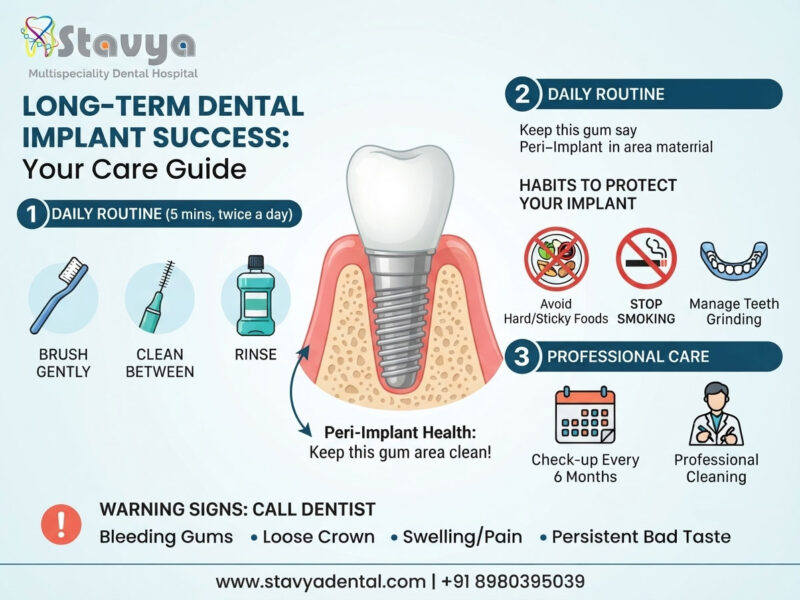
Brush twice daily using the technique recommended by your dental professional.
Depending on your implant design and gum condition, your dentist may also recommend interdental brushes, floss designed for implants, water flossers or other cleaning aids.
5. Stop Smoking
If you smoke, ask your dentist for guidance on quitting.
Reducing tobacco exposure can support better oral health and may reduce implant-related risks.
6. Control Excessive Bite Forces
If you grind or clench your teeth, your dentist may recommend a night guard or other protective strategy.
Never ignore signs of severe tooth wear or jaw discomfort.
7. Attend Implant Maintenance Visits
Professional implant maintenance allows your dentist to detect early inflammation, bone changes or mechanical complications.
Early detection can make management easier.
8. Choose Technology-Assisted Treatment Planning When Appropriate
Modern dental technology can provide additional diagnostic information when it is clinically indicated.
CBCT 3D Imaging
CBCT can provide three-dimensional information about jawbone anatomy and important structures. This can be particularly useful for implant planning. Stavya Dental Clinic has published a detailed guide comparing CBCT with conventional dental X-rays.
Digital X-Rays
Digital radiography can provide detailed dental images and can support diagnosis and treatment planning.
OPG
An OPG provides a broad panoramic view of the jaws and can help identify structures and conditions that may not be obvious during a routine visual examination.
Intraoral Scanner
Digital intraoral scanning creates a three-dimensional digital representation of the mouth and can assist with digital workflows and restorative planning.
CAD/CAM Technology
Computer-aided design and manufacturing can be used to create customized dental restorations. Stavya Dental Clinic describes CAD/CAM and intraoral scanning among its digital dental facilities.
Intraoral Camera
An intraoral camera allows the dental team to obtain close-up images of areas inside the mouth, helping with visualization and patient education.
Laser Dentistry
Laser technology can be used for selected dental and soft-tissue procedures. Its suitability depends on the specific clinical situation.
Technology is a tool—not a replacement for clinical expertise. The correct technology should be selected according to the patient’s anatomy, diagnosis and treatment requirements.
When Should You See a Dentist About a Dental Implant?
Contact your dentist if you experience:
- Implant mobility
- Increasing pain
- Persistent swelling
- Bleeding around the implant
- Pus or discharge
- Gum recession
- Persistent bad taste or bad breath
- A loose crown
- Difficulty chewing
- A sudden change in your bite
Do not wait for the problem to become painful.
Some implant complications can progress without dramatic symptoms, which makes routine professional monitoring especially important.
Can a Failed Dental Implant Be Replaced?
In some situations, a failed implant may be removed and another implant may eventually be placed.
However, the correct approach depends on why the implant failed.
Your dentist may need to address:
- Infection
- Bone loss
- Gum disease
- Insufficient bone
- Bite problems
- Bruxism
- Poor implant positioning
- Other underlying risk factors
Simply replacing the implant without identifying the original cause may not solve the problem.
A comprehensive evaluation is therefore essential before planning another implant.
Dental Implant Care at Stavya Dental Clinic
At Stavya Dental Clinic, implant treatment begins with understanding the individual patient’s oral condition, bone anatomy, gum health, functional requirements and aesthetic goals.
Modern diagnostic and digital technologies—including CBCT, digital X-rays, OPG, intraoral cameras, intraoral scanners and CAD/CAM technology—can support different stages of diagnosis, planning and restorative treatment.
Our approach focuses on accurate diagnosis, customized treatment planning, appropriate technology and long-term oral health rather than simply placing an implant.
If you are experiencing a loose implant, gum inflammation, discomfort or another concerning symptom, a professional examination can help determine whether the issue involves the implant, surrounding tissues or the restoration.
Related Dental Implant Resources from Stavya Dental Clinic
For readers who want to learn more before choosing treatment, explore these related resources:
Dental Implant Category: Dental Implants – Stavya Dental Clinic
Dental Implant Surgery Recovery: Read the Dental Implant Surgery Recovery Guide
What Happens to Your Jawbone After Tooth Loss?: Read the Jawbone Loss & Dental Implant Guide
Transitioning to Dental Implants: Read the Dental Implant Adjustment Guide
Dental Implant Restoration Options: Explore Dental Implant Restoration Options
Dental Implants vs. Dentures: Compare Dental Implants and Dentures
CBCT vs. Traditional Dental X-rays: Read the CBCT vs. Traditional X-rays Guide
Digital Radiology: Learn How Digital Radiology Supports Dental Diagnostics
Frequently Asked Questions About Dental Implant Failure
How common is dental implant failure?
Dental implants generally have high success rates, but failure can occur. The risk varies depending on patient health, implant location, bone conditions, surgical factors, oral hygiene, smoking, gum disease, bite forces and long-term maintenance.
What is the biggest cause of dental implant failure?
There is no single cause. Implant failure is multifactorial. Early failure may involve problems with healing, infection or implant stability, while later complications frequently involve peri-implant disease, bone loss or mechanical overload.
Can a dental implant fail years later?
Yes. An implant can develop complications after functioning successfully for years. Peri-implantitis, progressive bone loss, excessive bite forces and mechanical complications are among the possible causes of late problems.
Does smoking increase dental implant failure risk?
Smoking is an important risk factor for peri-implant disease and can negatively affect oral healing and tissue health.
Can gum disease cause dental implant failure?
A history of periodontitis is associated with an increased risk of peri-implantitis and implant failure. Managing gum disease is therefore an important part of implant treatment planning.
Is a loose dental implant always a failed implant?
Not necessarily. The visible crown or abutment may be loose while the implant fixture remains integrated. However, any movement should be professionally examined as soon as possible.
Can a failed dental implant be replaced?
Often, replacement may be possible, but the cause of the original failure must first be identified and managed. Bone grafting or treatment of infection or gum disease may sometimes be necessary.
Final Takeaway: Protect Your Dental Implant From Failure
Dental implants are designed to provide a long-term solution for missing teeth, but their success depends on much more than the implant itself.
Healthy gums, sufficient bone, careful treatment planning, proper implant placement, good oral hygiene, controlled bite forces, healthy lifestyle choices and regular professional maintenance all matter.
If you notice mobility, persistent pain, swelling, bleeding, discharge, gum changes or a loose implant crown, do not ignore the symptoms.
Early evaluation can help determine the cause and may allow your dentist to address a complication before it becomes more serious.
At Stavya Dental Clinic, modern diagnostic technologies such as CBCT, digital X-rays, OPG and intraoral scanning can support individualized treatment planning where clinically appropriate.
If you are considering dental implants in Ahmedabad or are concerned about an existing implant, schedule a professional dental evaluation to understand your specific situation and treatment options.
Stavya Dental Clinic
Ahmedabad
Phone: +91 89803 95039
Website: Stavya Dental Clinic
Blog: Stavya Dental Clinic Blog
Medical disclaimer: This article is intended for general educational purposes and does not replace an examination, diagnosis or personalized treatment plan from a qualified dental professional.